

China will start paying interest on the digital yuan
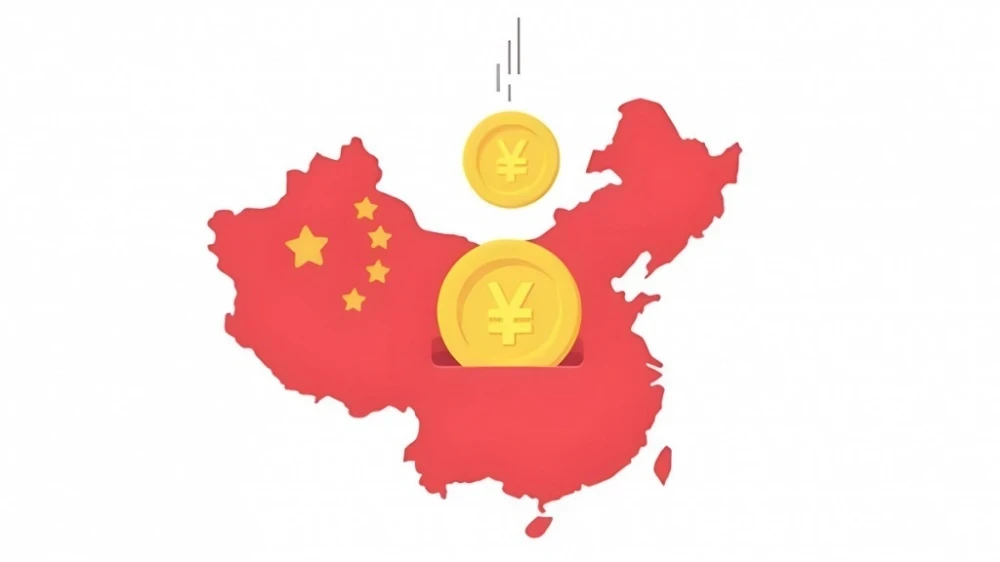
Starting January 1, 2026, China will become the first country in the world to begin paying interest on the balances of the digital yuan (e-CNY), allowing its holders to earn income similar to that of demand deposits.
The People's Bank of China (PBOC) has introduced an updated management model for the digital yuan, as reported by Deputy Governor Lu Lei in an article for the state newspaper Financial News. He noted that the digital yuan is changing its nature and transitioning from the concept of "digital money" to "digital deposit currency."
Violation of International Trends
This initiative contradicts the views of international financial institutions such as the European Central Bank and the Federal Reserve System of the United States, which insist that central bank digital currencies (CBDCs) should remain interest-free to avoid undermining financial stability.
The new system will operate under the "Action Plan for Strengthening the Management of the Digital Yuan and Financial Infrastructure." Interest will be accrued only on verified wallets in categories 1-3 for individuals and legal entities, while anonymous wallets in category 4 will remain interest-free. Accrual will occur quarterly, on the 20th of the last month of each quarter, at demand deposit rates.
Analyst Wang Jian from Guoxin Securities characterized this transformation of the digital yuan into an interest-bearing system as an evolution from "digital money 1.0" to "deposit currency 2.0," emphasizing that it represents "a new type of bank account" that combines traditional payment functions with new contractual capabilities.
Impressive Usage Volumes
As of the end of November 2025, there were 3.48 billion transactions with the digital yuan in China, totaling 16.7 trillion yuan (approximately $2.37 trillion). The number of personal digital wallets reached 230 million, while corporate wallets amounted to 18.84 million.
The international platform mBridge processed 4,047 cross-border payments totaling 387.2 billion yuan ($54.21 billion), with 95.3% of all transactions being conducted in digital yuan.
Competition for Users
The introduction of interest is aimed at increasing the attractiveness of the digital yuan amid fierce competition with payment systems like Alipay and WeChat Pay, which dominate the cashless payment market in China. Previously, the digital yuan was primarily used as a payment tool without the possibility of accumulation.
Accounts with digital yuan will receive similar protection as traditional bank deposits, thanks to the national deposit insurance system. Commercial banks will be able to manage digital currency balances as part of their assets and liabilities, providing more opportunities for operational management.
In September 2025, the PBOC established the International Operational Center for the Digital Yuan in Shanghai to expand the influence of the Chinese digital currency on the global stage. The bank also plans to launch pilot programs for cross-border use of the digital yuan in collaboration with Singapore, Thailand, Hong Kong, the UAE, and Saudi Arabia.
Situation Analysis
Historical data shows that interest-bearing CBDCs could become a new tool for conducting currency wars in the 21st century. China is effectively setting a precedent for an "attractive" state digital currency while the U.S. limits its own CBDCs and the EU develops a strictly regulated digital euro. This creates an asymmetry reminiscent of the reserve currency race of the 1970s, when countries competed for the status of an international means of payment.
From the perspective of systemic risks, the introduction of interest on the digital yuan creates a unique situation: the central bank gains direct access to every transaction while simultaneously encouraging the accumulation of this currency. Such a level of financial transparency has no historical precedent in monetary systems. The question remains open: are other central banks ready for a similar "interest race," or will China temporarily outpace them in the process of economic digitalization?
Source: hashtelegraph.com


Related materials:
