The "Uzbekistan – 2030" Strategy Adapts to New Global Challenges and
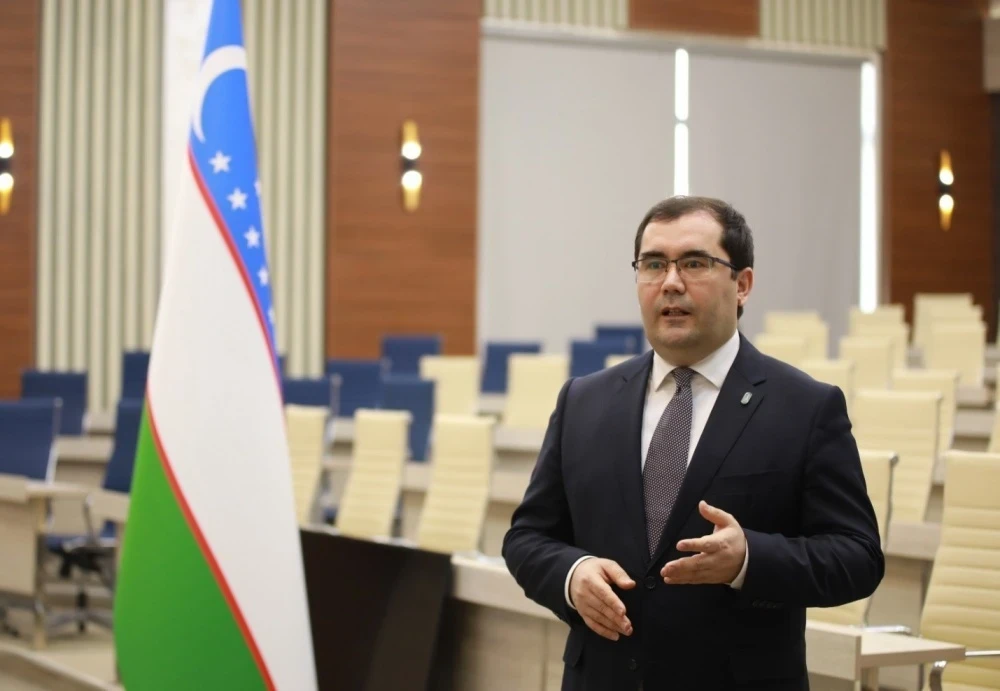
The Executive Director of the "Development Strategy" Center, Eldor Tulyakov, shared information on why the "Uzbekistan – 2030" strategy needs updating, as well as the main directions of this process. He noted that the rapid development of global processes and technological changes require a revision of this important program document. The key principle of the updated edition is the idea that "government bodies must serve the people." This implies the implementation of specific mechanisms that will make reforms more effective and tangible for every family.
"The 'Uzbekistan – 2030' strategy is a central document that shapes the medium- and long-term directions for the country's development. It concentrates the logic of reforms, priority goals, and practical mechanisms for shaping a New Uzbekistan," he added.
In recent years, significant achievements have been made in the country across various sectors, including socio-economic development, governance, human rights protection, and strengthening civil society.
In this context, the "Uzbekistan – 2030" strategy has played a key role in systematizing these processes. However, public life and international conditions are constantly changing. New economic realities and technological shifts present new challenges for state policy.
In this regard, there is a need to adapt the "Uzbekistan – 2030" strategy to current needs and demands of the time.
The main idea of the updated strategy, proposed by the country's leadership, is that "government bodies must serve the people." The new edition of the strategy is intended to fill this principle with practical content and continue the country's development based on a more effective and accountable system.
In the process of refining the strategy, a thorough analysis of achieved results is conducted, and existing problems and challenges are taken into account. Performance indicators are being revised, which will allow for an accurate assessment of the degree of achievement of set goals. Each task will be assigned responsible bodies, and funding sources will be presented in an open and transparent format, increasing accountability for the implementation of the strategy.
Particular attention is paid to ensuring that the strategy is accessible and relevant to every citizen. The updated "Uzbekistan – 2030" strategy is being developed so that everyone can see what practical benefits it brings to their lives, families, and the future of their children. When discussing real changes, it is important to understand that this is not about general slogans.
The indicators of medium-term goals are being updated in light of modern economic and social challenges. Additionally, full digitization of the monitoring of strategy implementation is planned, which will ensure transparency and allow for decision-making based on reliable data, strengthening public oversight.
There is also an emphasis on aligning all strategic documents related to sectors and regions with the "Uzbekistan – 2030" strategy, which will help achieve coherence and effectiveness in state policy.
An important aspect is the creation of the strategy based on broad public discussions. The draft will be put forward for discussion to obtain practical proposals from the population, experts, and civil institutions, as indicated in the recent Address of the President of the Republic of Uzbekistan to the parliament and the people. A document that takes into account public opinions and the real demands of citizens will be truly viable and effective.
Thus, the process of refining the "Uzbekistan – 2030" strategy represents a consistent and open approach aimed at deepening reforms and adapting them to modern requirements, as well as enhancing practical returns in people's lives. The main emphasis is placed on the fact that the strategy should serve the welfare of the people," the expert concluded.


Related materials: