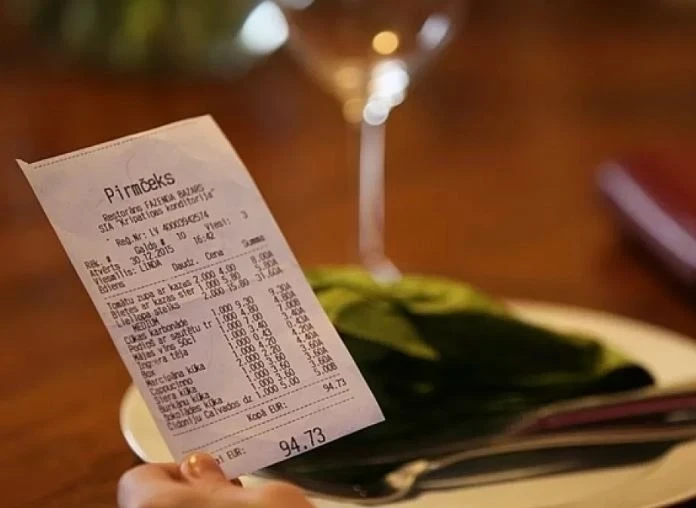
This decision has become relevant against the backdrop of rising prices in restaurants and cafes following the cancellation of the service charge. Kaktus.media has gathered various opinions on this matter.
State Anti-Monopoly Agency
According to Jenala Orozbaev, the head of the State Anti-Monopoly Agency, the prices of dishes in cafes are not subject to state regulation, as this is a competitive market.He explained: "According to point 141, the service charge in the form of a percentage of the bill amount is prohibited. We will monitor how establishments interpret this point. If there is no such charge, there will be no fines, but if it is present on the receipt, the establishment will face penalties."
Orozbaev also added that the agency has a metrological supervision service that will check the compliance of declared dish volumes in case of complaints from consumers.
An example of control can be a situation where the menu states that a dish contains 50 grams of meat, 300 grams of noodles, and 200 grams of liquid. "We will check such cases, and appropriate measures are provided for violations. We do not aim to pressure businesses, but we are establishing order to protect consumer interests," he noted.
At the same time, Orozbaev emphasized that currently, prices in the country are not regulated.
Consumers have the right to choose: if one establishment does not suit them, they can turn to another. The catering sector is competitive.He also pointed out that the rise in dish prices will lead to an increase in tax revenues.
According to Orozbaev, "We can influence the market in other ways besides price regulation. Establishments may have started to earn more, but this could lead to a decrease in the number of customers. Over time, the situation will stabilize."
If we strengthen control over the output of finished dishes, it will be impossible to make 12-13 portions from ten. So far, we have not fined anyone, but inspections will begin shortly.Additionally, the State Anti-Monopoly Agency plans to investigate the catering market for possible collusion, which is a violation of legislation. However, experts warn that proving collusion is difficult.
Association "Horeca Club"
Gulzat Raimbekova, head of the "Horeca Club" association, which unites representatives of the restaurant and hotel businesses, noted the differences between product underweight and service charges.She said: "Our restaurateurs must comply with the information stated in the menu. If the weight of the salad is specified as 300 grams, the customer should receive exactly that amount. Association members are constantly responsible for the accuracy of this data, and it has nothing to do with prices or service."
Legislation
According to point 42 of the "Rules for the Trade of Certain Types of Goods on the Territory of the Kyrgyz Republic," the establishment of prices for goods is carried out independently by entities engaged in trading activities.Penalties for violations of trading rules are outlined in the Code of Offenses, specifically in Article 286 "Violation of Trading Rules." The fine for individuals is 3,000 soms, and for legal entities — 13,000 soms.
There is also Article 390 "Violation of Consumer Rights in the Sale of Goods (Work), Services."
- Measurement errors, overcharging, and miscalculations result in a fine for individuals of 16,500 soms, and for legal entities — 51,000 soms.
- Overpricing compared to the prices indicated on the packaging or label is punishable by a fine of 3,000 soms for individuals and 15,000 soms for legal entities.
- Failure to provide consumers with information about prices (tariffs) for goods (services, work) in the national currency also incurs a fine of 3,000 and 15,000 soms for individuals and legal entities, respectively.
Who has the right to check?
- The Department of Disease Prevention and State Sanitary-Epidemiological Supervision under the Ministry of Health of the Kyrgyz Republic and the Veterinary Service under the Ministry of Agriculture of the Kyrgyz Republic conduct inspections aimed at preventing zoonotic diseases among the population.
- The department and the Main Internal Affairs Directorate of Bishkek also monitor compliance with smoking bans in public places.
- The Environmental and Technical Supervision Service under the Ministry of Natural Resources conducts inspections of waste disposal.
- The Ministry of Construction, together with the Bishkek City Hall, controls signage on buildings.
- The Ministry of Construction also conducts fire safety inspections in conjunction with the Fire Supervision Service under the Ministry of Emergency Situations of the Kyrgyz Republic.
- The Labor Legislation Control Service, along with the tax service, checks compliance with labor standards.
- Joint inspections of labor legislation also concern the presence of foreign workers in catering.
- The Social Fund of the Kyrgyz Republic and the State Tax Service check the age of workers.
- The State Agency for Intellectual Property and Innovations of the Kyrgyz Republic, together with the National Agency for the State Language, checks the use of the state language in the catering sector.
- The Road Traffic Safety Control Department and the State Agency for Intellectual Property can impose fines for background music and televisions in hotel rooms.