The Embassy of the Islamic Republic of Iran in the Kyrgyz Republic has issued a statement regarding the recent internal events in Iran, as well as foreign interference and abuses.
The document notes that "peaceful gatherings in the country have a legitimate status and basis for expressing opinions, demands, and protests. However, the recent protests, which were initially of an economic nature, began to deviate from their purpose, leading to violence and instability, partly due to the interference of foreign actors."
The events can be divided into four key stages:
First stage (December 28-31): peaceful protests.
These demonstrations were primarily organized in bazaars and among trade unions. The authorities quickly began a dialogue with union representatives and entrepreneurs, taking their demands into account. As a result, some of them were included in the agenda, and the protests gave way to negotiations.
Second stage (January 1-7): violent protests without the use of weapons.
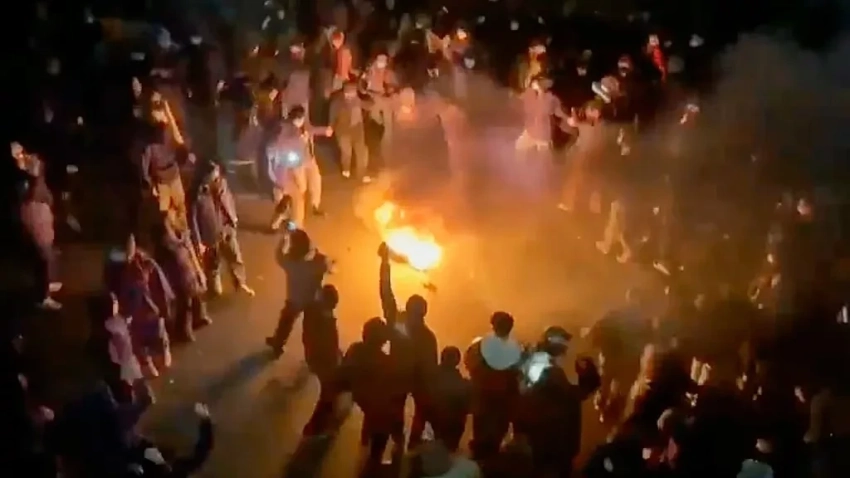
New participants joined the protesters, and the demonstrations became more aggressive. Security forces acted with restraint, seeking to prevent an escalation of violence. This period was still under control; however, the nature of the protests began to change. Similar cases are observed in Western countries.
Third stage (January 8-10): armed and terrorist acts.
During the protests, terrorists with firearms appeared, shooting at both police and peaceful citizens, aiming to increase the number of casualties to provoke U.S. intervention. There is evidence, including voice messages, indicating that these actions were managed from abroad, with obvious involvement from the U.S. and Israel. Israeli media reported the presence of Mossad agents speaking Persian on the streets of Tehran. Mike Pompeo sent a New Year's greeting to the Iranian people and Mossad agents. Iran holds those who planned the murders of innocent people responsible for these events and demands acknowledgment of their guilt. This stage is viewed as a continuation of the twelve-day conflict with Israel and the U.S. (June 2025), and Iran intends to pursue the guilty parties on both international and domestic fronts.
Fourth stage (from January 10): restoration of control.
Security forces began detaining numerous terrorists armed with weapons, whose testimonies will be made public soon. According to recent surveys, over 80% of the population wishes to end the unrest, believing that more than 70% of the incidents are related to foreign interference, while only 30% are due to economic reasons. On January 12, Iranians took to the streets in mass demonstrations, expressing their dissatisfaction with the violent protests supported by the U.S. and Israel.
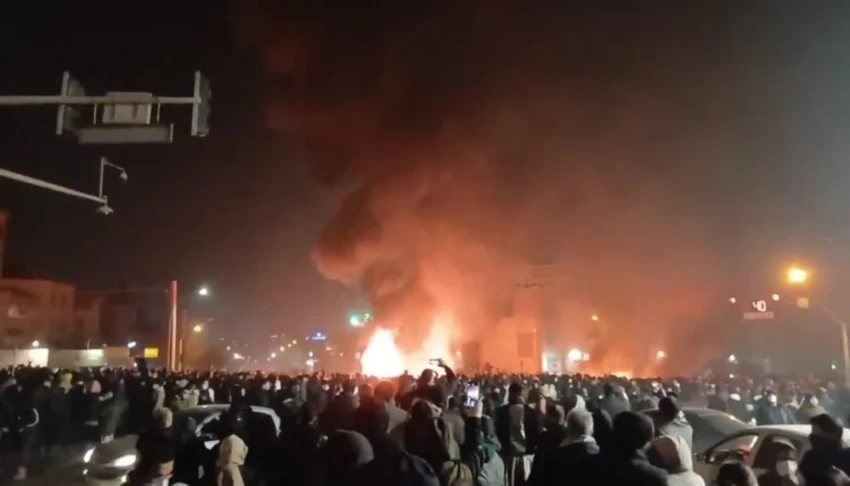
Investigations show that the unrest led to widespread destruction: the arson of about 200 shops, attacks on 53 fire trucks, 8 of which were completely destroyed, the burning of 180 ambulances, the destruction of 26 banks and 25 mosques in the capital, as well as attacks on 53 mosques across the country. Government buildings, police stations, and other state property were also attacked, and more than 1,300 units of weapons were seized from the terrorists. These actions resemble methods characteristic of terrorist groups.
The statement also mentions that "support for violence in the West continues, despite its decline. Western countries, particularly the U.S., accuse the Iranian authorities of repression against armed protesters, while in the U.S., thousands of people fall victim to police every year, raising concerns among human rights defenders and global public opinion."
In conclusion, it is emphasized that the right to peaceful protests is universally recognized; however, no country can tolerate unrest, arson of state property, terrorism, and shooting at civilians and law enforcement officers.