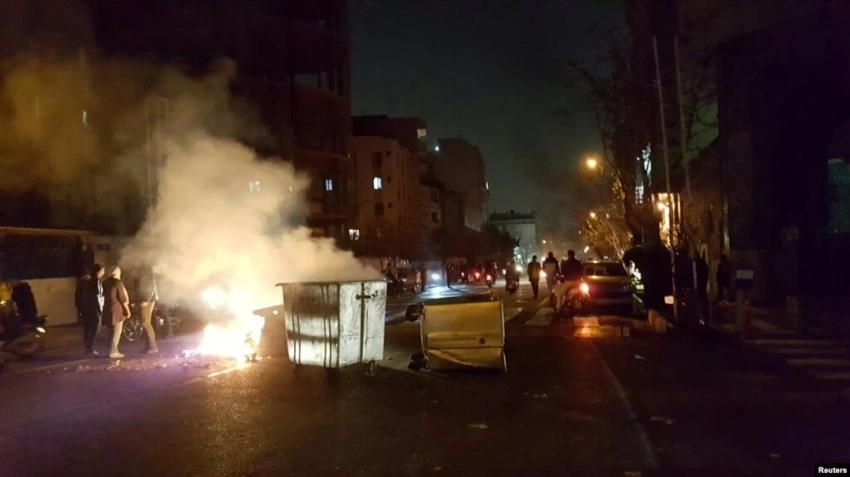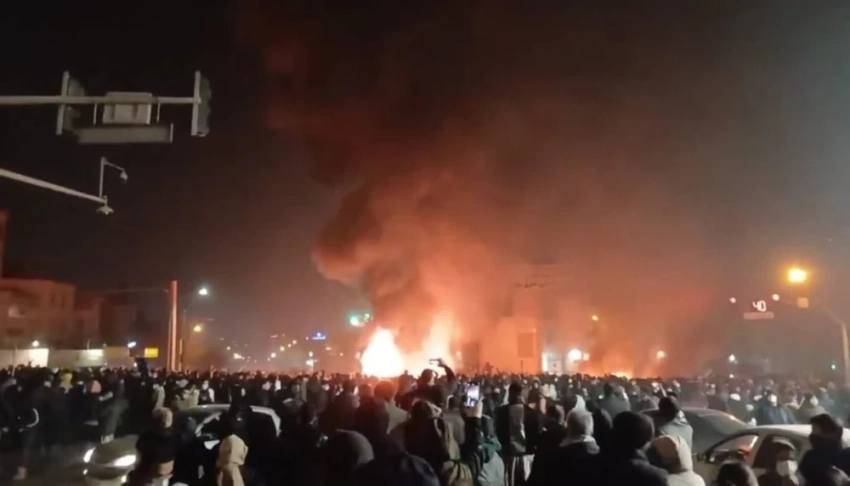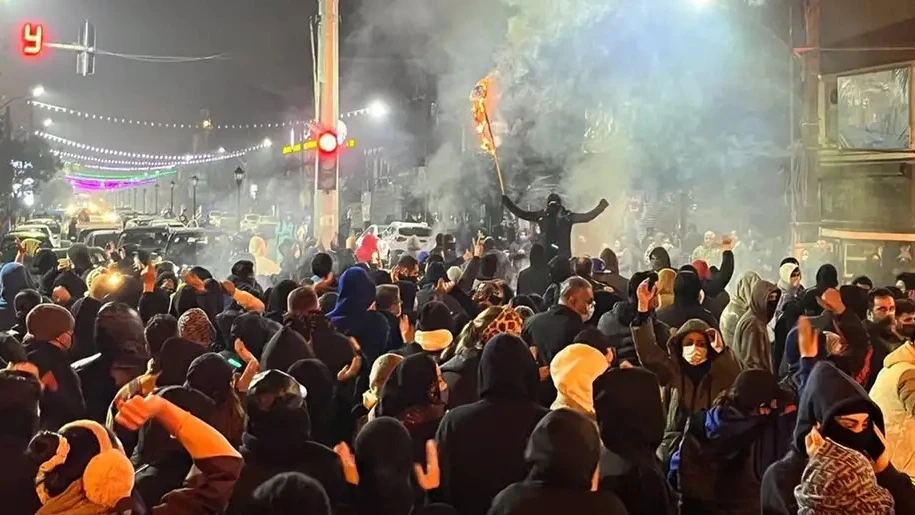
Protests on the streets in Iran. Photo UGC.
According to data published by the human rights network HRANA, based in the USA, the number of victims of anti-government protests in Iran has risen to 538 people. This information was announced on January 11, whereas earlier reports indicated 203 fatalities, as noted by DW.
Since January 8, the Iranian authorities have imposed a complete internet blackout, significantly hindering access to information from the country, and this regime has been in place for over 70 hours. DW journalists report that the only way to obtain information about events in Iran remains the Starlink satellite communication. For the first time, Iranian authorities have begun using drones for patrolling, allowing them to identify protesters from the air. Accurate data on the number of casualties and detainees is currently unavailable.
Journalists note that the response of security forces to the protests is becoming increasingly brutal, as the current actions differ significantly from previous waves of discontent in the country.
Judging by the scale of repression, threatening statements from officials, and the tone of state media, the situation is completely different and has taken the authorities by surprise.It is also reported that even medical facilities are not safe places for the injured. "There is a high risk that the wounded may be abducted by security forces. In several cases, they refuse to return the bodies of the deceased to their relatives," mentions one of the DW correspondents.
Mass protests against the Iranian leadership have been ongoing since December 28, 2025. Despite the brutal measures from security forces and the internet blockade, thousands of people are taking to the streets of Tehran and other major cities. Protesters bang on pots and shout slogans such as "Death to Khamenei," referring to Iran's Supreme Leader Ayatollah Ali Khamenei, while motorists honk in support.
On January 10, the Islamic Revolutionary Guard Corps (IRGC) declared its readiness to suppress the protests. They emphasized that ensuring state security is a "red line," and the army will protect "national interests, strategic infrastructure, and public property" using force, as stated on state television.