

Twenty Years Without Kyrgyz: What the Tough Signal from the Head of the State National Security Committee Was About
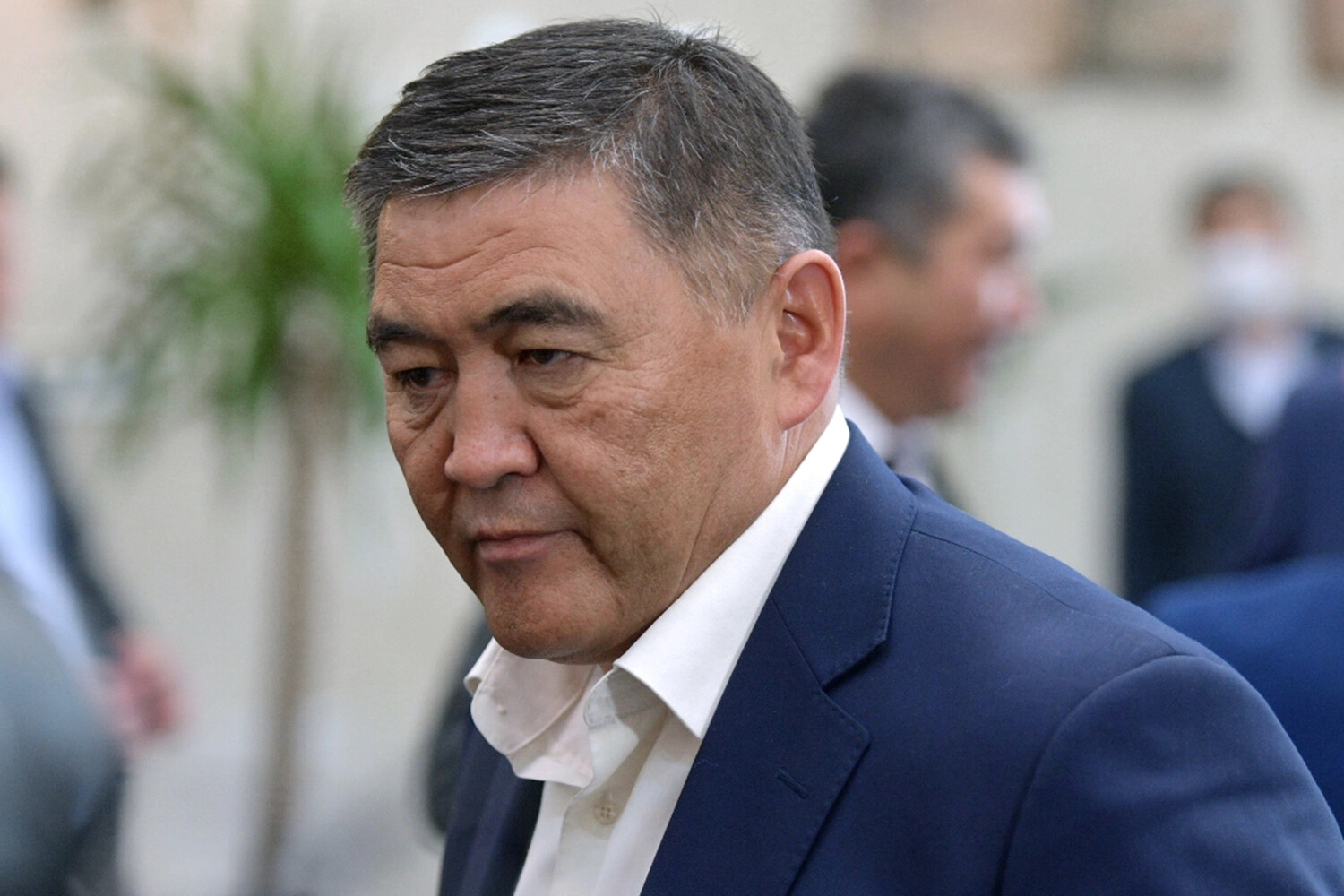
The phrase of the Chairman of the State Committee for National Security Kamchybek Tashiev, addressed to representatives of the Chinese company China Road, became one of the most discussed topics in the public space at the end of 2025. The statement was made at a working meeting on the construction of the Barskoon — Karakol road in the Issyk-Kul region, but quickly went beyond the production episode and turned into a subject of broad public discussion.
The occasion was Tashiev's harsh remark that for almost twenty years of working in Kyrgyzstan, representatives of the contracting organization had not mastered the state language. The comment was made without diplomatic softening — in a direct and characteristic manner for a security agency.
Video from the meeting quickly spread on social media. The public's reaction was polar: some perceived Tashiev's words as a timely and long-overdue emphasis on the status of the Kyrgyz language, while others saw them as a threat to the linguistic balance and even a hint at the possible displacement of the Russian language from the public space.
This sharpness of perception is largely understandable. In post-Soviet countries, the language issue has long ceased to be exclusively a cultural topic — it is increasingly viewed as an element of politics, identity, and state sovereignty. However, the emotional interpretation of this episode does not take into account the broader institutional and political context.
Kyrgyzstan has constitutionally enshrined a bilingual model: the Kyrgyz language is the state language, while Russian is the official language. This formula has served for many years as the basis for linguistic balance, allowing for the simultaneous strengthening of national identity and the preservation of interethnic stability.
Evidence of respect for the Russian language comes not only from declarations but also from practical steps. For instance, the launch of the new television channel Nomad TV, aimed at a Russian-speaking audience, has become a vivid testament to the preservation of a multilingual information space.
Moreover, during negotiations with President of Russia Vladimir Putin, the head of state Sadyr Japarov specifically emphasized the significant role of the Russian language in Kyrgyzstan as a language of interethnic communication, education, and international contacts.
The personal context also deserves attention. Kamchybek Tashiev is a graduate of Tomsk Polytechnic University, one of the leading technical universities in Russia. This fact alone refutes claims about the alleged negative attitude of the head of the GKNB towards the Russian-speaking space.
It is also important to consider the communicative aspect of what happened. Addressing representatives of China Road, Tashiev spoke in Russian — a language that remains operational and understandable for most foreign specialists working in Kyrgyzstan. This indicates a pragmatic, rather than ideological approach: the language is used as a tool for effective interaction, not as a means of pressure.
The key meaning of the GKNB head's statement lies in the realm of business ethics. The company China Road has been involved in infrastructure projects in Kyrgyzstan for almost two decades, interacting with government structures, local residents, and workers. In such conditions, basic proficiency in the state language, at least at the level of business communication, appears not as an ultimatum but as a form of respect for the host side.
In many countries, knowledge of the state language is an unwritten standard for business integration for foreign companies. Kyrgyzstan, in this context, is no exception and increasingly conveys the expectation of deeper involvement from partners in the local reality.
Kamchybek Tashiev's statement fits into a broader trend — the state's desire to strengthen its own subjectivity without destroying international and intercultural ties. This is not about displacing the Russian language or confronting foreign investors, but about a reminder: long-term work in Kyrgyzstan implies respect for its institutions, language, and cultural space.
In this sense, language acts not as a tool of pressure, but as a marker of partnership and responsibility. Interpreting the words of the GKNB head solely in an emotional or confrontational plane means ignoring the managerial and diplomatic context.
The sharpness of the formulations is explained not by ideology, but by Tashiev's personal communication style, characterized by directness and a tough delivery. The essence of the message remains extremely pragmatic: a prolonged presence in the country implies adaptation, respect, and understanding of the local reality.


