Reactions to the remarks of the Russian TV presenter
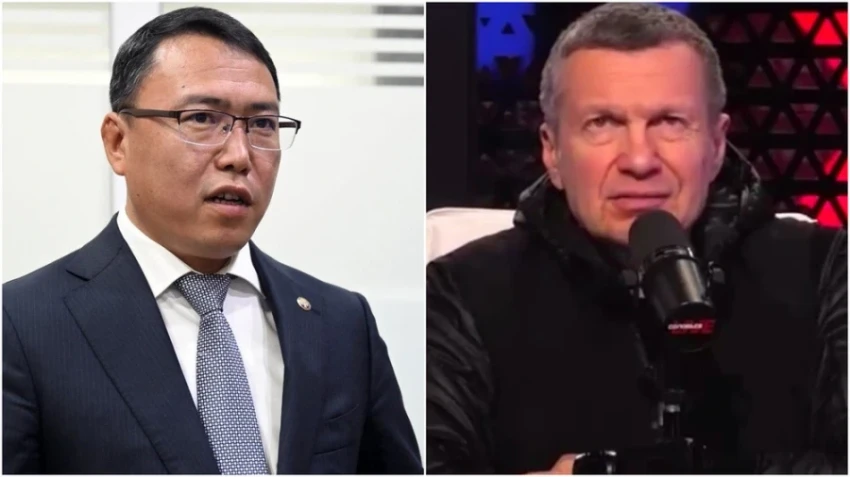
Recent statements by Vladimir Solovyov regarding the possibility of a "special military operation" in other regions under Russia's influence have sparked active discussion among politicians and experts in Central Asia, as reported by the Politik portal.
Bobur Bekmurodov, a deputy of the Oliy Majlis of Uzbekistan, noted that the times when the fates of nations were determined by "shouts in TV studios" or directives from "older brothers" are long gone. He emphasized that the borders of Central Asia are a matter of honor, and any threats to independence will meet a decisive and united response. According to him, such statements only create conflicts between neighbors, while the countries of the region possess enough strength and courage to defend their territory.
“It is not worth paying attention to Solovyov's words and his imperial ambitions. We advise him to familiarize himself with the Uzbek proverb, which translates to 'Play with your own nightingale,'” Bekmurodov added in a video address.
The rector of the University of Journalism of Uzbekistan, Sherzodkhan Kudratkhodja, emphasized that on air, Solovyov openly stated what had previously been concealed: international law is suggested to be ignored, sovereignty is to be considered a formality, and countries are referred to as "zones of influence."
He also noted that the phrase "Our Asia" is not just a slip of the tongue, but an expression of a colonial approach, where states are viewed as objects and borders as obstacles.
Kyrgyz political scientist Yrysbek Osmonov stated that Kyrgyzstan is not a territory for conquests but represents a sovereign state with a rich history. He pointed out the cynicism of the remarks coming from a media figure of a country that is considered a strategic partner of Kyrgyzstan.
“Such statements not only offend but also sow distrust and animosity, where we have sought mutual understanding for many years. [...] Talk of 'conquest' is not just a relic of colonial thinking; it is a threat to the foundations of our partnership,” Osmonov concluded.
Kazakh political scientist Gaziz Abishev suggests that various motives may lie behind such statements. He points to a possible reaction from the Kremlin to U.S. actions in Venezuela, as well as a signal to Central Asia and the Caucasus — "don't overstep, or we will come with fire." He does not rule out a personal demarche from Solovyov, demonstrating militarism from a safe studio.
In Abishev's opinion, such undeserved public outbursts against allies violate the ethics of international relations, especially in conditions where rhetoric inciting interethnic hatred is already leading to tangible consequences.
He also noted that defining the geopolitical interests of one's country is normal practice, but deliberately preparing the audience for a possible war with neighbors is an entirely different story.
Photo www