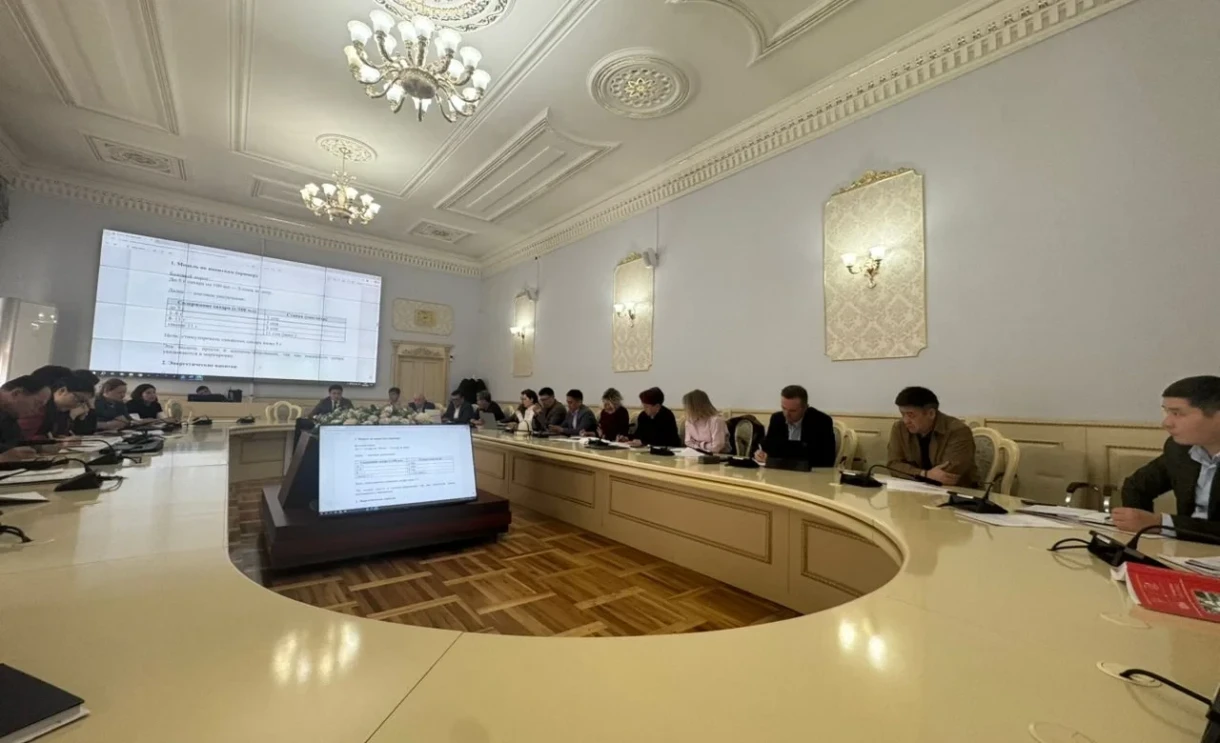
The Association for the Development of the Agro-Industrial Complex of Kyrgyzstan has expressed its position regarding the Ministry of Health's initiative to increase excise taxes on sugar-containing beverages. The appeal highlights potential negative consequences for the processing of agricultural raw materials, farmers, and price stability in the market. (text below)
To the President
of the Kyrgyz Republic
Sadyr Japarov
To the Chairman of the Cabinet of Ministers
of the Kyrgyz Republic
Akylbek Japarov
To the Deputy Chairman of the Cabinet of Ministers - Minister of Water Resources, Agriculture, and Processing Industry of the Kyrgyz Republic
Erkebulan Akunbekov
To the Deputies of the Jogorku Kenesh of the Kyrgyz Republic
(by list)
OPEN APPEAL
of producers and processors of the agro-industrial complex regarding the initiative to increase excise taxes on sugar-containing beverages.
Dear Sadyr Nurgozhoevich,
Dear Akylbek Alekseevich,
Dear Erlis Abakirovich,
Dear Deputies of the Jogorku Kenesh,
The Association for the Development of the Agro-Industrial Complex of the Kyrgyz Republic, representing the interests of domestic producers and processors of agricultural products, expresses its respect and considers it important to outline its position regarding the proposed increase in excise taxes on sugar-containing beverages initiated by the Ministry of Health.
As part of its initiative, the Ministry of Health proposes to implement a mechanism for taxation of harmful products (Public Health Product Tax), which involves increasing the current excise rate from 3 som/liter to a differentiated scale from 5 to 11 som per liter, as well as introducing additional excise taxes on energy drinks and salty snacks. It is expected that the funds from this tax will be directed to the National Health Fund to finance preventive programs and the healthcare system.
The Association supports the need to improve public health and prevent non-communicable diseases; however, it believes that the proposed measure requires a comprehensive assessment considering economic, social, and sectoral consequences.
In this regard, we draw attention to a number of systemic problems and risks associated with the proposed changes.
The paradox of state policy regarding the agro-industrial complex
Currently, the state policy of the Kyrgyz Republic is aimed at developing the agro-industrial complex, import substitution, and ensuring food security.
The Cabinet of Ministers implements large-scale programs to support farmers and the processing industry through:
- The Ministry of Water Resources, Agriculture, and Processing Industry
- The Ministry of Economy and Commerce
- The Ministry of Finance
- State financial institutions and support programs (banks, development funds, etc.)
Through mechanisms such as preferential lending programs and financial support tools, the state allocates significant resources annually for the development of the agricultural sector.
It is important to note that sugar and its processed products are part of food security.
Thus, a paradox arises: on one hand the state allocates significant funds to support farmers and processors, on the other hand measures are proposed that increase the tax burden on processed agricultural products.
Inconsistency of the initiative with the strategic objectives of agro-industrial development
By the decree of the President of the Kyrgyz Republic No. 202, which concerns additional measures for the development of the agro-industrial complex, a strategic task is defined:
- to increase the volume of agricultural product processing by 50% by 2030.
To achieve this goal, the state:
- stimulates the creation of processing enterprises
- supports the formation of value-added chains
- stimulates the purchase of agricultural raw materials from farmers
At the same time, a significant portion of processed fruit and berry products is sold in the forms of compotes, nectars, juices, and fruit drinks. The proposed increase in excise burden may reduce the economic attractiveness of processing agricultural raw materials, which contradicts the tasks set by the President.
Risks for farmers and rural regions
The production of compotes, nectars, and fruit drinks is directly related to the purchase of raw materials from domestic farmers.
Increasing excise taxes may lead to the following consequences:
- increased production costs
- decreased competitiveness of local producers
- reduction in the purchase of agricultural raw materials
- decreased income for farming households
- reduced capacity utilization of processing enterprises
- loss of jobs in the regions
Thus, a tax measure aimed at regulating consumption may negatively affect the rural economy.
Risk of displacing domestic producers with imported products
Increasing the tax burden will inevitably lead to higher prices for domestic products. The Kyrgyz market is open, and products from neighboring countries — Afghanistan, Kazakhstan, Uzbekistan, Russia, and others — are already actively represented in it.
In recent years, there has been an increase in the supply of sugar-sweetened water and beverages, which are actively promoted through HoReCa channels and retail networks.
If excise taxes on domestic products are raised, this may lead to:
- consumers choosing cheaper imported beverages
- domestic producers losing part of the market
- effectively supporting farmers from other countries
Thus, the tax measure may not improve public health but merely redistribute the market in favor of imported products.
Limited applicability of international experience
The justification for the initiative cites examples from countries such as Hungary, Mexico, and Norway, where taxes on certain categories of harmful products are in effect.
However, a direct comparison of these countries with the conditions in Kyrgyzstan is inappropriate for a number of structural reasons.
Firstly, the mentioned states have a significantly higher income level, which reduces susceptibility to rising food prices.
Secondly, their economies are characterized by developed processing industries and high added value of products, which allows enterprises to adapt more easily to additional tax burdens.
Thirdly, these countries have effective tax administration systems that allow for precise determination of product composition and sugar content levels.
Fourthly, they have developed laboratories and control infrastructure, ensuring systematic monitoring of food quality and composition.
In contrast, Kyrgyzstan is at the stage of forming its processing industry. According to the relevant authority, currently less than 10% of agricultural products are processed, indicating a weak industrial base.
In these conditions, mechanically transferring foreign models of tax regulation without considering national specifics may lead to negative consequences for local production.
Administrative risks and lack of laboratory infrastructure
The proposed mechanism implies differentiation of excise rates depending on sugar content. However, Kyrgyzstan currently lacks sufficient laboratory infrastructure capable of ensuring:
- prompt determination of sugar content
- regular laboratory control
- effective administration of such a tax
This creates the risk of:
- inaccurate declaration of product composition
- increased administrative burden
- additional opportunities for unfair competition.
Possible stimulation of the use of artificial sweeteners
The desire of producers to reduce tax burdens may lead to the replacement of sugar with artificial sweeteners. Studies show that prolonged consumption of certain artificial sweeteners raises debates among specialists regarding their impact on human health.
Thus, the proposed measure may lead to the replacement of natural sugar with chemical analogs, which does not always align with the goals of improving public health.
Risks of growth in the shadow market
International practice shows that a sharp increase in excise taxes leads to:
- growth of illegal turnover
- smuggling of products
- increased share of the unaccounted market
For the small market of Kyrgyzstan, such risks are particularly significant.
Contradiction to state policy on inflation control and price stabilization
Currently, the Cabinet of Ministers is implementing a set of measures aimed at controlling inflation, ensuring food security, and stabilizing prices for socially significant products.
These measures are aimed at supporting agricultural production, developing processing, and expanding the supply of products in the domestic market to ensure the availability of food goods for the population.
In this context, the initiative to increase excise taxes on sugar-containing beverages may have the opposite effect.
Increasing the tax burden will inevitably lead to higher production costs for processed products and, consequently, to increased retail prices.
Thus, the proposed measure may create additional inflationary pressure and contradict the state policy aimed at stabilizing prices for food products.
The need for a comprehensive approach to public health issues
The Association fully supports the need for measures to improve public health.
However, addressing this issue requires a comprehensive approach, including:
- educational programs
- information campaigns
- formation of a culture of healthy eating
- development of physical activity
Fiscal measures should be considered only as one element of the policy, not the primary regulatory tool.
The issue of consistency in state policy
The business community notes that this initiative has already been discussed within the framework of the Interagency Working Group on amendments to the Tax Code of the Kyrgyz Republic at the Ministry of Economy and Commerce in 2025 and did not receive support.
Nevertheless, similar proposals continue to arise. This initiative is being promoted within the projects of the Ministry of Health, where international consultants and project experts are involved.
Business observes with interest and surprise that such initiatives keep reappearing on the agenda, despite previously made decisions.
We respect international experience and recommendations from organizations, but when forming state policy, it is necessary to take into account national economic specifics, the level of industrial development, and the priorities of the country's food security.
Considering all of the above, representatives of the agro-industrial complex of Kyrgyzstan insist on maintaining the existing conditions of tax regulation and against making decisions that could negatively impact:
- the development of the processing industry
- the incomes of farmers
- the competitiveness of local producers
- the sustainability of the agro-industrial complex.
Therefore, we ask you to consider the possibility of rejecting the project to increase excise taxes on sugar-containing beverages and to continue the dialogue involving business, relevant ministries, and experts to develop balanced solutions.
“It is important for state policy to be consistent. We support measures to improve public health; however, such decisions must be made considering their real economic consequences. Changes in the tax burden should be assessed in terms of their impact on farmers, processing, and the sustainability of the agro-industrial complex” — Baltabaev R.
The post Association of the Agro-Industrial Complex against the increase in excise taxes on sweet drinks proposed by the Ministry of Health of Kyrgyzstan first appeared on K-News.