Photo from the internet
Background: political tension and opposition
By the early 2000s, dissatisfaction with President Askar Akayev's policies had reached its peak, especially after the signing of agreements with China on border delimitation, which was perceived as a transfer of territories, including the Uzenku-Kuush area.
Against the backdrop of growing discontent, opposition activists gained strength, among whom Deputy Azimbek Beknazarov of the Jogorku Kenesh stood out. His arrest on January 5, 2002, related to his activities in the 1990s, sparked public outrage. Supporters and human rights defenders claimed that this persecution had political roots.
Experts believe that Beknazarov's arrest became the catalyst for mass protests that began to escalate.
Protests: January - March 2002
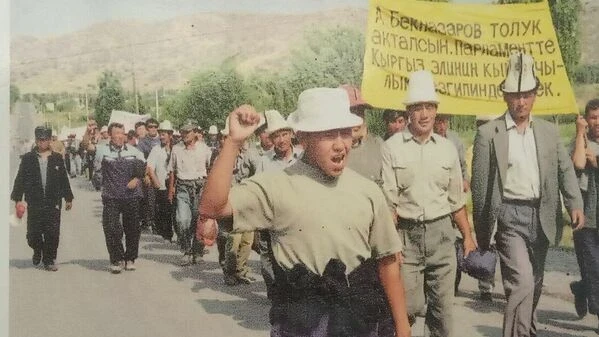
Starting in early 2002, protest actions began to take place in Bishkek and the Jalal-Abad region. In the Aksy district, they became particularly massive, including rallies, pickets, and hunger strikes.
According to human rights defenders such as Aziza Abdirasulova, the protests had a sustained character and were accompanied by harsh measures from law enforcement: arrests and dispersals of rallies.
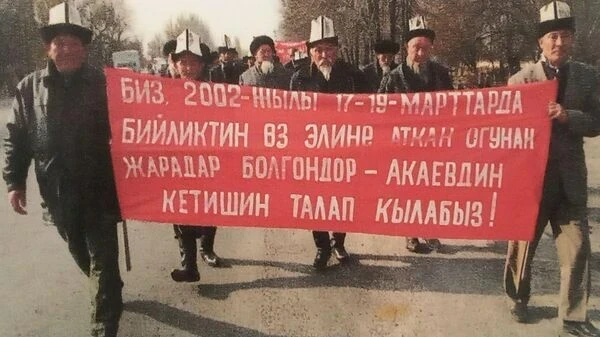
The relationship between the local population and the authorities became strained, and the protesters' demands focused on two main points: the release of Azimbek Beknazarov and the rejection of territorial agreements.
Climax: the tragedy of March 17
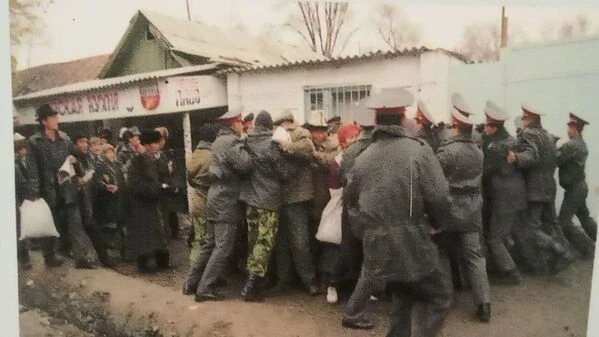
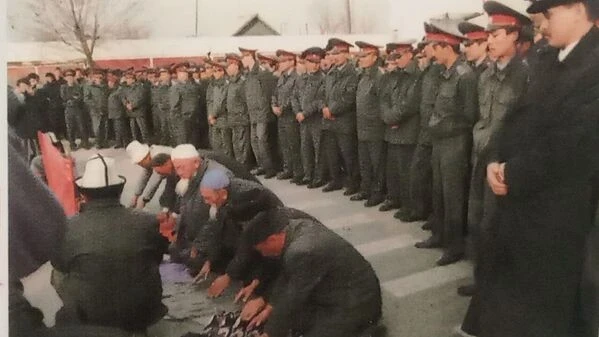
March 17, 2002, became a day that changed everything. Residents of several villages in the Aksy district headed to Kerben with the intention of participating in the protest.
According to Human Rights Watch, security forces stopped a group numbering from several hundred to two thousand people near the village of Bospiek.
What followed was tragic: the security forces opened fire. Official and international reports state that six were killed and many were injured.
Human rights organizations emphasized that the use of firearms against unarmed citizens was unjustified.
Witness accounts and alternative versions of events
According to human rights defender Aziza Abdirasulova, the protesters were unarmed and moving peacefully. She claims that the actions of the security forces were premeditated, including the deployment of significant forces to the region.
Her testimony raises several questions about what happened: shots were fired into the crowd, where women were at the front, while most of the dead and injured were men at the back. There are video recordings documenting the moment the shooting began.
Abdirasulova also emphasizes that many circumstances of this incident have not been properly legally assessed, and some facts were not considered during the official investigation.
Authorities' reaction and investigation of the incident
In the first days after the tragedy, the authorities claimed that the police acted in response to aggression from the protesters and used force in self-defense.
However, a state commission in May 2002 came to different conclusions, recognizing the use of weapons as illegal and the actions of the authorities as erroneous.
Several commissions, including state and parliamentary ones, were created to investigate, but their results did not lead to a full legal resolution of the case.
Political consequences of the tragedy
The events in Aksy became a catalyst for a large-scale political crisis. Protests spread to other regions of the country, ultimately leading to the resignation of the Kyrgyz government in May 2002, and Prime Minister Kurmanbek Bakiev stepped down under public pressure.
In a broader context, these events undermined trust in Askar Akayev's authority, and many analysts view them as one of the factors that led to the "Tulip Revolution" of 2005.
Legal proceedings and accountability
Legal proceedings regarding the Aksy events lasted several years. Some officials were held accountable, but most charges were mitigated or not brought to a logical conclusion.
Human rights defenders repeatedly pointed to the incompleteness of the investigation and that many responsible individuals escaped punishment.
More than two decades later, the events in Aksy continue to remain not only a tragedy but also a symbol showing the limits of the state's forceful response to public discontent and the consequences of the absence of political dialogue.
As Aziza Abdirasulova emphasizes, the events in Aksy have not received a full political and legal assessment, which, in her opinion, has reflected on subsequent crises in the country, including the events of 2010 and later conflicts.