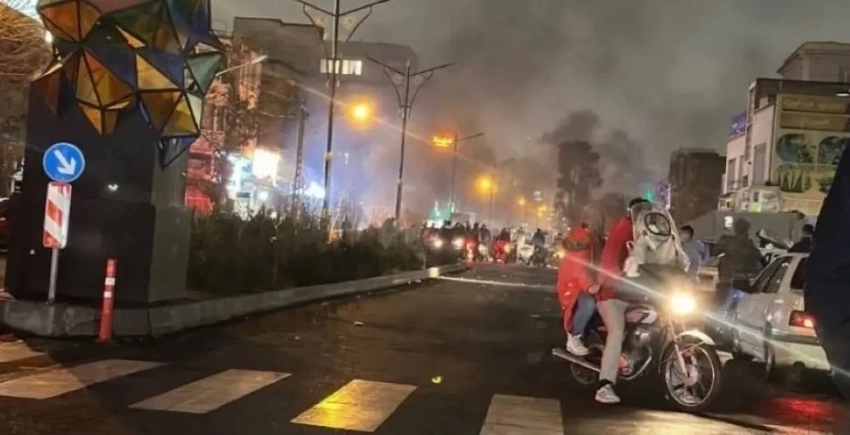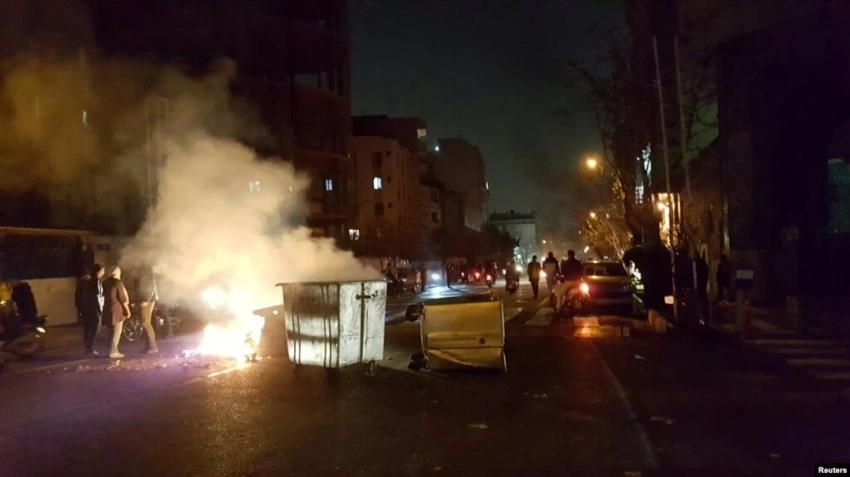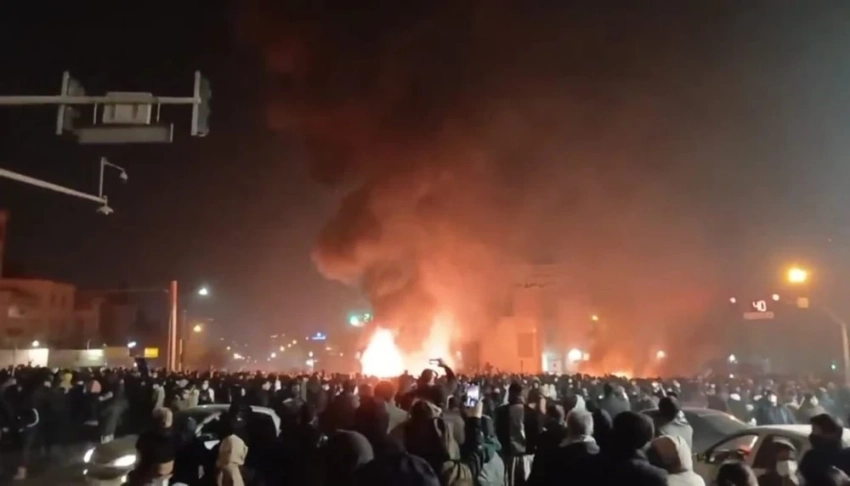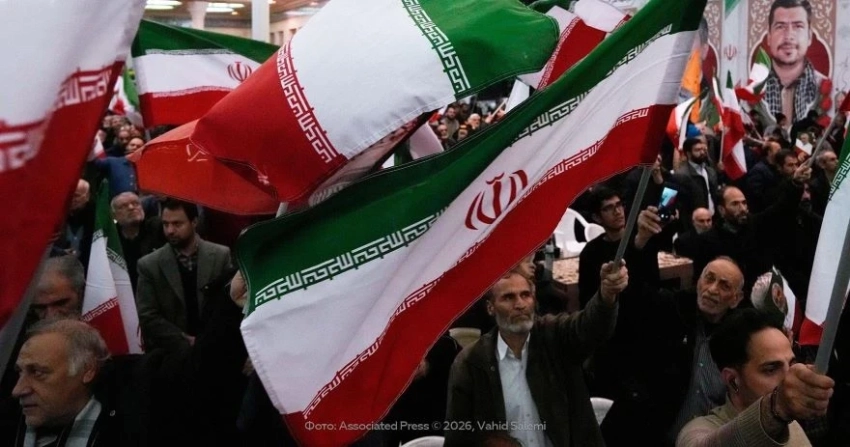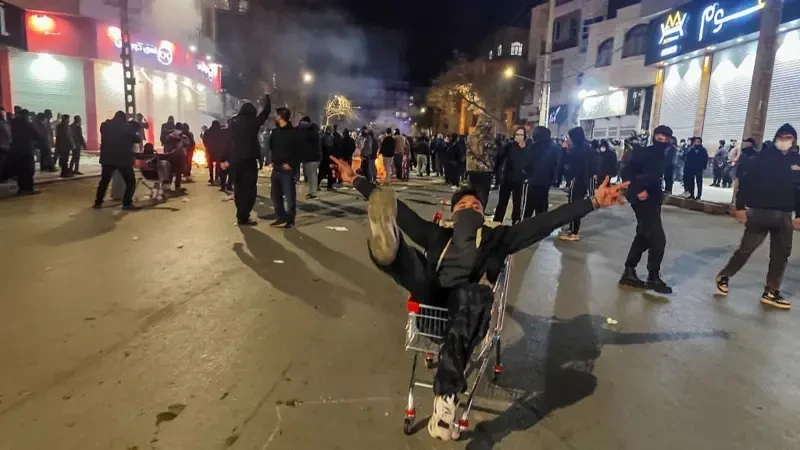
Protests continue in Iran, which began nearly two weeks ago due to a severe economic crisis. Clashes between protesters and police have become frequent, and human rights organizations have accused Iranian forces of using weapons against demonstrators. The country is experiencing widespread internet outages.
According to the Persian service of the BBC, 22 deaths among protesters have been confirmed, while the Iranian government reported the deaths of six security personnel.
However, the organization Iran Human Rights, based in Norway, claims that the number of killed protesters is at least 45, including eight minors.
According to the information from the Human Rights Activists News Agency (HRANA), at least 34 protesters and four security personnel have been reported killed, with around 2,200 detained. Protests have spread to 111 cities and towns, including universities, where, for example, final exams at Amir Kabir University in Tehran have been postponed for a week, according to ISNA.
On Thursday, a major internet outage occurred in Iran, which, according to the monitoring group NetBlocks, continued into Friday, complicating the flow of information from the country. There are also issues with mobile communication.
Ayatollah Ali Khamenei, the Supreme Leader of Iran, referred to the protesters as "vandals" who are destroying their own streets in his televised address on Friday. He stated that the Islamic Republic "will not yield" in the face of "saboteurs" and accused Trump of having "blood on his hands" of Iranians.
Reasons for the Iranian Protests
The protests began on December 28, when shop owners in Tehran took to the streets to protest against the sharp decline in the value of the Iranian rial compared to the US dollar.
The rial has fallen to a record low over the past year, and inflation has reached 40%. Sanctions related to the nuclear program exacerbate the economic situation, which is already suffering from mismanagement and corruption.
Students soon joined the protesters, and the protests spread to other cities, where participants often shouted slogans against Supreme Leader Khamenei and sometimes expressed support for Reza Pahlavi, the son of the last Shah of Iran, who was overthrown during the Islamic Revolution of 1979.
Reza Pahlavi, who is abroad, supported the demonstrators and called for mass protests on Thursday and Friday at 8:00 PM local time (4:30 PM GMT).
"The great people of Iran, the whole world is watching you. Go out into the streets and express your demands as one," Pahlavi noted (quote from Euronews). — "I warn the Islamic Republic and its leader that the world and (President Donald Trump) are watching you closely. Suppressing the people will not go unanswered."
In response, Trump threatened on Thursday that the US would take tough measures against Iran if the authorities began "killing people," adding that Washington "will hit them very hard."
Kurdish opposition parties in Iran, based in Iraq, also called for a general strike in Kurdish areas in western Iran.
The human rights group Hengaw reported widespread support for this call in 30 cities, publishing videos of closed shops. According to Hengaw, at least 17 protesters were killed during the unrest in predominantly Kurdish provinces of Ilam, Kermanshah, and Lorestan, many of whom belonged to the Kurdish or Lur minority.
The Persian service of the BBC confirms that protests in Tehran and Mashhad were not dispersed, based on videos posted on social media on Thursday evening.
In one video, a crowd of protesters is seen moving along the main road in Mashhad, shouting slogans like "Long live the Shah" and "This is the last battle! Pahlavi will return." Several men climbed onto an overpass and removed what appeared to be surveillance cameras installed there.
Another video shows a column of protesters on a major highway in eastern Tehran.
In a video shot in the capital, the crowd can be heard chanting: "This is the last battle! Pahlavi will return." In other areas in the north of the city, protesters shouted "Shame!" and "Don't be afraid, we are all together" after clashes with police.
Other videos show protesters shouting "Death to the dictator" (addressed to Khamenei) in Isfahan, "Long live the Shah" in Babol, and "Don't be afraid, we are all together" in Tabriz.
In Dezful, footage provided to the BBC shows a large crowd of protesters and security forces, who reportedly opened fire from the central square.
On Thursday, Trump reiterated the threat of military intervention if Iranian authorities continue to kill protesters.
"I made it clear to them that if they start killing people — and they usually do during riots, they have a lot of them — if that happens, we will hit them very hard," he said on the Hugh Hewitt Show.
Airlines are canceling flights to Iran, with Turkish Airlines canceling five flights to Tehran scheduled for Friday. According to Istanbul airport, five more flights operated by Iranian airlines were canceled, while seven flights are still awaiting departure. Flights from Dubai have also been canceled.
Prior to this, according to FlightRadar24, a Turkish Airlines flight heading to Shiraz and a Pegasus flight to Mashhad turned back and did not enter Iranian airspace.
Events of Wednesday
According to Iran Human Rights, Wednesday was the bloodiest day since the protests began, with 13 confirmed deaths among protesters.
Videos posted on social media show protesters clashing with security forces, with sounds of gunfire heard.
Footage from various areas shows security forces shooting into the crowd and using tear gas, to which some protesters responded by throwing stones.
In videos published on Wednesday, confirmed by the BBC, crowds of protesters in Qazvin, northwest of Tehran, can be seen chanting slogans, including "Death to the dictator" (addressed to Khamenei) and "Long live the Shah."
In footage from Bandar Abbas in the Persian Gulf, demonstrators chant "Police, support, support," before being dispersed by security forces.
In the holy city of Mashhad for Shiites, protesters clashed with police, forcing them to retreat. In another video, people are seen chanting slogans in support of the Pahlavi dynasty.
According to the BBC, a large demonstration took place in Abadan on Wednesday evening, where protesters shouted "Guns, tanks, fireworks! The mullahs must go," referring to Iranian spiritual leaders.
In other footage shot from a balcony, security forces can be seen opening fire while fleeing from protesters who are throwing stones and other objects at them.
As night fell, security forces dispersed protesters in Aligudarz using tear gas as a crowd gathered in the square chanting "Long live the people's uprising!"
Footage also emerged of protesters in Kayemiyeh, in Fars province, toppling a statue of Qassem Soleimani, the head of the elite Quds Force, who was killed in a US airstrike ordered by Trump in 2020.
The Iranian Fars news agency, close to the Islamic Revolutionary Guard Corps, reported that armed men shot two police officers in Lordegan in the southwest of the country.
These police officers were reportedly killed by "rebels" who attacked them.
Later, there was also information that another police officer was stabbed "while attempting to suppress the unrest" in the Mallard district, located west of Tehran.
These reports have not yet been confirmed, as the BBC and other independent media face restrictions on reporting from Iran.
Response of Iranian Authorities
After a Cabinet meeting on Wednesday, Vice President for Executive Affairs Mohammad Jafar Qayampanah stated that President Masoud Pezeshkian had instructed not to take "any measures" against peaceful protesters.
"Those armed with firearms, knives, and machetes who attack police stations should be considered rebels, and we must distinguish between protesters and rebels," he added.
State media also reported the start of payments of a new monthly allowance of $7 for 71 million citizens to help cope with the high cost of living.
The head of the judiciary, Gholamhossein Mohseni Ejei, stated that "rebels" would be punished quickly to serve as a deterrent.
Ayatollah Khamenei, holding absolute power in the country, noted on Saturday that it is necessary to "engage in dialogue with the protesters," but at the same time "rebels must be punished."
Opinions of Local Residents
An activist in the UK relayed to the BBC the account of a woman from Tehran who expressed that the protests arise from despair.
"We live in a state of suspension," she said. "I feel like I'm suspended in the air — with no wings to fly away, no hope to achieve my goals here. Life has become unbearable."
Another woman shared that she went out to protest because her dreams were "stolen" by the spiritual leadership, and she wanted the authorities to know: "We still have a voice to scream, and a fist to hit them in the face."
A resident of Ilam spoke about young people from families connected to the authorities who participate in the protests. "My friend and her three sisters, whose father is known in the intelligence services, go out to protest without his knowledge," she reported.
25-year-old Mina from Kuhdasht in Lorestan told Reuters reporters over the phone that she "just wants to live a peaceful, normal life."
"Instead, they insist on a nuclear program, support armed groups in the region, and maintain hostility towards the US. These actions would have been appropriate in 1979, but not today. The world has changed," she believes.
According to Reuters, opinions in Iran regarding the possibility of foreign intervention are divided. Even critics of the government doubt its feasibility.
"Enough. This regime has ruled my country for 50 years. Look at the results. We are poor, isolated, and disillusioned," said a 31-year-old man from Isfahan who preferred to remain anonymous.
However, he is against foreign intervention: "I don't want my country to suffer from military actions again. Our people have already endured too much. We desire peace and friendship with the world — without the Islamic Republic."
Expert Opinions
Sanam Waqif, director of the Middle East program at the Chatham House think tank in London, told the BBC that the protests quickly transformed into political ones and arose against a backdrop of deep public discontent.
"People are tired. They have no visible prospects. Daily life is becoming increasingly difficult," she noted. "If the protests continue to gain popularity and more people take to the streets, the government's responses will become harsher."
Sadegh Zibakalam, a professor of political science at Tehran University, believes that the authorities may exercise caution, fearing repression from the US.
"Some Iranian leaders, including commanders of the IRGC and security forces, may be more cautious and not rush to suppress the protests, fearing possible US intervention," he noted in a conversation with the BBC.
These protests are the largest since 2022, when unrest began following the death of a young Kurdish woman, Mahsa Amini, who was detained by the morality police for improper hijab wearing.
According to human rights organizations, more than 550 people were killed as a result of the suppression of protests in 2022, and 20,000 were detained.
According to Reuters estimates, the protests have not yet reached the scale of those in 2022-2023.
The Iranian authorities have restricted internet access amid ongoing protests. In response, society has urged residents to use the encrypted messenger BitChat, supported by Jack Dorsey.
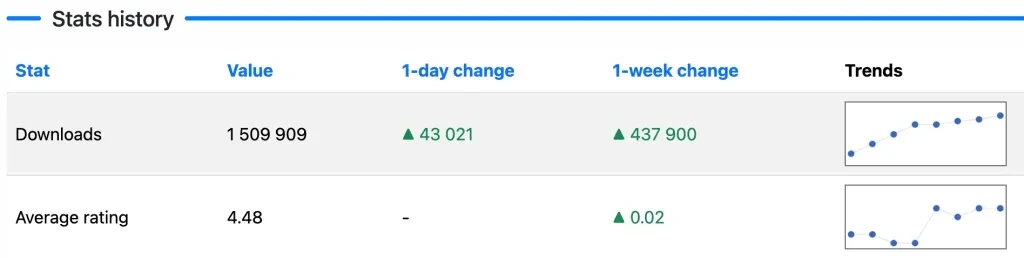
According to Chromestats, in the last 24 hours, the number of downloads of the app increased by 43,000, and over the week — by 437,900. However, it is unclear what proportion of this is related to Iran.
Previously, the messenger attracted attention in Nepal and Indonesia amid protests against the current authorities.
BitChat does not require an internet connection: each Bluetooth device in the network functions as a client and relay, transmitting encrypted messages up to 30 meters.
Elon Musk's Starlink satellites can also provide high-speed internet access. Users have reached out to the billionaire asking him to deploy equipment in Iran, which he had already done during protests in June.
Reports suggest that Musk has responded to these calls.