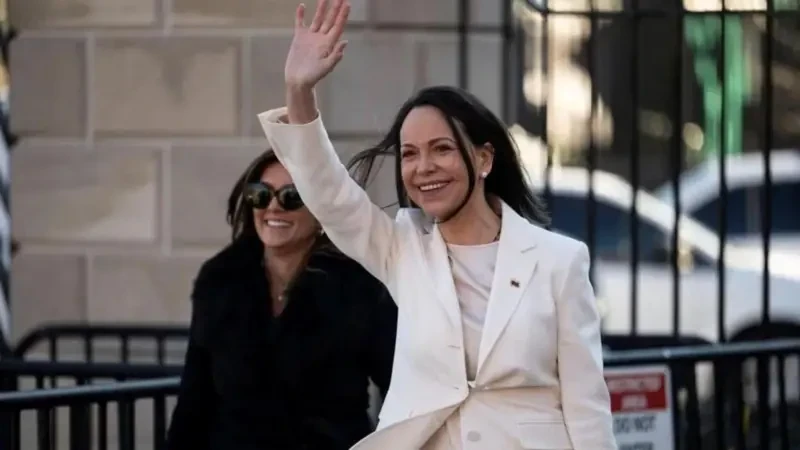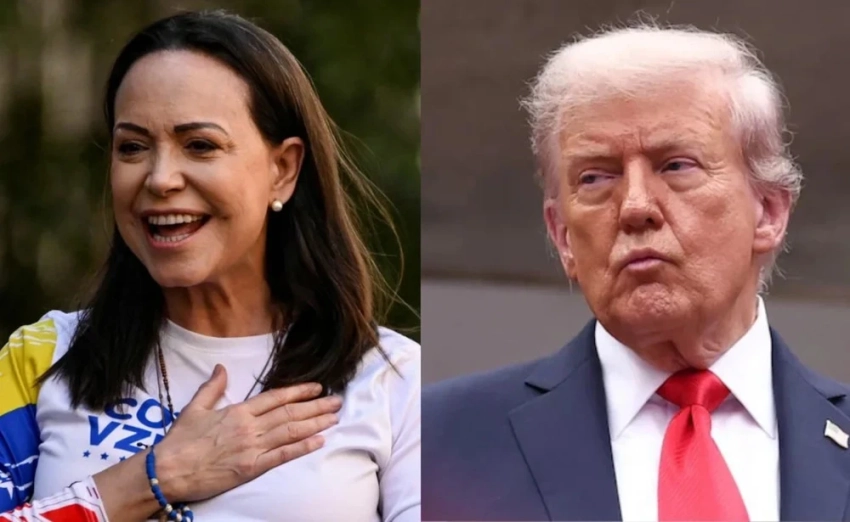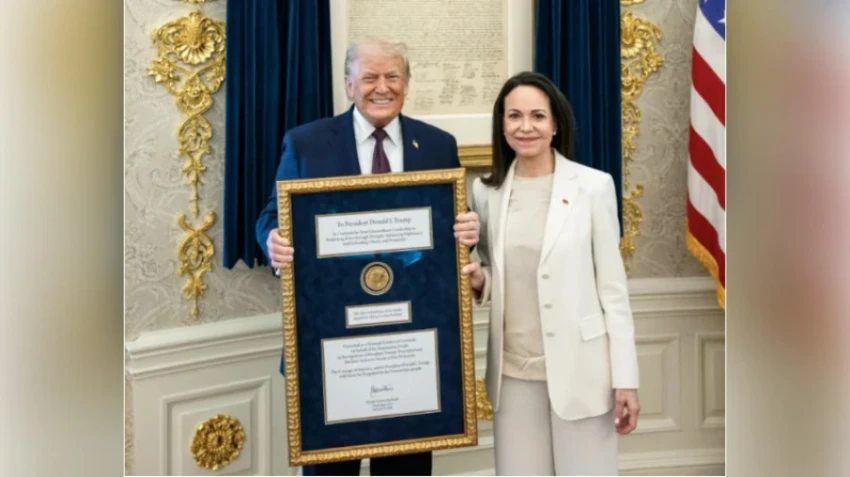
On January 3, when Maduro was under arrest in the U.S., Machado, a Nobel Peace Prize laureate, declared on X: “The hour of freedom has come.” But shortly after that, Trump stated that his administration would “govern the country until a safe and sensible transition of power is organized.” This statement led to a swift shift from joy to fear and uncertainty among Venezuelans, and even Trump’s meeting with Machado did not bring clarity.
What are the next steps for Venezuelans towards freedom? Will the U.S. act to restore the sovereignty of a people undermined by Maduro when he “stole” the 2024 presidential election from the legitimate winner, Edmundo González?
Machado previously reminded Americans: “We have an elected president, and we are ready to serve our people.” A few days later, the Vatican expressed support by publishing photos of her meeting with Pope Leo XIV after a private audience that had not been announced beforehand.
However, nearly two weeks after U.S. intervention in Caracas, it became clear that Trump decided to halt the development of democracy in Venezuela to preserve the regime. Although Venezuelans elected González with an alleged two-thirds of the votes, Trump seems intent on ignoring this mandate.
Even the Nobel Peace Prize awarded to Machado did not influence Trump. He appeared to take it as a personal affront. As reported by the Washington Post, “if she had refused the prize, saying she could not accept it from Trump, she would be president of Venezuela today.” This underscored suspicions that the U.S. may have forced Machado to leave the country—a step she long resisted to avoid hindering the overthrow of Maduro.
According to the Wall Street Journal, the CIA concluded that the Venezuelan opposition would not be able to effectively counter Chavista forces. Secretary of State Marco Rubio supported this position, noting that while Machado is “fantastic,” “the reality is that the overwhelming majority of the opposition is no longer in Venezuela.” The administration, he added, is focused on “urgent issues that require resolution.”
Rubio's plan for Venezuela consists of three phases, starting with a “stabilization” phase expected to last two to three months. During this period, the country will be governed by Maduro’s former vice president, Delcy Rodríguez, who has shown no intention of promoting a democratic process. Rodríguez's political future is also in question, given the influence of Maduro’s secret police chief, Diosdado Cabello, and Defense Minister Vladimir Padrino López, as well as her vulnerable position as a puppet of Trump.
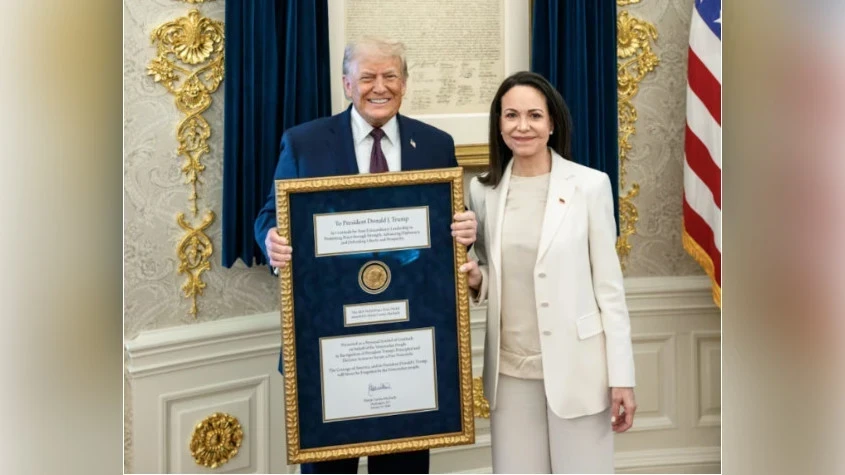
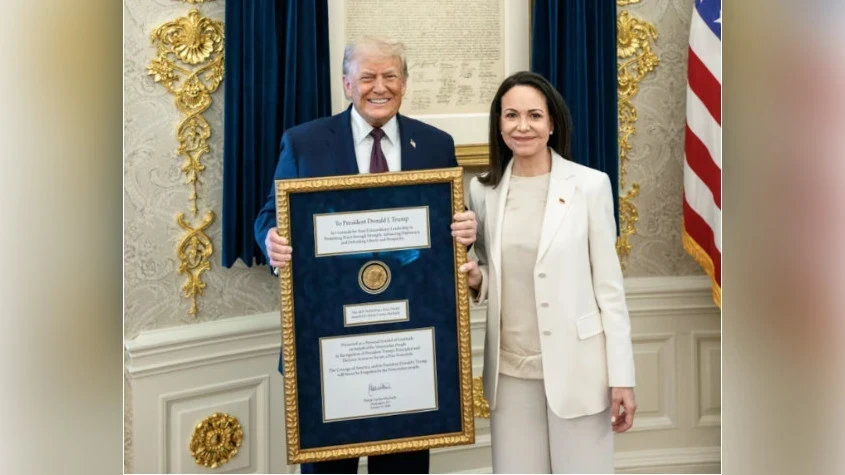
As noted by the Caracas Chronicles, this has led to a “delay in the transitional period.” Although Machado stated that her meeting with Trump at the White House went “great,” there is no evidence that it changed the overall dynamics. In an attempt to encourage Trump, she even handed him her Nobel Prize during her visit on January 15—a gesture that Trump gladly accepted, despite the Nobel Committee clearly stating that the prize is non-transferable. But no flattery can resolve the underlying issue: Trump does not support Machado because she is primarily focused on popular sovereignty rather than Trump’s plans for Venezuelan oil.
The Venezuelan opposition can no longer afford to indulge Trump’s vanity. Machado earned the Nobel Peace Prize for mobilizing Venezuelans both inside and outside the country over the past two years, and she needs to replicate that success if the opposition wants to have influence in the political transition process. As one commentator noted, the ability to organize nationwide protests is the “only tool” at Machado's disposal.
The opposition faces the task of mobilizing resistance without provoking violence from the secret police and its armed groups. The only demand that can pressure Rodríguez and Rubio while minimizing risks is the release of all political prisoners. Interestingly, this is the only issue on which Machado and the Trump administration agree after the overthrow of Maduro.
Returning to the streets is undoubtedly fraught with significant risks. However, well-planned, targeted, and coordinated protests can help the opposition regain influence, seize the initiative in the political agenda, and attract active support from world leaders beyond Trump. After all, ideologically, Machado has much more in common with European leaders like German Chancellor Friedrich Merz and Italian Prime Minister Giorgia Meloni than with Trump, who is perpetually focused on deals.
This proximity is not accidental. As a devout Catholic, Machado understands that Christian democracy has historically provided the moral and organizational foundations for Venezuela's democratic civil society. It is no surprise that the leader born in the U.S., whose values are closer to her own, does not live in the White House but in the Vatican. This week, Pope Leo publicly called on the international community to “respect the will of the Venezuelan people” and “protect the human rights and civil rights of all, ensuring a future of stability and harmony.”
Machado and Trump, on the other hand, cannot come to a consensus on values, both moral and political. Therefore, the Venezuelan opposition leader needs to return to the strategy that initially earned her international credibility. The time for pro-democratic forces in Venezuela to re-establish themselves and play a significant role in shaping the country’s political future is running out.