
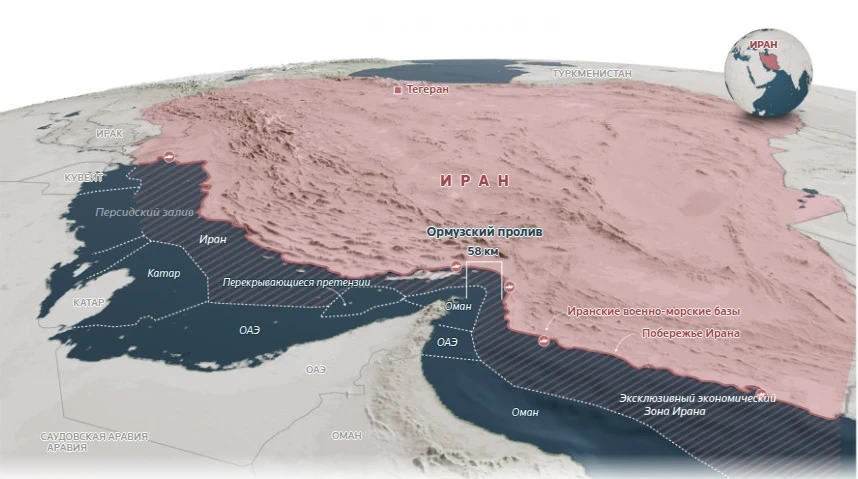
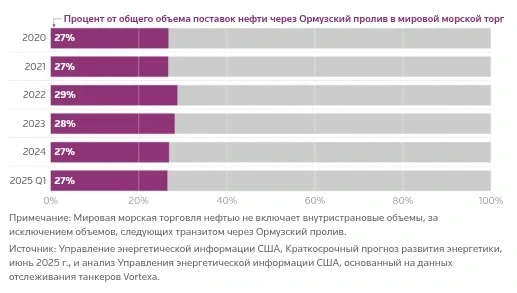
The Strait of Hormuz, linking Iran and Oman, is a key route for the transportation of oil and gas, accounting for about 20% of global supplies. However, recently, shipping in this area has come under threat due to the escalating conflict between the USA and Israel with Iran.
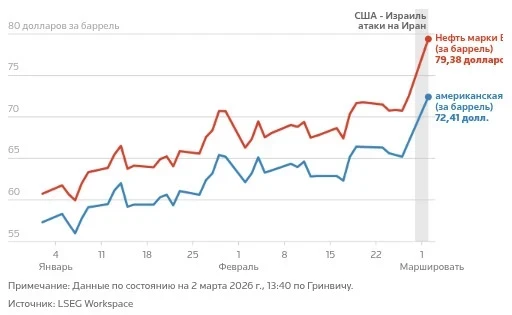
According to Reuters, recent large-scale military actions against Iran have led to a significant decrease in the reliability of transit through the strait, which has already affected market oil prices, causing them to rise sharply. Prices are expected to remain high in the coming days as investors closely monitor the situation in the region.
According to research by analysts from Vortexa, over 20 million barrels of oil, condensate, and fuel passed through the Strait of Hormuz daily last year. Major oil-exporting countries in the region, such as Saudi Arabia, Iran, the United Arab Emirates, Kuwait, and Iraq, rely on this route for supplies, primarily to Asia.
Additionally, Qatar, one of the leading global exporters of liquefied natural gas, also sends almost all of its LNG volumes through this strait.
Following recent attacks on vessels in the Strait of Hormuz, which occurred in response to Iran's actions against the USA and Israel, shipping in this strategically important area has virtually ceased. Many tankers, including major operators and oil companies, have temporarily suspended their operations in the region.
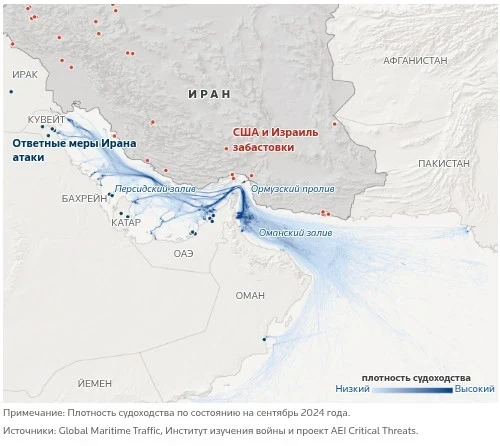
Some tanker owners reported suspending oil and liquefied gas shipments through the Strait of Hormuz due to recent attacks that damaged several vessels. One manager from a major trading company noted that their ships would remain in port for several days. Satellite data shows that tankers have piled up in ports such as Fujairah in the UAE, waiting for the situation to resolve.
Threat from Iran
Iran, for its part, has announced the possibility of closing the strait, which poses a real threat to international shipping. As a result of recent attacks that led to the damage of several tankers, the situation in the region has become even more tense.
In one incident, the tanker Stena Imperative, located in the Persian Gulf, was damaged by "airstrikes," resulting in the death of one worker. Another tanker, MKD VYOM, flagged under the Marshall Islands, was also attacked, leading to the death of a crew member.
Additionally, a bunkering tanker, Hercules Star, was also fired upon in the UAE area but successfully returned to port, and the crew remained safe.
Besides attacks on vessels, Iran may also use mines, which pose a significant threat to shipping in this narrow passage. According to estimates by American intelligence, Iran has up to 6,000 mines of various types, creating additional risks for navigation.
“The use of naval mines in such confined waters as the Strait of Hormuz poses a serious threat, especially in narrow corridors where the depth is shallow,” explained Scarlett Suarez, a senior analyst at the British company Dryad Global, which specializes in maritime risks and cybersecurity.
Although there has been no large-scale use of mines during the crisis, threats remain relevant and could lead to partial or targeted attacks on shipping in this area.


