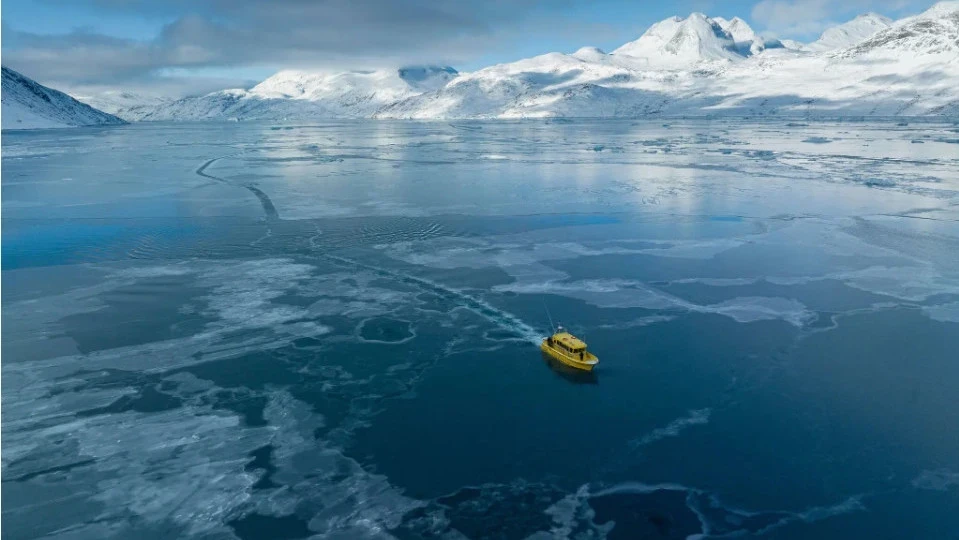
Greenland, the largest island in the world, is facing serious environmental challenges that affect billions of people. The extensive ice sheets of the island, covering about 2 million square kilometers, are rapidly melting, causing significant changes in the planet's climate stability.
The causes of this phenomenon lie in carbon dioxide emissions from the burning of fossil fuels. The Arctic is experiencing the greatest warming, at least twice as fast as other regions of the Earth.
With the opening of new trade routes and access to mineral resources necessary for the transition to clean energy, climate change is making the Arctic more attractive to international players. This circumstance has not gone unnoticed by President Trump.
John Conger, a former Pentagon official, noted that "Trump's obsession with Greenland confirms the reality of climate change," highlighting the importance of this issue.
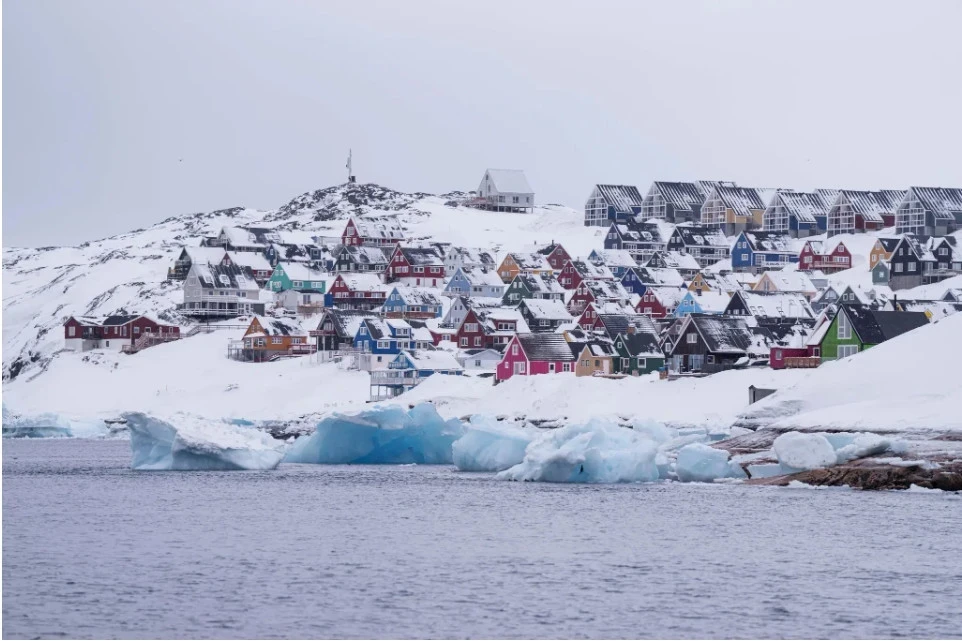
Last year in Nuuk. Recent studies show that the melting of the Greenland ice sheet contributes to the slowing of the ocean current network.
On Wednesday, representatives of the Trump administration, who had previously expressed ideas about seizing Greenland, plan to meet with delegations from Denmark and Greenland. It is important to note several key aspects regarding the global climate.
The Ice Melting Problem
According to research conducted by the Danish Meteorological Institute and published in Carbon Brief, Greenland lost 105 billion metric tons of ice over the 12 months ending August 31, 2025. This is not an accident — the island's ice sheet has been melting for nearly three decades.
From 1985 to 2022, the area of glaciers has shrunk by nearly 2,000 square miles. The melting of ice contributes to rising sea levels, threatening coastal regions around the world. Since 1993, sea levels have risen by 4 inches.
If all of Greenland's ice were to melt, which is unlikely in the next hundred years, it could lead to a sea level rise of 24 feet, increasing the risk of flooding during storms and high tides.
"Greenland is on the path to irreversible melting," says glaciologist Sarah Das.
With the loss of sea ice, the surface's reflectivity also decreases, leading to additional warming of the oceans. This, in turn, affects the circulation of ocean currents and can cause climate changes even in the Southern Hemisphere.
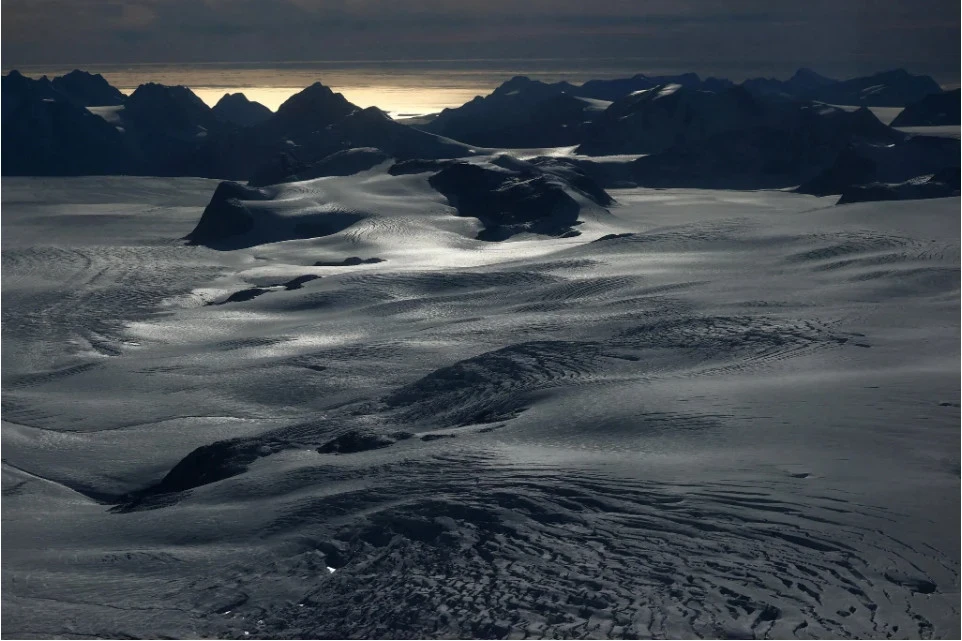
Most of Greenland's territory is covered by ice.
Mineral Resources of Greenland
Greenland, an autonomous part of Denmark, has extensive deposits of various minerals, such as graphite and rare earth elements, which are critical for the development of renewable energy technologies in the EU. The main resources needed for battery production are located in Greenland.
China is a leader in the graphite market, attracting interest from international investors, including Trump's allies, who are investing in mining projects in the region.
However, mining poses a complex challenge due to the abundance of ice, and the Greenland government has banned uranium mining, citing environmental risks.
Additionally, for the past 50 years, oil companies have attempted to develop oil in vulnerable Arctic waters off the coast of Greenland. However, in 2021, the government announced a halt to the issuance of oil exploration licenses due to climate and environmental considerations.
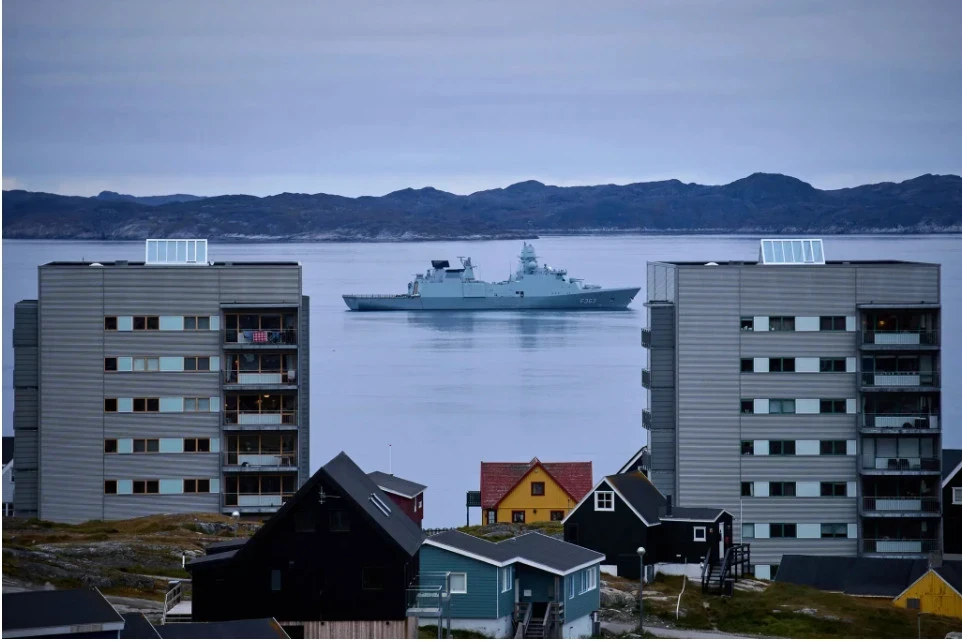
A Danish military ship during NATO exercises off the coast of Greenland in September. Greenland is a semi-autonomous territory of Denmark. Credit...
New Maritime Routes
Climate change is already creating difficulties for the local population of Greenland, as ice sheets shrink, making harbors shallow and damaging roads due to melting permafrost.
At the same time, the situation is opening up new maritime routes, such as the "Polar Silk Road," which China is actively using to shorten trade routes to Europe. This corridor along the northern coast of Russia is only accessible for a few months each year.
Ecologists warn of serious environmental consequences associated with increased shipping, including pollution from soot generated by using heavy fuel oil as ship fuel.
The prospect of a new maritime route has led to a race to build icebreakers, with Russia possessing the largest fleet, followed by several NATO countries, including Canada and Finland.
Conger noted that strengthening Washington's ties with NATO is becoming more relevant than a potential conflict with Denmark, a NATO ally, over Greenland. "The United States gains additional strength from NATO membership," he added.