
The agency notes that the country has a successful system for the identification and tracking of animals. All cattle, pigs, and horses are registered, receiving either ear tags or subcutaneous chips. Information about the owner, the place of keeping, and vaccinations is recorded in a unified electronic database.
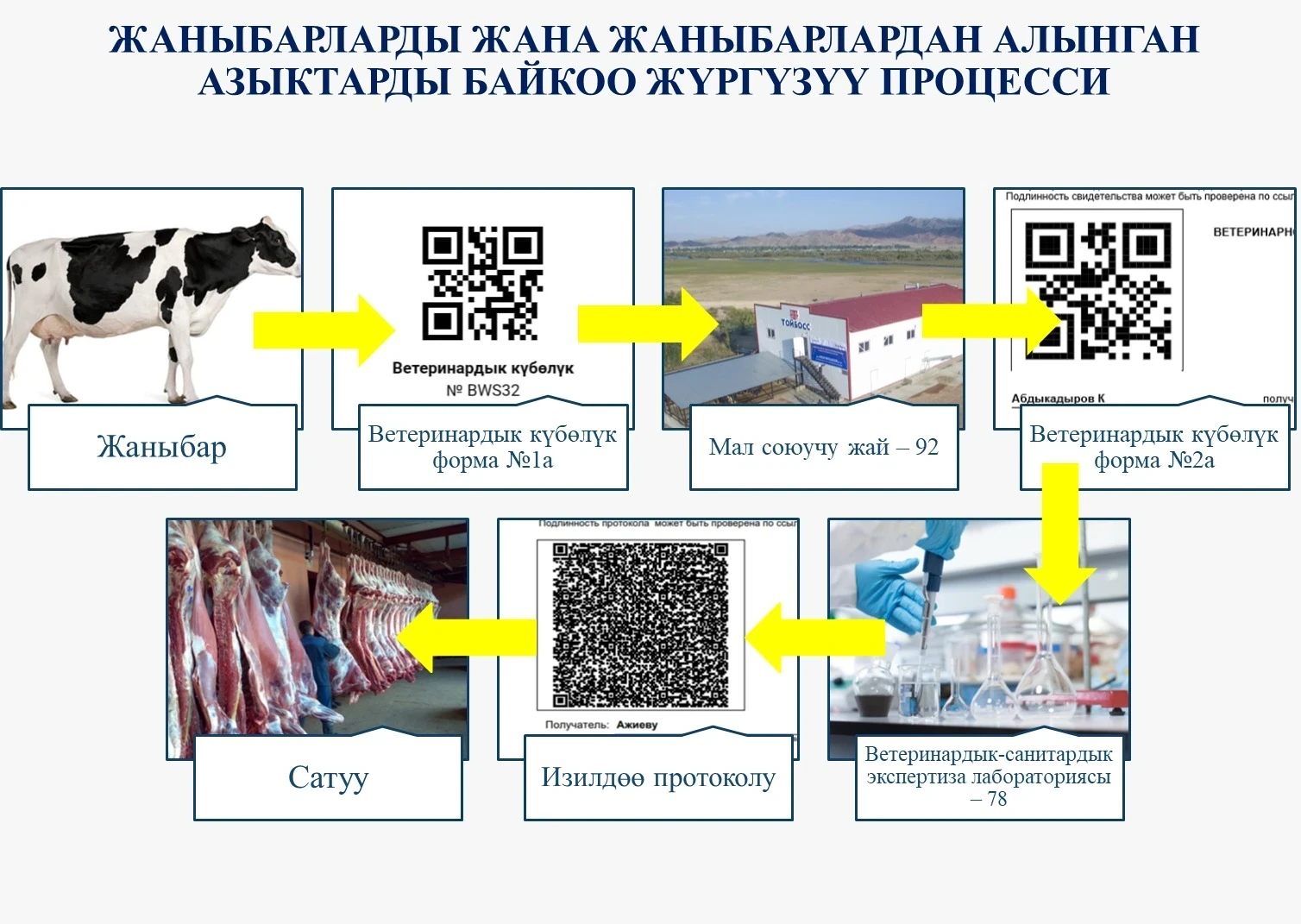
Photo: Veterinary Service. The path of meat products through the CIOJ system
Monitoring the condition of animals eliminates the possibility of sick livestock entering the market. Before slaughter, a veterinarian conducts a clinical examination and checks the vaccination history, after which an electronic certificate of form No. 1a with a QR code is issued. Only with this document can the animal be sent to a specialized slaughter point, where specialists recheck its condition and temperature. After slaughter, the meat undergoes veterinary and sanitary examination, receives a primary stamp, and a new electronic certificate of form No. 2.
Additional checks occur directly at the markets. Final examinations are conducted in veterinary and sanitary laboratories, after which an oval stamp is placed on the carcasses, and a test protocol with a QR code is issued. This document serves as the main guarantee of safety for consumers.
Veterinary service specialists urge citizens to be attentive and to purchase meat only at official trading points. Buyers have the right to request the test protocol from sellers and can independently scan the QR code on their smartphones to find out the date and place of slaughter, as well as the results of the tests.
At the same time, experts warn of the risks associated with purchasing meat in unregulated places or "from hand" in rural areas, as this may pose health risks due to the lack of an identification and tracking system.


