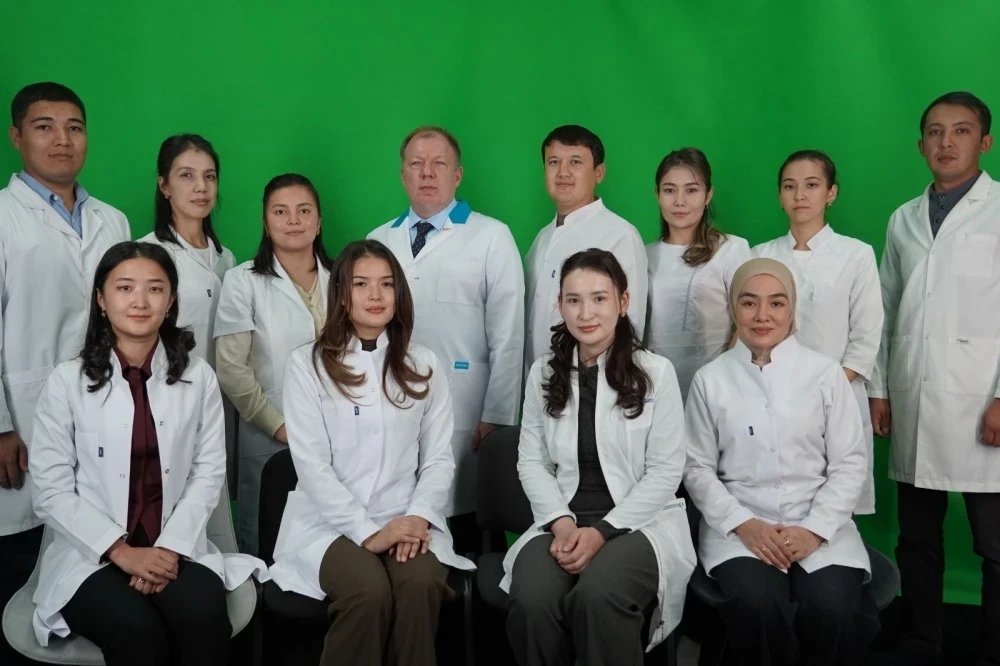
- I.V. Pershukov – professor, doctor of medical sciences and philosophy (PhD), head of the department of hospital therapy with a course in radiation diagnostics and oncology at Jalal-Abad State University, as well as a member of the American College of Cardiology (FACC) and the American Society of Cardiovascular Angiography and Interventions (FSCAI).
Text excerpt:
“One of the key aspects of modern oncology is the primary prevention of malignant neoplasms, aimed at reducing the incidence rate.
It is important to distinguish between individual measures and state initiatives for cancer prevention.
Individual Prevention
Individual prevention includes informing the population about cancer and adhering to a number of recommendations.
Considering risk factors, every person should keep the following aspects in mind:
- Monitor your diet. It is recommended to avoid salty and pickled products, as they contain nitrites and nitrates. Instead of canning, rapid freezing should be used, which, as studies have shown, has contributed to a decrease in stomach cancer incidence in the USA. Limit the intake of animal fats, smoked and fried foods, and increase the proportion of fresh vegetables and fruits in your diet. If fresh products are scarce, taking synthetic vitamins is beneficial. Clinical observations show that vitamins A and E reduce the frequency of gastric epithelium metaplasia and have a positive effect on precancerous changes in mucous membranes;
- Pay attention to the dangers of smoking, both active and passive. Quitting smoking can reduce the risk of cancer by 30%;
- Be aware of endocrine-metabolic disorders. Obesity and frequent abortions increase the risk of reproductive system cancer;
- Consider hereditary forms of cancer. In the case of “familial forms,” timely consultation with a doctor is recommended;
- Avoid excessive sun exposure;
- Maintain oral and genital hygiene;
- Limit the consumption of strong alcoholic beverages. Low-alcohol drinks, such as table wines, do not have such a negative impact.
Mass Prevention
State measures for the primary prevention of cancer include monitoring the content of carcinogenic and radioactive substances in water, food, air, and soil. The state must address environmental issues through the implementation of filters in enterprises that pollute the atmosphere, improving the efficiency of engines in vehicles, using environmentally friendly fuels, and eliminating occupational hazards in industries.
Early detection of malignant tumors diagnosed at initial stages can ensure recovery for 70-100% of patients.
The basis of early cancer diagnosis is screening. Its goal is to reduce mortality from oncological diseases through the active detection and treatment of preclinical forms of cancer. Each screening program should meet several criteria:
- The pathology must be significant from a public health perspective, with high incidence and mortality rates.
- The screening method must have high sensitivity, while specificity is less important.
- The method should be accessible to a wide population.
- Low cost and minimal invasiveness of the procedure are desirable.
- The results of screening should lead to a reduction in mortality from this pathology.
Considering these requirements, several oncological diseases have been selected for which it is advisable to develop screening programs. These include breast cancer, cervical cancer, stomach cancer, colorectal cancer, prostate cancer, and lung cancer.
However, there are objective barriers to the widespread implementation of screening for these forms of cancer.
In the Russian Federation, a screening program for breast cancer (BC) is being implemented, where mammography is used as the primary method. According to this program, all women aged 40 to 60 are screened with mammography every two years in one projection.
Nevertheless, there are shortcomings in this program. Studies in various countries have shown that the optimal age for mammography screening is 50-69 years, as the maximum number of cases occurs at ages 60-64. It is also recommended to conduct mammography annually and in two projections. For women aged 40-49, mammography can be performed every two years. The necessity of screening for women over 70 remains controversial. Research results show that in the 50-69 age group, screening leads to a 25% reduction in mortality from BC. Ultrasound examination (US) of the breasts is not recommended as a screening method and is only used for diagnostic clarification. The effectiveness of self-examination as a screening method has been studied but has not demonstrated a reduction in mortality compared to control groups. Therefore, self-examination should not replace regular mammograms, and all women practicing it should be recommended the same guidelines as others. In the USA, due to the development of screening, the diagnosis of localized forms of BC (Tis-2N0M0) is made in almost 90% of women, while in Russia this figure is only 30%.
Cervical cancer screening (CC) has been widespread in Scandinavia since the 1960s. Cytological examination of a smear from the cervix (Pap test) confirms its effectiveness in reducing mortality from this type of cancer. The frequency of testing also affects the effectiveness of screening. Studies show that the optimal interval between tests is once every three years, which leads to a 90% reduction in mortality. Increasing the frequency to once a year only provides a 1% increase. It should be noted that the five-year survival rate for advanced CC does not exceed 13%, while for localized forms it is 88%. Thus, colposcitoscopy should become a mandatory part of the state preventive program.
Stomach cancer screening using esophagogastroduodenoscopy (EGDS) has proven effective in Japan, where the five-year survival rate for early detection of stomach cancer reaches almost 100%. Survival at other stages does not exceed 40%, while in other developed countries this figure is less than 20%. However, replicating such results in other countries has not yet been achieved. In the USA, stomach cancer screening is being implemented, but research results are not yet known.
Colorectal cancer screening is conducted using fecal occult blood tests. The effectiveness of this method has been proven by numerous randomized studies showing a 33% reduction in mortality with annual testing in individuals over 50 years old. Currently, studies are being conducted on the use of colonoscopy as a screening method, but results have not yet been published. Nevertheless, many insurance companies in the USA refuse to renew contracts with individuals over 50 who have not undergone colonoscopy.
For lung cancer screening, previously, X-rays and cytological examination of sputum were used. However, randomized studies have not confirmed a reduction in lung cancer mortality in experimental groups. Therefore, fluorography, conducted in the Russian Federation in certain groups, is only important for tuberculosis control and does not improve early lung cancer diagnosis rates. Currently, the method of low-dose spiral computed tomography (CT) is being tested as a screening tool. Using this method, lung cancer was diagnosed at early stages in 80% of patients in Japan, although the cost of this method is a significant factor.
The prostate-specific antigen (PSA) test for men over 50 is a widely accepted screening method for prostate cancer diagnosis. Since the early 1980s, with the introduction of this method in the USA and Europe, the incidence of prostate cancer has significantly increased, but data on mortality reduction is lacking. The increase in incidence is explained by the fact that screening detects latent forms of cancer that do not manifest clinically, do not progress, and do not lead to death. Such a condition does not affect the quality and duration of the patient’s life, and aggressive treatment may even worsen their condition. Therefore, many experts recommend a watchful waiting strategy, where patients undergo regular examinations, and treatment is initiated only with disease progression.
Thus, the effectiveness of screening is confirmed by the following data:
- BC through mammography in women aged 50-69;
- Precancerous conditions and CC using colposcitoscopy;
- Precancerous conditions and colorectal cancer using fecal occult blood tests.
The effectiveness of other screening methods is still under study:
- Prostate cancer using the PSA test;
- BC in women under 50;
- Stomach cancer using EGDS;
- Lung cancer using spiral CT;
- Some other methods.
Breast self-examination and chest X-rays have not demonstrated effectiveness as screening methods for cancer diagnosis.
In addition to developing screening programs, to improve the quality of early diagnosis and reduce mortality from oncological diseases, it is necessary to ensure the training of specialists involved in the programs, wide population coverage (including personal invitations), active media promotion, and monitoring all stages of the program with an assessment of its effectiveness. When conducting national screening, involving 60% of the target population is considered minimally effective. In Scandinavian countries, the coverage of breast and cervical cancer screening reaches up to 90%, while in Russia this figure does not exceed 20%.
The key role in the early diagnosis of malignant tumors is played by the “oncological vigilance” of the population and the education of doctors, especially at the primary level. Active promotion of knowledge about preventive examinations and early symptoms of malignant diseases is necessary. Unfortunately, the skills of medical personnel are often insufficient, leading to a significant number of advanced cases where the disease is diagnosed for the first time. In recent years, the widespread adoption of alternative treatment methods has also contributed to late diagnosis and unsatisfactory therapy outcomes, as they are not always carried out by qualified oncology specialists and sometimes even by individuals without medical education.”