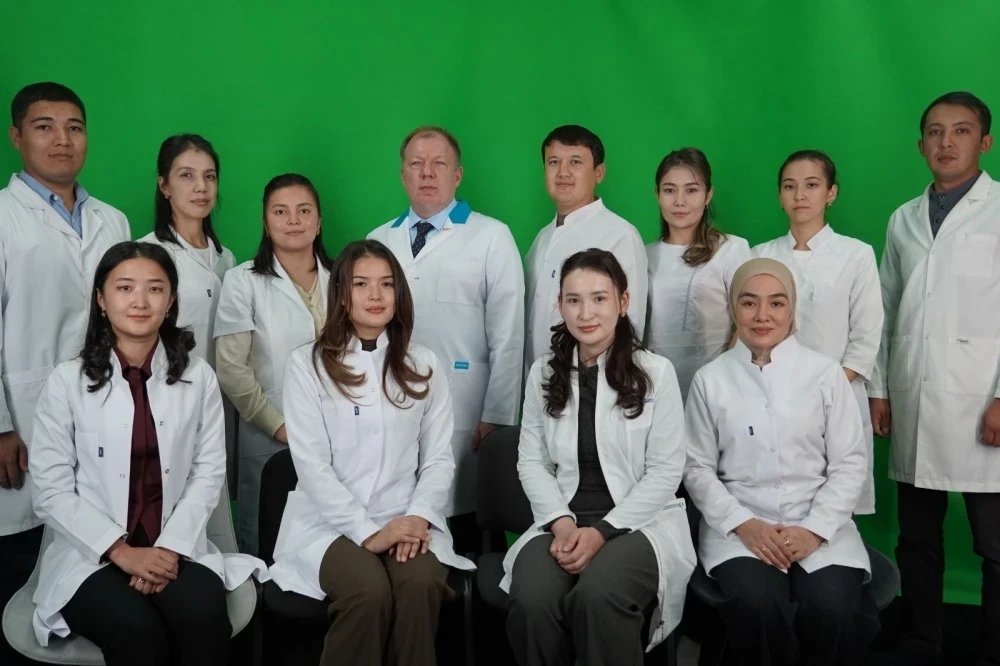
- Igor Vladimirovich Pershukov – professor, doctor of medical sciences, PhD, head of the Department of Hospital Therapy with a course in Radiation Diagnostics and Oncology at Jalal-Abad State University, as well as a fellow of the American College of Cardiology (FACC) and the American Society of Cardiovascular Angiography and Interventions (FSCAI).
We present to your attention the text:
“At the dawn of the 20th century, doctors had only a scalpel and radiation therapy methods for treating tumors. In the middle of the century, pharmacological approaches (chemotherapy, hormone therapy) began to be applied. By the end of the 20th century, active development was seen in biotherapy, cryogenic and laser treatments, as well as photodynamic therapy.
1. Surgical Interventions
Among the methods for treating malignant tumors, surgery occupies an important place. Thanks to advancements in anesthesiology, surgical operations have reached new heights: today, complex combined surgeries involving the resection of multiple organs are possible.
In the last 15 years, surgeries on the brain, spine, and mediastinum have been actively applied in oncology. For example, the N.N. Blokhin Russian Cancer Research Center has successfully performed over 100 nephrectomies in patients with kidney cancer while simultaneously removing a thrombus from the inferior vena cava. The indications for surgical treatment of patients with concomitant cardiovascular diseases are expanding, allowing for coronary bypass surgeries to be performed simultaneously with operations on malignant tumors.
The future of surgery in oncology is linked to the development of organ-preserving surgeries for tumors that are sensitive to drug and radiation therapy, as well as the rehabilitation of patients after extensive surgeries.
Organ-preserving surgeries are performed, for example, in breast cancer and malignant tumors of the bones. Endoprosthetics and breast plastic surgery are becoming increasingly common, and methods for endo- and ecto-prosthetics after traumatic surgeries are also being developed.
2. Radiation Therapy
Radiation therapy, used as primary, combined, or palliative treatment, covers almost 70% of oncology patients. The effectiveness of ionizing radiation is enhanced by experimental methods of controlling radiosensitivity in both normal and tumor cells. Innovative methods of radiomodification include irradiation with large fractions, fractionation of daily doses, hyperthermia, thermoradiotherapy, hyperglycemia, hypoxic radiotherapy, as well as contact methods of radiation therapy.
2a. Proton Therapy
Proton therapy, although less common, is a modern method of radiation therapy that uses proton beams (hydrogen nuclei) instead of traditional X-rays. This allows for more precise targeting of the tumor while minimizing damage to healthy tissues.
Mechanism of Action of Proton Therapy
The unique property of protons lies in the Bragg effect, which allows the maximum energy of radiation to be concentrated at a specified point at a certain depth, after which the energy sharply decreases to zero. This allows for precise adjustment of the proton beam so that it reaches the tumor and stops within it, without affecting the surrounding healthy tissues. This is especially critical when treating tumors located near vital organs (brain, spine, eyes).
Modern devices often use the "pencil beam scanning" (PBS) method, which provides high precision of irradiation by “shading” the tumor layer by layer.
Advantages of Proton Therapy
- Minimal impact on healthy tissues. Side effects are less pronounced compared to traditional radiation therapy and chemotherapy.
- Effectiveness in complex localizations. The method is suitable for tumors located near critically important organs or in hard-to-reach places.
- Reduced risk of secondary tumors. This is especially important in pediatric oncology, as proton therapy decreases the likelihood of developing new malignant formations in the future.
- Applicability in children and weakened patients. The method helps maintain quality of life and prevent growth and cognitive function disorders when irradiating the brain.
- Possibility of a repeat course of radiation therapy in case of recurrences.
Indications for Proton Therapy
Proton therapy is used for:
- tumors of the brain and central nervous system (including chordoma, chondrosarcoma, malignant meningioma);
- tumors of the head and neck (cancer of the nasal cavity, nasopharynx, larynx, trachea, etc.);
- neoplasms near critically important structures (brain stem, optic nerves, etc.);
- spinal and pelvic sarcomas;
- lung, breast, liver, prostate cancer;
- eye diseases (uveal melanoma, choroidal melanoma);
- tumors in children.
- Contraindications
- severe patient condition (ECOG III–IV);
- active phase of tuberculosis;
- concomitant pathology in the stage of decompensation;
- acute emergency conditions (myocardial infarction, stroke);
- sepsis;
- tumors in the stage of decay with a risk of bleeding;
- pregnancy;
- some mental disorders (schizophrenia, epilepsy with pronounced convulsive syndrome);
- general severe condition or activity on the Karnofsky scale of less than 60%.
Where to Receive Treatment
Proton therapy is available in specialized centers with proton accelerators. In Russia, such centers are located, for example, in Obninsk (A.F. Tsyba MRNC) and Dimitrovgrad (Federal Scientific Clinical Center for Medical Radiology and Oncology of the FMBA of Russia), as well as in clinics in the Czech Republic, Spain, France, Germany, South Korea, and other countries.
Important: the appointment of proton therapy is made by an oncologist after a detailed assessment of the patient's condition and all indications.
2b. Carbon Therapy
An even more advanced, albeit less common, method is carbon therapy, which uses carbon ions. This hadron therapy is considered more progressive and safer compared to traditional photon therapy, as it allows for more precise targeting of the tumor while minimizing damage to healthy tissues.
Principle of Action
Carbon ions have a high ionizing ability, 36 times greater than that of protons. When irradiated, they transfer most of their energy at the Bragg peak — at the end of their path in the tissues. This allows for maximum concentration of the radiation dose on the tumor and significantly reduces it in the surrounding healthy tissues.
Unlike gamma radiation, tissues located behind the tumor are not damaged, as all energy from the ions is distributed only within the neoplasm.
Advantages of Carbon Therapy
This method is effective against radioresistant tumors. Carbon ions successfully combat tumors resistant to conventional radiation methods or proton therapy, which is especially relevant for hard-to-reach tumors in the brain and in cases of oxygen deficiency in tumor tissues.
Due to the high effectiveness of carbon therapy, it is possible to increase the radiation dose in one session, reducing the total number of required sessions.
The targeted impact reduces the risk of damage to healthy tissues, which is particularly important when treating children and patients with vital organs near the tumor.
Areas of Application
Carbon therapy has been studied for the treatment of various malignant neoplasms, including:
- intracranial tumors;
- malignant neoplasms of the head and neck;
- primary and metastatic lung cancer;
- gastrointestinal tumors;
- prostate and urogenital cancer;
- sarcomas;
- malignant skin neoplasms;
- breast cancer;
- gynecological malignancies;
- oncological diseases in children.
The method has also been applied to recurrent diseases.
Features of Therapy Administration
Carbon therapy can be carried out in two ways:
Passive scattering. A collimator is used to form the beam in the lateral direction and a range compensator to form the beam distally.
Active scanning. A narrow “pencil” beam is used, which allows avoiding the use of a collimator or compensator.
Limitations and Challenges
High cost. The construction of carbon therapy centers and the treatment itself are more expensive than traditional photon therapy.
Technological complexity. Complex equipment and high qualifications of medical personnel are required for accurate calculations.
Limited availability. As of 2020, there were only 13 carbon therapy centers in the world, most of which are located in Japan.
Prospects
Research is underway on the possibilities of combining carbon therapy with cancer immunotherapy, as well as the potential of FLASH therapy — ultra-high doses of radiation delivered in milliseconds.
3. Drug Methods
The development of drug methods (chemotherapy, hormone therapy, immunotherapy) has been particularly active in recent years. Oncologists have access to more than 100 antitumor drugs, hormones, anti-hormones, enzyme inhibitors, and agents that suppress angiogenesis in tumors. Some tumors (for example, hemoblastoses, malignant testicular tumors, choriocarcinoma) can be cured exclusively with drug methods. For instance, one of the most aggressive malignant tumors in women – uterine choriocarcinoma, which previously led to fatal outcomes, is now successfully treated: more than 80% of women with lung metastases after polychemotherapy show no signs of disease five years later. It is important to note that pregnancy and childbirth are possible three years after treatment completion. At the N.N. Blokhin Cancer Research Center in Russia, more than 150 healthy children have been registered, born to mothers who recovered from choriocarcinoma.
There are also oncological diseases (breast cancer, small cell lung cancer, osteosarcoma, Ewing's sarcoma, Wilms' tumor, ovarian cancer, etc.) for which the use of antitumor drugs in treatment is mandatory.
Most human tumors still respond poorly to drug methods. Nevertheless, recent research is expanding the possibilities of drug therapy through the use of new antitumor drugs and the development of new treatment regimens. Modern approaches to biotherapy and targeted cancer therapy (vaccines, cytokines, growth factors, enzyme inhibitors, monoclonal antibodies, agents that suppress angiogenesis, gene-engineering therapy) continue to evolve. To enhance the effectiveness of drug treatment for malignant neoplasms, it is also important to study the mechanisms of drug resistance. Overcoming drug resistance by suppressing the synthesis of protective proteins in tumor cells and normalizing the process of apoptosis can improve the outcomes of drug therapy.
4. Physical Impact Methods
Methods of physical impact on tumors have been actively developed in recent years. The effectiveness of cryogenic treatment for skin tumors, lips, and mucous membranes of the mouth has been substantiated. Laser therapy and photodynamic therapy are being applied. Radiofrequency ablation of tumors and focused high-intensity ultrasound are becoming increasingly common methods in clinical practice.”