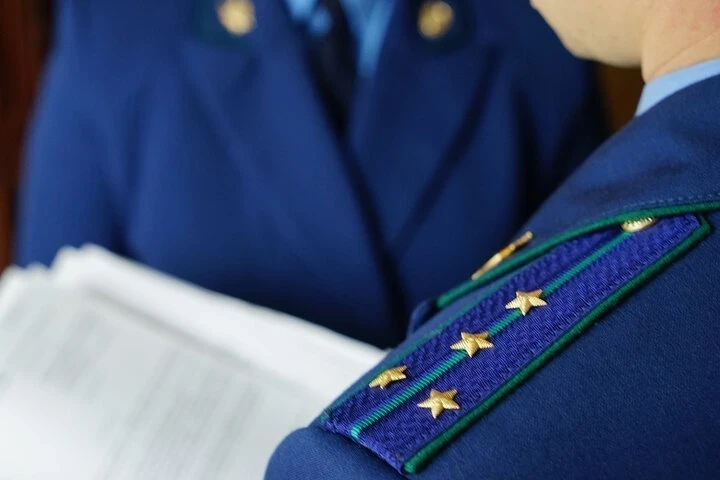
At a meeting of the Jogorku Kenesh committee, a draft law was discussed that would deprive prosecutors of the right to wear epaulettes and turn them into civil servants. This initiative, proposed by the GKNB, has met with sharp disagreement within the prosecutor's office.
Deputy Attorney General Umutkan Konkubaeva noted that behind the seemingly technical changes lies an attempt to weaken the status of the prosecutor's office, which, according to the Constitution, is an important element of the system of checks and balances. She emphasized that the prosecutor's office oversees the Ministry of Internal Affairs, the GKNB, and the State Service for Execution of Sentences, where military ranks are retained. Transitioning prosecutors to the status of civil servants would significantly reduce their influence over these agencies.
Konkubaeva emphasized: "The prosecutor's office is not just a servicing structure. It plays a key role in ensuring the stability of state governance and law and order. This initiative could threaten the institutional independence of the prosecutor's office and reduce the protection of citizens' rights."
However, the question of the real independence of the prosecutor's office has drawn criticism from lawyers. Lawyer Aliya Turumbekova expressed in her blog that the prosecutor's office itself has created conditions for doubts about its status. In her opinion, this structure has effectively lost its independence even before the reforms began.
She noted: "The situation has reached absurdity, where complaints about specific agencies are sent back to the same agencies without any investigation into the actions being complained about. This speaks to professional degradation and a complete loss of independence. The prosecutor's office has become a dependent body, and you have brought this upon yourselves by voluntarily relinquishing your key role and responsibility."
It should be noted that the initiator of the draft law is the GKNB. The authors of the document propose to regulate the use of five-pointed stars on epaulettes, which, in their opinion, are currently worn by civil servants performing "purely civil functions." The reform suggests replacing special ranks with class ranks for employees of the prosecutor's office (excluding military), customs, and fiscal authorities. In particular, it is planned to transition the administrative block of customs to the status of civil servants to eliminate the unjustified use of military symbolism. A final decision on these innovations will be made in parliament in the coming days.