- Kyrgyzstan has a huge hydropower potential of 142.5 billion kWh per year, making it a leader in Central Asia. However, only 13% of this potential is utilized. It resembles a situation where a person with gold in their pocket asks others for money for bread. This is what Kyrgyzstan's energy sector looks like.
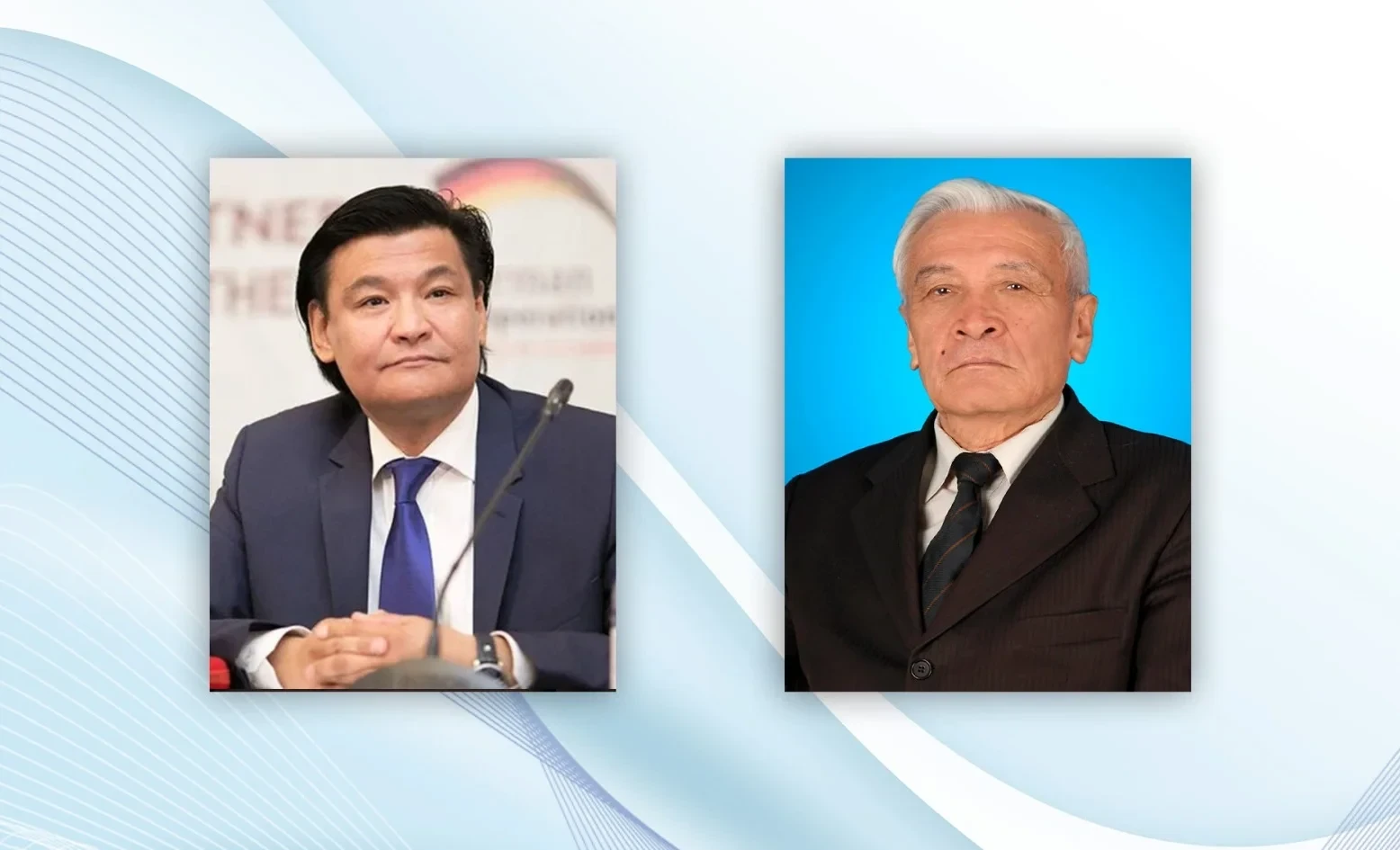
- Kubatbek Kalievich, what is behind this paradox?
- It all comes down to tariffs. In 2024, the average electricity price for industrial enterprises in Kyrgyzstan was 4.35 cents per kWh, while in Kazakhstan it was 7.5 cents, in Russia 7.75, and in China up to 8.75 cents. Investors will not invest in new power plants if the selling price of electricity is lower than their construction costs. The math in this situation is not in our favor.
— But low tariffs are beneficial for the population; this is a social aspect...
Kubatbek Rakhimov: This is just an illusion. Imagine a store that sells bread below cost. Customers will be happy until the store closes. In 2024, the cost of electricity was 2.42 soms per kWh, while the average tariff was only 2.11 soms. The difference of 0.31 soms per kWh with an annual consumption of 15 billion kWh leads to hidden losses of about 450 million dollars a year. The government covers these losses, meaning we all do.
Kalyi Rakhimov: And it's not just about money — it's about equipment wear and tear. The Kurpsai Hydropower Plant was commissioned in 1981, and its normative service life expired in 2011. The Toktogul Hydropower Plant has also been operating since Soviet times. We continue to use old equipment instead of developing new ones. This is not savings — it's capital destruction.
- You proposed the concept of a "tariff basket." Can you explain it in simple terms?
Kubatbek Rakhimov: We can use a currency management model where the currency is tied to a basket of reserve currencies. Similarly, the "tariff basket" implies a weighted average of the tariffs of our neighbors: Kazakhstan, Russia, China, Uzbekistan, and Tajikistan. This would give a benchmark of about 7.6 cents per kWh. Our tariff should not deviate downwards by more than 20-25%, considering the advantages of hydropower.
- How does trade with neighbors affect our tariffs?
Kubatbek Rakhimov: The connection is direct. If our electricity is cheaper, foreign investors will set up energy-intensive production here, consuming our resources and exporting profits. For example, a plant with a capacity of 100 MW can save up to 21 million dollars a year due to our tariffs compared to Kazakhstan. Over 20 years, this savings would amount to 420 million. This is our natural rent that we give to foreign businesses.
Kalyi Rakhimov: Additionally, low tariffs encourage irrational consumption — for example, in mining and using outdated equipment. This increases the load on electrical networks, while funding for their development is lacking. We find ourselves in a vicious circle.
— Raising tariffs could hit the poor. How can we avoid social upheaval during the reform?
Kubatbek Rakhimov: This is an important question. Currently, subsidies are not targeted: wealthy families receive more cheap electricity than the poor. We need to raise the tariff but implement targeted protection. The first 100-150 kWh per month should remain at a preferential tariff for everyone, while everything above that should be at market price. The "Үй-булого комок" program already exists and needs development, not populism.
Kalyi Rakhimov: A cheap tariff today will lead to expensive consequences tomorrow. Emergency outages cost the economy much more than raising tariffs: enterprises stop, goods spoil, people freeze. True concern for the poor is creating a reliable energy system, not the illusion of affordable light.
— If we have the advantage of cheap hydropower, why can't we maintain low tariffs?
Kalyi Rakhimov: This advantage is real, but only for existing and depreciated stations. The construction of "Kambar-Ata-1" with a capacity of 1860 MW will cost 5-7 billion dollars. No bank will provide a loan if the selling price of electricity is 4 cents per kWh.
Kubatbek Rakhimov: The normative cost of a new hydropower plant is 8.5-11 cents, a solar power plant is 5-6.5 cents, and a thermal power plant at Kara-Keche is 5.5-7.5 cents. All these figures are above current tariffs. Without raising them, no project can be profitable. As a result, either projects are not implemented, or their implementation is delayed for many years, which we are currently observing.
— The documentation for the Upper Naryn Cascade is 80% ready. Why has the project been frozen since 2016?
Kalyi Rakhimov: We could not reach an agreement with the investor. The agreement with RusHydro was terminated, resulting in an arbitration process in The Hague with compensation of about 37 million dollars. The tender for a new investor did not take place, and the project with a capacity of 237.7 MW producing 942 million kWh per year remains frozen. At the same time, we continue to import billions of kWh from Russia and Kazakhstan.
Kubatbek Rakhimov: If the cascade operated under the "tariff basket" concept, the annual revenue would be about 72 million dollars. Over 20 years, that would be 1.4 billion. This is unfulfilled national wealth. A new investor will not come until tariffs ensure profitability. This is not politics — it's math.
— CASA-1000 is a project for exporting to Afghanistan and Pakistan. How is this related to tariffs?
Kalyi Rakhimov: CASA-1000 implies the export of up to 1300 MW of summer surplus hydropower. The project includes a 500 kV Datka–Hodjent line of 477 km, a converter station, and a line to Pakistan of 750 km. The project cost is 1.16-1.2 billion dollars, financed by the World Bank and EBRD. Reconstruction of the Kurpsai Hydropower Plant is required for participation — increasing capacity from 800 to 960 MW for 150 million dollars.
Kubatbek Rakhimov: The key point: Pakistan and Afghanistan are ready to pay market prices for our summer megawatts. The export tariff under CASA-1000 exceeds our subsidized domestic tariff. The market clearly shows that our electricity is worth more than we sell it domestically. This is the best confirmation that current tariffs are undervalued.
— How can we raise tariffs without provoking social upheaval?
Kubatbek Rakhimov: Three main principles: gradualness, transparency, and targeting. Gradual — the government already has a plan for tariff growth until 2035, and it must be adhered to without freezes in the election year. Transparency — each increase must be justified by specific projects. People accept price increases when they understand what they are paying for. Targeting — preferential tariffs for low-income individuals, not cheap electricity for everyone.
Kalyi Rakhimov: Two main technical priorities. The first is reducing losses in the networks from 15% to 11-12% — this is equivalent to virtually introducing about 600 MW without building new stations. The second is the reconstruction of existing hydropower plants. The Toktogul Hydropower Plant added 240 MW by replacing units, which is faster and cheaper than new construction.
— How are tariffs related to the EAEU?
Kubatbek Rakhimov: The EAEU agreement implies the creation of a common electricity market, which requires a unified tariff policy. The "tariff basket" concept is aimed precisely at this. Our tariffs must be comparable to those of our neighbors. We cannot keep tariffs half as low as Kazakhstan's and remain an equal participant in the common market. It is better to act consciously and on our terms.
— What will Kyrgyzstan's energy sector look like in ten years if everything goes well?
Kalyi Rakhimov: Kyrgyzstan will become an exporting country. By 2035, consumption will grow to 29.7 billion kWh. If we commission "Kambar-Ata," a 1200 MW thermal power plant at Kara-Keche, and also develop solar and wind sources, we will close the deficit and move to export. The energy sector could become the second most significant export sector after gold. However, this is only possible with the right tariff policy; otherwise, we will be left with beautiful mountains and dark apartments.
Kubatbek Rakhimov: Kyrgyzstan can become a "green hub" of Central Asia. We have hydropower, solar, and wind resources — everything the world needs in the transition to sustainable energy sources. The "tariff basket" concept, as a legally enshrined principle, will signal the market: we have a predictable, economically justified policy. Attract investments, build, and earn, and we will also benefit. Cheap electricity is just an illusion. A fair tariff is the real path to development.