As of today, electricity tariffs for households in Kyrgyzstan continue to remain socially oriented. For many years, they have been below cost, which has led to the necessity of financing the difference from the state budget, creating financial problems in the energy sector.
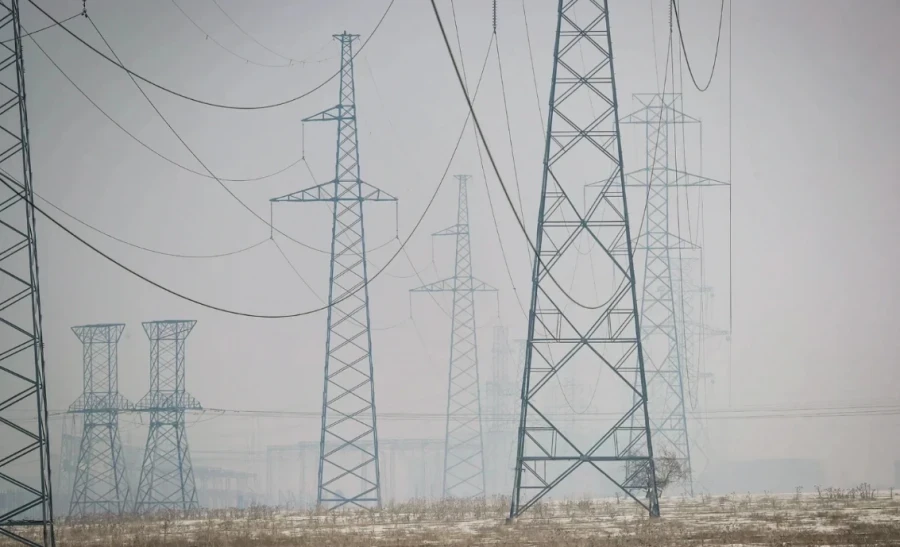
In recent years, significant changes have been taking place in this area. Progress has been particularly noticeable since the adjustment of the tariff policy last year — active measures to update infrastructure and strengthen the technical base have accelerated. Currently, electricity is perceived not only as a service but also as a foundation for the country's economic security. The Ministry of Energy of the Kyrgyz Republic reports that the modernization of electrical networks has become a priority direction. In the regions, substations have been updated, outdated transformers have been replaced, and automated control systems are being implemented, which helps reduce the number of emergency outages. This has already led to an increase in the reliability of electricity supply in several areas.
Additionally, to reduce technical losses, modern meters are being actively introduced, and digital control mechanisms are being expanded. Experts note that such measures not only promote more efficient electricity consumption but also ensure transparency in the functioning of the entire system.
According to the National Electric Network of Kyrgyzstan, a significant amount of funds was invested last year in updating production equipment and major repairs. The reconstruction of several strategically important facilities has improved the reliability of electricity production and reduced the number of emergency situations.
These achievements have been made possible by changes in the tariff policy. From May 1, 2025, the tariff for the population increased from 1.11 som to 1.37 som per kWh, which is an increase of 23.8%. This increase did not create a critical burden on family budgets but provided additional resources for the modernization of the sector.
Even this modest increase in revenue has allowed the energy sector to implement large-scale investment and technical projects.
Modernization of the electrical grid infrastructure
As part of the new tariff policy, large-scale modernization has been carried out, including:
- replacement of 74 power transformers, adding +690 MVA of capacity;
- installation of 645 new transformer substations;
- updating of 910 km of overhead power lines;
- installation of 500 thousand modern digital meters.
The installed capacity of the largest hydroelectric power stations has also been increased:
- Toktogul HPP — from 1200 MW to 1440 MW;
- At-Bashinsky HPP — from 40 MW to 45.6 MW;
- reconstruction work continues at the Uch-Kurgan HPP.
Social aspects
In Kyrgyzstan, 190 thousand subscribers living in mountainous regions benefit from an unlimited tariff of 1.37 som per kWh. According to the social norm, more than 43 thousand subscribers pay for up to 700 kWh per month at 0.50 som, and any excess is charged at 2.60 som. In the Toktogul district and the city of Kara-Kul, preferential tariffs apply: up to 150 kWh — 0.22 som, thereafter — 1.37 som.
Comparison of tariffs in the region
Compared to neighboring countries, tariffs in Kyrgyzstan remain among the most affordable:
- Kyrgyzstan — 1.37 som/kWh (≈1.6 cents USD);
- Kazakhstan — 25–32 tenge/kWh (≈4.31–5.54 som);
- Uzbekistan — 600–1000 sums/kWh (≈4.31–7.30 som);
- Tajikistan — 30.75–35.36 dirams/kWh (≈3.16–3.60 som);
- Armenia — 36.48–46.48 drams/kWh (≈2.78–10.64 som).
Thus, the tariff model of Kyrgyzstan allows for maintaining social balance while directing resources towards infrastructure renewal.
Increase in consumption and new challenges
Every year, hundreds of new enterprises are opened and modern residential complexes are built in the country, increasing the load on the energy system. In 2025, 36 thousand new subscribers were connected. From 2022 to 2025, their total number increased by 96,975. Electricity consumption in 2025 reached 19,094 kWh (compared to 18,234 kWh in 2024).
Goals of the tariff policy
The energy system must be self-sufficient. The long-term retention of tariffs below economically justified levels has led to infrastructure wear and tear. The main goal of the reform is to ensure the financial stability of the sector, which will allow:
- systematically update electrical networks;
- introduce new capacities;
- develop "green" and renewable energy sources;
- create stable and clear conditions for investors.
Investments in energy are the foundation for long-term economic growth. Without reliable energy supply, full development of industry, small and medium-sized businesses, and the agricultural sector is impossible.
Priorities until 2030
By 2030, it is planned to implement strategic directions:
- development of green energy (solar and wind projects);
- expansion of hydroelectric potential (construction of small and medium-sized HPPs);
- digitization and full automation of electricity distribution;
- formation of an energy-saving culture.
These measures will strengthen the country's energy independence and create the prerequisites for forming a regional energy hub. Modern steps in the energy sector are the foundation for sustainable development in the future.