According to human rights activists, Iran intends to permanently cut off access to the global internet, providing it only to those who have passed the regime's verification, reports The Guardian.
As reported by the organization Filterwatch, which monitors internet censorship in Iran, there is a plan that implies access to the international internet will become a "state privilege." This conclusion is based on data obtained from several sources within the country.
Government representatives and state media have already begun signaling that this change will be permanent, claiming that after 2026, there will be no return to unrestricted access.
According to the plan, only those Iranians who have access to classified information or have passed government verification will receive access to a filtered version of the internet, said Amir Rashidi, head of Filterwatch. Other citizens will be limited to access only to the national internet network, which is isolated from the global internet.
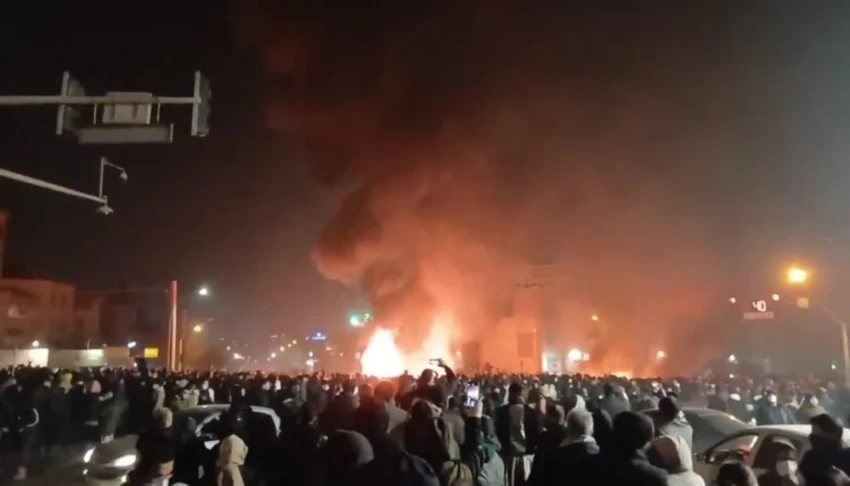
Since January 8, Iran has been experiencing an internet shutdown that began after twelve days of protests against the government, during which thousands of people died, although demonstrations seem to have begun to quiet under the pressure of brutal repression.
The current internet shutdowns are among the largest in the country's history and have lasted longer than similar measures in Egypt in 2011. An Iranian official stated that the international internet would not be available at least until Nowruz, which is celebrated on March 20.
A former U.S. State Department official specializing in internet censorship noted that the idea of permanently disconnecting Iran from the global internet seems "plausible and concerning," although it would require significant costs.
"It could happen, but the economic and cultural consequences would likely be enormous, and the authorities may overestimate their capabilities," he added.
Rashidi noted that "the authorities seem satisfied with the current level of internet control and believe that the shutdown has helped them cope with the situation."
The current internet shutdown in Iran is the result of 16 years of efforts to strengthen the regime's control over the online space. One element of this strategy is a complex system of filtering internet traffic that allows only selected users to access the global network, while others remain blocked — a well-known practice of "whitelisting."
According to researchers from Project Ainita and Outline Foundation, who study the Iranian internet, the creation of such a system has been made possible by technologies exported from China. These technologies include high-performance intermediary devices that can monitor and manipulate internet traffic. Existing commercial solutions can scale to ensure control over internet traffic at the level of entire countries, allowing for spying on users and blocking access to certain websites and VPNs.
"In fact, censorship equipment is installed in every network, and the government can block connections in both directions," they stated.
At the same time, Iran has a national internet network that is accessible only within the country. It allows users to access a number of websites and applications created specifically for citizens, including Iranian messengers, search engines, navigation apps, and streaming video services similar to Netflix. This network is controlled and is virtually completely separated from the global internet.
Work on creating a national internet in Iran began in 2009 when authorities suddenly shut down the internet during protests following Mahmoud Ahmadinejad's elections and realized that a complete shutdown could lead to enormous economic losses.
"Previously, they had never shut down the internet so radically. It really paralyzed the entire network and caused serious damage," noted researchers from Outline Foundation and Project Ainita.
By 2012, the Supreme Council of Cyberspace was established, and work began on creating an isolated internal network. Over time, Iranian authorities began blocking services such as Facebook, Twitter, and Google during the 2012 protests but left access to other important services.
Researchers claim that over the past ten years, authorities have employed a "carrot and stick" approach to compel online companies, banks, and internet providers to move their key infrastructure inside the country. Authorities offered tax incentives to those who agreed and prohibited work for those who refused.
In 2015, researchers purchased server space in Iran using bitcoins and began scanning the country's IP addresses.
Their research revealed that Iran is creating an internal internet network that is completely isolated from the outside world, using the same protocols as for connecting local networks in offices or homes.
"It resembles an office network, where you have servers, and if you connect to another network, you cannot access them, as they are within the internal network," explained one of the researchers.
Iran has managed to create such a network that functioned during the protests and is now the primary means of internet access for most citizens. It will continue to develop but will remain inaccessible to users outside the country and will not be connected to the global network.
A former U.S. State Department official noted that Iran's capabilities for controlling the internet, demonstrated in recent days, significantly exceed those of many other authoritarian regimes that also seek similar measures.
However, it remains unclear whether Iran will be able to create a new permanent online environment. "The digital rights advocacy community rightly expresses concern. The consequences of this will be serious for the Iranian authorities, who will be held accountable for the damage caused to the economy," he concluded.