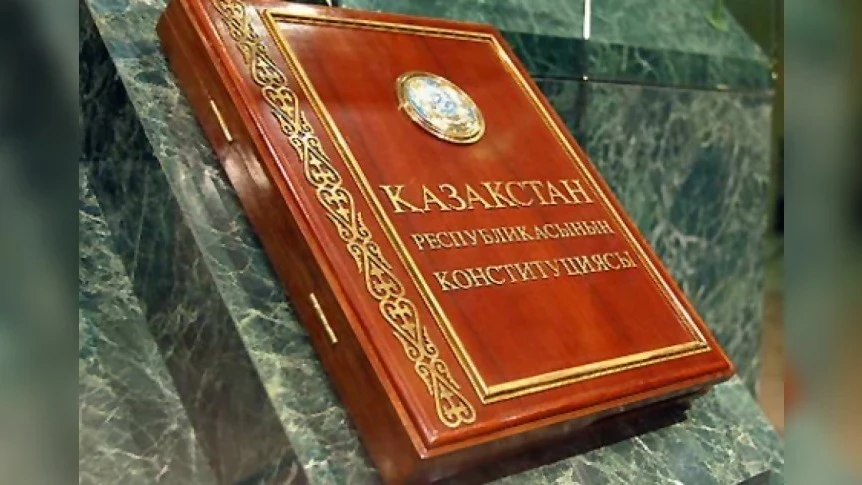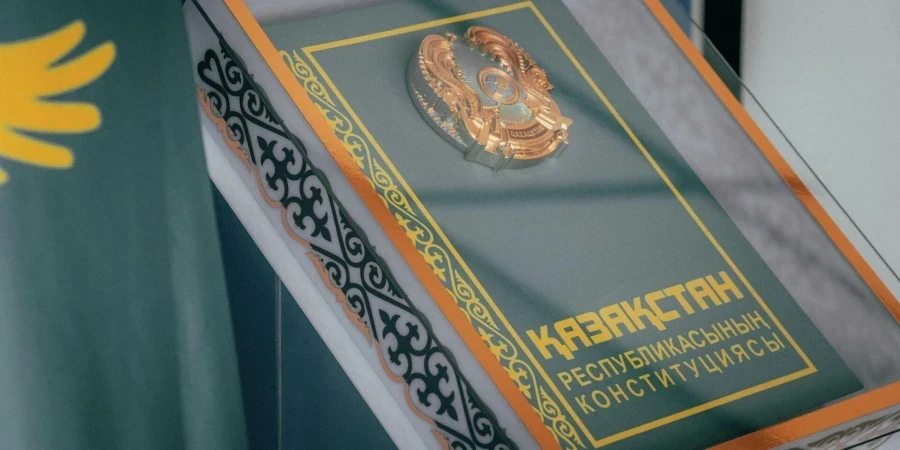
An expert analyzes the second draft of the Constitution of Kazakhstan
Professor and Doctor of Law, as well as Honorary Lawyer of Kazakhstan Marat Kogamov shared his thoughts on the new draft Constitution, which still needs to be approved in a referendum.
“The official media of the country presented the final version of the second draft of the Constitution. If the people support it in the referendum, the day of its adoption will become a national holiday, and the new Constitution will come into effect on July 1, 2026,” he noted.
Thus, the Fundamental Law has been presented to the residents of Kazakhstan, reflecting the nomadic tradition, consistency, and coherence of norms that form the basis of steppe civilization. It should be emphasized that before the formation of the USSR, important legal acts such as the Great Yassa of Genghis Khan and the constitutions of Kasym Khan, Yesim Khan, and Tauke Khan were in effect in the history of Kazakhstan. The periods of Soviet and post-Soviet times were also protected by the Constitutions of 1978, 1993, and the one currently in effect since 1995,” he added.
Based on my analysis of public opinion regarding the new draft Constitution, it became clear that the majority of citizens reacted positively to the political and legal decision announced at the recent Kurultai in Kyzylorda. This decision concerned the need to amend the 1995 Constitution, which effectively led to the preparation of a new edition of the country's main legal act.
The 1995 Constitution fulfilled its historical role by revealing both the strengths and weaknesses of the state system. Necessary amendments were made to it, taking into account changing realities. But time does not stand still, and now it is necessary to make important decisions to preserve legal sovereignty and ensure the future of the nation.
The emergence of the new draft Constitution has sparked a lively response from society, and many progressive proposals were discussed at the meetings of the working group and the Constitutional Commission created at the initiative of the head of state.
Every citizen's opinion matters; however, it is difficult to agree with the viewpoint of the well-known human rights activist Yevgeny Zhovtis. In his recent article on the BBC News website, the conclusions about the new edition of the draft Constitution seem unfounded to me.
Firstly, since 2019, the state leader has consistently implemented the ideology of a Just State, which includes six interconnected principles of domestic policy. One of these principles, in the context of a rapidly changing world order, has become the principle of "Strong President — Influential Parliament — Accountable Government." The draft of the new Constitution reflects classic forms of interaction between the president and the three branches of government, which should prevent abuses by each of the bodies.
Consequently, the appointments of high-ranking officials in central government bodies will be divided between the president and the Kurultai. The president works directly with these individuals, while the senior officials, appointed after consultations with the Kurultai, will represent the interests of the legislative power.
Thus, the new Constitution maintains the institution of "immunity" for a number of high-ranking officials, but also introduces clear forms for revoking this immunity in criminal justice, which is already provided for in current legislation.
Therefore, Zhovtis's thesis about a "super-presidential" regime has no legal or factual basis.
Secondly, Kazakhstan remains a full-fledged participant in key international documents on human rights protection, and this is beyond doubt. This should be clear to Zhovtis as well.
The topics of international treaties, respect for international law norms, and peaceful resolution of disputes occupy an important place in the new draft Constitution.
It concerns Kazakhstan's international obligations that have been ratified in the established manner. The draft also emphasizes that the application of international treaties in the country will be determined by national legislation, which is necessary for their proper understanding and application.
In this context, Zhovtis's assertion about the vagueness of the norms of Article 23 of the draft, which allegedly may limit freedom of speech, is unfounded. In fact, there is an excess of freedom of speech in Kazakhstan, which is a positive aspect.
Zhovtis also ignores the norms of the ICCPR of 1966, which indicate the need for special obligations and responsibilities when exercising rights, including possible limitations for the protection of public order and security.
Thirdly, the creation of a unicameral legislative body — the Kurultai — is a tribute to the historical traditions of nomadic civilization and the norms of Kazakh customary law. All laws must be adopted in one body, which eliminates unnecessary procedures and simplifies the legislative process.
The idea of creating an influential parliament has been a subject of discussion within the political initiatives of the head of state and has been perceived by society as part of the concept of a "Just State."
I can assert this, as I was one of the initiators of the scientific discussion on this issue in 2025 in Astana and reflected my thoughts in publications on legislative activity and the improvement of the Constitution.
Fourthly, politics, economics, and law are the three foundations on which any Fundamental Law is built. Economic issues and the state budget are of utmost importance for any legislative body. The draft of the new Constitution enshrines the rules of conduct for the Kurultai in the adoption of laws, including economic ones, and their execution by the government.
The Kurultai has the right to enact laws concerning the budget and state assistance, to hear reports from the government and the Supreme Audit Chamber, and to express a vote of no confidence in the government if necessary.
Thus, the rights and duties of the Kurultai and the government are interconnected, which emphasizes the legal subjectivity of the parliament as an important element of the "Influential Parliament" in relation to the "Accountable Government." The reduction of the Kurultai's role in regulating economic policy, as Zhovtis claims, does not correspond to the principles of the new Constitution.
Discussion of the norms of the new Constitution should be motivated and based on a deep understanding of the historical context of Kazakh statehood,” concluded Kogamov.
photo www