
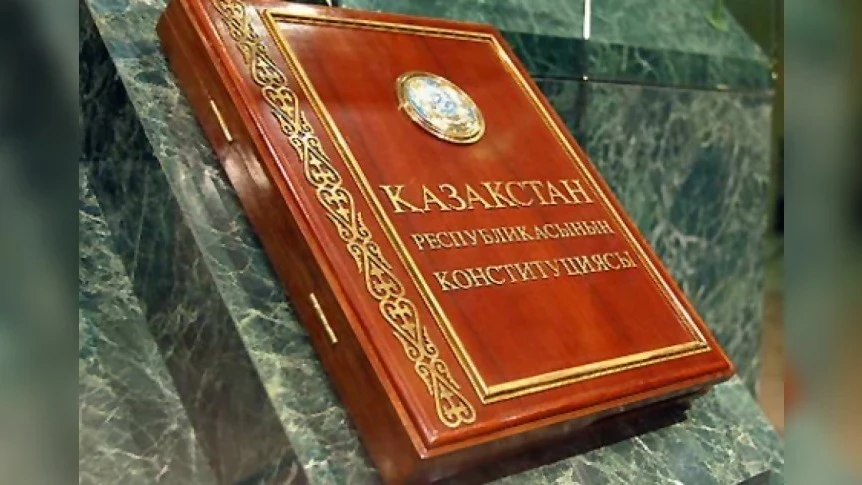
Thus, the people of Kazakhstan are presented with a Fundamental Law that reflects the spirit of the nomadic civilization and continues the traditions that existed long before the formation of the USSR — such as the Great Yassa of Genghis Khan and the Constitutions of Kasym, Yesim, and Tauke khans. Even during the Soviet and post-Soviet periods, the constitutions of 1978, 1993, and the current one from 1995 were in effect, which protected the rights of the people.
An analysis of public opinion regarding the new draft Constitution showed that the majority of citizens support the political and legal decision of the president, announced at the last Kurultai in Kyzylorda. This concerns the concept of amending the current Constitution of 1995 and adopting a new version of the highest legal act.
It is not surprising that the Constitution of 1995 has completed its historical role, revealing the strengths and weaknesses of statehood. Amendments were made in accordance with the times. However, today the task is to preserve legal sovereignty and ensure the future of the country.
The emergence of the new draft Constitution has triggered a positive response from society, as many progressive norms became the subject of discussion at the meetings of the working group and the Constitutional Commission established by the president.
All opinions of citizens are important and deserve attention. However, I cannot agree with the position of human rights activist Yevgeny Zhovtis, who recently published an article on the BBC News website, in which his conclusions seem unfounded to me.
Firstly, since 2019, the president has consistently implemented the idea of a Just State, which is expressed in six main principles of domestic policy. One of them — "Strong President — Influential Parliament — Accountable Government" — is justified in the context of a changing world order. The draft of the new Constitution includes forms of interaction between the president and the three branches of power to prevent abuses.
Thus, the appointments of senior officials of state bodies are divided between the president and the Kurultai, which allows for control by the representative power.
The norms of the Constitution maintain the institution of inviolability for senior officials but also provide conditions for the deprivation of this inviolability in criminal justice.
In this regard, Zhovtis's thesis about a "super-presidential" regime has no legal or factual basis.
Secondly, Kazakhstan has always been and remains an equal participant in international human rights documents. This has never been questioned. Zhovtis should understand this.
The topic of international treaties and their respect occupies a central place in the draft of the new Constitution. This concerns Kazakhstan's obligations under international treaties that are subject to ratification.
It is important to note that the draft Constitution clarifies that the procedure for the action of international treaties is determined by national laws, which is necessary for the effective application of international law norms in the country.
Moreover, Zhovtis's opinion about vague formulations in Article 23, which may threaten freedom of speech, does not correspond to the real situation, where there is even an excess of freedom of speech.
He also ignores the norms of international law that allow for restrictions on freedom of speech to protect the rights of others and public order.
Thirdly, the creation of a unicameral legislative body — the Kurultai — corresponds to the historical traditions of the Kazakh nomadic civilization. All laws should be adopted in one body, which simplifies the legislative process.
The idea of creating an influential Parliament was discussed in the president's Addresses and received support in academic discussions, which prepared the ground for legalization.
I myself was the initiator of a scientific discussion on this issue in 2025 in Astana and reflected my thoughts in publications on legislative activity.
Fourthly, politics, economics, and law form the basis of any Fundamental Law. Issues of economic regulation and the budget are important for any legislative body, and Kazakhstan is no exception. Therefore, the draft of the new Constitution includes rules related to the adoption of economic laws by the Kurultai and their implementation by the Government.
The Kurultai has the right to adopt laws concerning the republican budget and control over its execution. The failure to approve the government's budget report means a vote of no confidence in the government.
Consequently, the draft of the new Constitution correctly reflects the legal subjectivity of the Kurultai as the "Influential Parliament" in relation to the "Accountable Government." The reduction of the Kurultai's role in economic policy, as mentioned by Zhovtis, does not correspond to the positions of the draft.
The discussion of the new Constitution should be highly motivated and based on knowledge of the historical experience of creating and developing national statehood.


