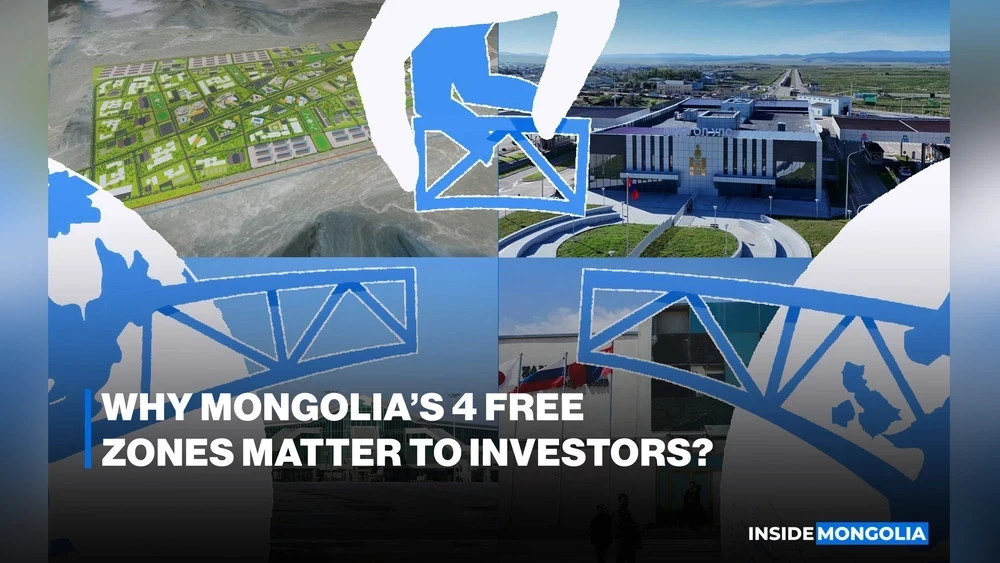
According to MiddleAsianNews, exemption from tax and customs obligations makes the four free economic zones of Mongolia one of the key mechanisms for attracting export-oriented investments.
?Tax Benefits
There are four free economic zones operating in Mongolia: Altanbulag, Tsagaanuur, Zamiin-Uud, and the Khushig Valley. Each of them offers a special tax and customs regime that differs from the standard conditions in the country. This creates favorable conditions for investors, allowing them to significantly reduce costs on importing equipment and organizing export-oriented enterprises.
? The key advantage lies in the tax regime. According to Mongolian legislation, goods imported into the free zones are exempt from customs duties, VAT, and excise taxes. Additionally, goods and services produced or sold in these zones by registered companies can also benefit from a preferential tax regime.
? The conditions for exporting goods to international markets from these zones also have their advantages, making them particularly attractive for projects in manufacturing, logistics, trade, and the tourism business.
Geographical advantages also contribute to the attractiveness of these zones.
Altanbulag is located in close proximity to the Russian border, Zamiin-Uud serves as the main gateway for Mongolia to China, while Tsagaanuur provides access to the west through Bayan-Ölgii. The Khushig Valley, being the newest and largest among these zones, is being developed near Chinggis Khaan International Airport as a long-term hub for logistics, trade, and commercial activities related to the airport.
In conclusion, the four free economic zones of Mongolia represent one of the most effective tools for attracting foreign investment, combining tax benefits, customs preferences, and strategic access to Russia, China, and other important trade routes. Although the implementation of projects may vary depending on the specific zone, the government is striving to update the legislation for free zones and improve the investment climate. This creates interesting prospects for exporters, manufacturers, and logistics companies monitoring the development of free zones.