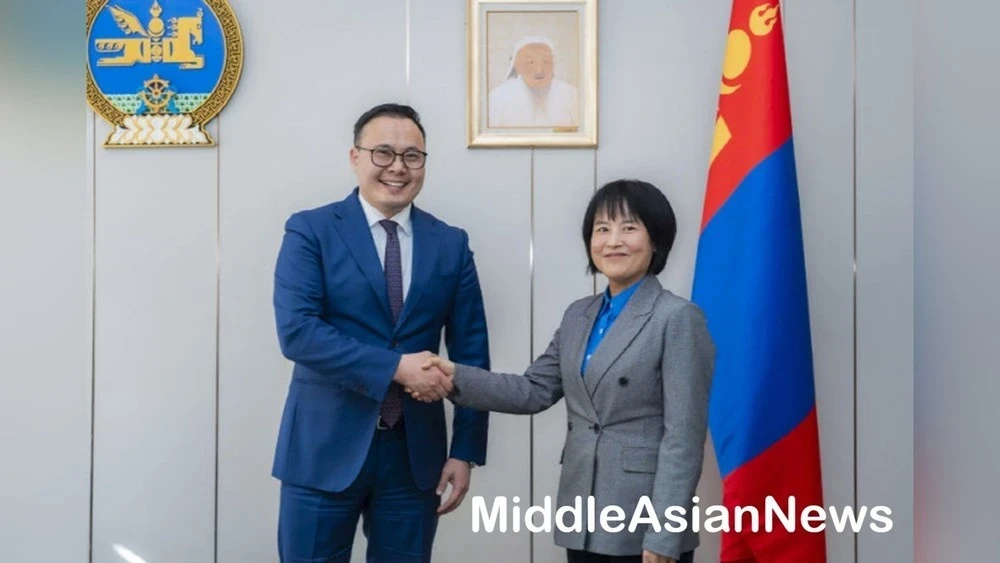
left: Batkhüü Idésh and Kwon Hee-jin
On Tuesday, the Ministry of Trade of the Republic of Korea announced negotiations with Mongolia aimed at accelerating the process of finalizing the bilateral Comprehensive Economic Partnership Agreement (CEPA). The signing of this agreement is expected to deepen cooperation in strategically important minerals between the two countries.
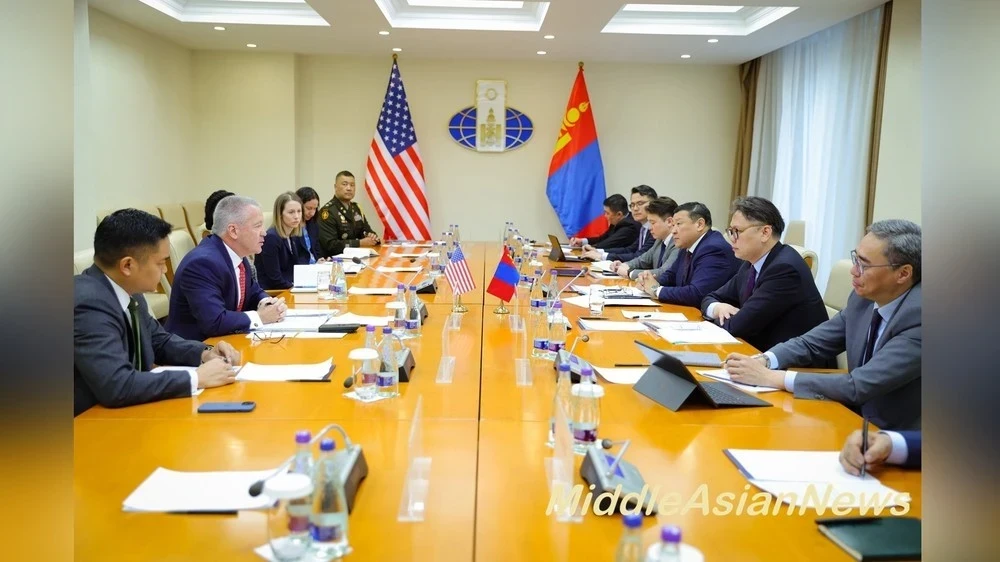
Kwon Hee-jin, the director general for trade negotiations at the ministry, visited Mongolia to discuss with representatives of agencies involved in trade and resources, including Batkhüü Idésh, who heads the Mongolian negotiation team for CEPA, as reported by MiddleAsianNews.
According to the ministry's information, by November 2024, South Korea and Mongolia will hold four rounds of negotiations on the Comprehensive Economic Partnership Agreement (CEPA). Mongolia is considered a promising market with high potential for increasing consumer goods exports against the backdrop of the growing popularity of Korean culture, despite its annual export being only $660 million, which is relatively small compared to larger countries. As a result, negotiations on CEPA began in December 2023 and will continue until November 2024; however, meetings were temporarily suspended due to concerns about opening the Mongolian market and disagreements over goods and rules of origin.
At the meeting on Tuesday, Kwon called for active efforts to resolve these disagreements and proposed including cooperation in critical mineral supply chains within the framework of CEPA negotiations. In particular, Kwon suggested to Deputy Minister Batkhüü Idésh to strive for a comprehensive agreement that focuses on key issues related to goods and rules of origin while simultaneously expanding the scope of CEPA to include cooperation in critical mineral supply chains.
On the same day, Kwon met with Deputy Minister of Industry and Mineral Resources Dashpurev Buriad, where they reached an agreement on the need to create a separate chapter on cooperation within CEPA.
She also held a meeting with Korean businessmen operating in Mongolia to learn about their issues and gather opinions that could be useful for CEPA negotiations.
According to the ministry, Mongolia has extensive resources of key minerals such as copper, molybdenum, and rare earth elements, making the country a promising partner for Seoul in the area of supply chains.
"Mongolia is an emerging market where Korean companies are actively increasing their presence, as well as an important partner in the field of resources," Kwon noted in a press release, confirming the readiness to accelerate negotiations on the Comprehensive Economic Partnership Agreement with this country.
The Comprehensive Economic Partnership Agreement (CEPA) is a bilateral trade agreement that goes beyond traditional free trade agreements (FTAs). Under CEPA, the parties agree on preferential trade terms for goods and cooperation in various economic areas, which typically includes liberalization of trade in services, protection and promotion of investments, as well as issues related to intellectual property rights, competition, and public procurement. CEPA links the economies of the two countries with broader commitments rather than focusing solely on goods.
Traditional free trade agreements have narrower scopes compared to CEPA, which cover a wider range of issues. Free trade agreements generally aim to reduce or eliminate tariffs on goods and may include limited provisions for services. In contrast, CEPA covers both trade in goods and services, as well as investments, intellectual property rights, competition policy, and public procurement. They also address customs procedures, mutual recognition of standards, and alignment of technical regulations, which are often superficially addressed or excluded from traditional free trade agreements.
Comprehensive Economic Partnership Agreements (CEPA) typically contain provisions on digital trade, such as rules for electronic transactions and commitments not to impose customs duties on electronic transmissions, which are often absent in free trade agreements. Additionally, CEPA facilitate the temporary movement of entrepreneurs and professionals through visa agreements or recognition of qualifications, promoting trade in services and professional exchange. CEPA combine market access commitments with broader economic and regulatory cooperation across various sectors.