The U.S. Ambassador Richard L. Buangan in Ulaanbaatar
Learn what the U.S. Ambassador to Mongolia discussed with the author of The Diplomat, an international publication covering events in the Asia-Pacific region.
Richard L. Buangan, U.S. Ambassador, shared his thoughts on the prospects for cooperation in an interview for The Diplomat.
On January 27, the United States and Mongolia celebrated the 39th anniversary of the establishment of diplomatic relations, which began in 1987 during the closing years of the Cold War. These ties have become the foundation of Mongolia's "Third Neighbor" strategy aimed at diversifying the country's foreign policy beyond Russia and China.
In the context of increasing competition among world powers and Washington's pivot to the Indo-Pacific region, as well as in light of the "America First" foreign policy strategy of the second Trump administration, relations between Mongolia and the USA are at a critical juncture.
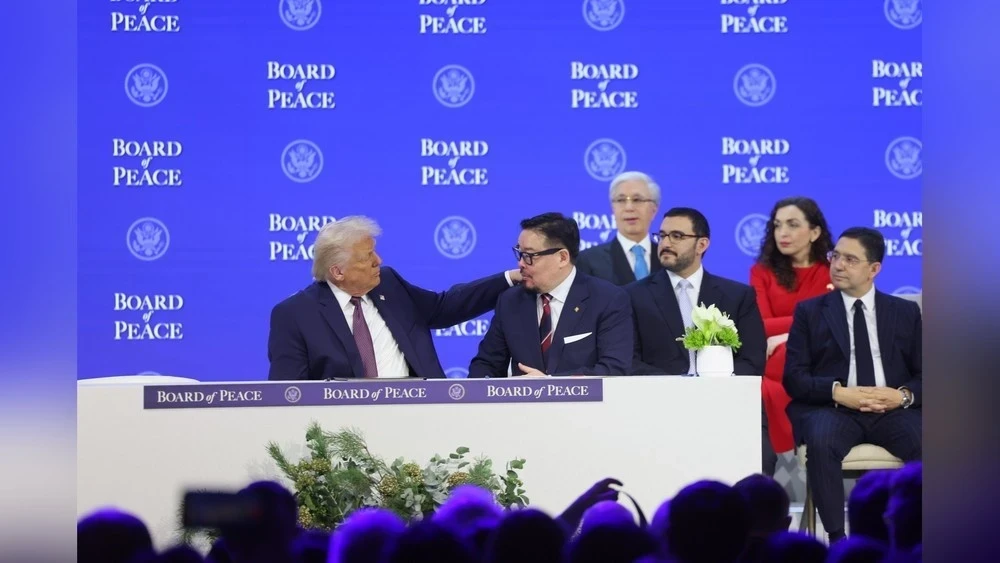
This important moment was underscored when on January 22, Mongolian Prime Minister Oyun-Erdene signed the Charter of the Council of Peace in Davos, Switzerland, which established Mongolia's status as one of the founders of this international organization. This update of the "Third Neighbor" strategy coincides with the end of the UN mission in South Sudan in April 2026, which may open opportunities for Mongolian peacekeepers in other regions.
However, recent events also raise questions about the stability of Mongolian-American relations. On February 2, the USA suspended the issuance of immigration visas for citizens of Mongolia, placing the country on a "high-risk" list, which is causing tension in bilateral relations.
Since the elevation of bilateral relations to strategic partnership in 2019, important questions remain about the real depth and impact of this cooperation. The question is how much it has moved from symbolic gestures to sustainable structures capable of addressing Mongolia's core issues, including energy stability and economic diversification.
While Mongolia is developing economic cooperation with China and Russia, this was confirmed by high-level delegation visits in February 2026. Chinese Vice Foreign Minister Sun Weidong visited Ulaanbaatar to reaffirm political priorities, while the Speaker of the Mongolian Parliament, Uchrala Nyam-Osor, visited Moscow to discuss energy cooperation.
In order to gain a deeper understanding of these events and their implications for Mongolian-American relations, Sumyaa Chuluunbaatar conducted an exclusive interview with Richard L. Buangan, who has served as the U.S. Ambassador to Mongolia since November 2022.
Buangan, an experienced diplomat with many years of service in East Asia, holds this position during a time coinciding with significant events such as Secretary of State Antony Blinken's visit to Mongolia in August 2024 and the beginning of Trump's second term, when Mongolia became one of the founders of the Council of Peace.
Throughout his tenure in Mongolia, Buangan has actively engaged with local communities, studied Mongolian culture and traditions, and participated in festivals and events. He noted that Mongolians possess qualities that resonate with American values, such as straightforwardness and openness. At the same time, his views on bilateral relations highlight both the successes achieved and the existing structural obstacles.
ANNIVERSARY DATES
Buangan designated 2026 as a "special" year for both countries, linking the 39th anniversary of diplomatic relations with two significant events: the 250th anniversary of U.S. independence and the 820th anniversary of the founding of the Mongol Empire. "These are important milestones, and we have many plans," he noted, expressing hope for further cooperation with Mongolian partners within this framework.
Symbolic anniversaries create opportunities for deeper cooperation; however, Buangan emphasized the importance of specific investments that define bilateral relations. An example is the $462 million Water Resources Agreement with the Millennium Challenge Corporation (MCC), which is set to conclude in March 2026 and will significantly increase clean water supplies in Ulaanbaatar.
“This is a tangible expression of America’s long-term commitment to partnership with Mongolia,” Buangan emphasized, noting that the project demonstrates the Trump administration's desire to support the self-sufficiency of recipient countries through sustainable development.
This project is accompanied by initiatives to expand Mongolia's global economic ties. In February 2026, the U.S. Trade and Development Agency (USTDA) signed an agreement with the Civil Aviation Authority of Mongolia to finance technical assistance to achieve a Category 1 (CAT 1) safety rating from the U.S. Federal Aviation Administration, which will not only improve air connectivity between the countries but also facilitate the export of Mongolian resources.
STRATEGIC PARTNERSHIP SEVEN YEARS ON
Seven years after the establishment of the strategic partnership between Mongolia and the USA, Buangan shared his perspective on the achievements, emphasizing America's role as a consistent partner. He noted that despite the distance, the USA takes pride in being Mongolia's "third neighbor" and takes this seriously. Buangan highlighted three areas where significant progress has been made.
First, cooperation in defense and security has become the foundation of the two countries' relations, aligning with both Mongolia's neutral foreign policy and U.S. priorities in the Indo-Pacific region. He mentioned the Khaan Quest peacekeeping exercises conducted jointly with the U.S. Army Pacific Command, which involve countries from around the world.
“We are assisting in the modernization of the Mongolian army, and the results of this cooperation are evident,” he added.
Mongolia ranks among the top countries in the world for the number of peacekeepers per capita, participating in various UN missions, which demonstrates its responsibility as a global participant and a reliable partner for the USA in security matters.
Second, educational and cultural ties form a solid foundation for bilateral partnership that goes beyond political and economic changes. Buangan emphasized the importance of human relationships: “Despite government agreements, if people do not know each other, these arrangements remain on paper,” he noted.
According to IIE Open Doors, about 1,500 Mongolian students study in the USA each year, while only 100 Americans study in Mongolia. The Peace Corps program, active since 1991, has become a vivid example of engagement with local communities.
Over its existence, more than 8,000 Mongolians have participated in exchange programs, creating a network of bilateral ties. Last year, a Center of Excellence in English Language Teaching was opened at the National University of Mongolia, continuing Blinken's initiative from 2024.
However, new visa restrictions may complicate mobility between the countries, despite U.S. development efforts aimed at supporting Mongolia's self-sufficiency.
Third, deepening cooperation in economic diversification and mineral extraction has become an important aspect that aligns with the strategic goals of both countries. Mongolia has significant reserves of copper, lithium, and rare earth elements, which opens opportunities for mutually beneficial investment.
Buangan mentioned recent events, such as Mongolia's participation in the conference on critical minerals in the USA, as signs of deepening strategic cooperation.
He praised Mongolia's involvement in the Council of Peace, marking this event as a "historic initiative" that opens new opportunities for the country.
Mongolia presented its membership in the Council of Peace as consistent with its multi-vector policy, emphasizing that it is not a military alliance but a platform for cooperation with respect for sovereignty. Membership does not entail funding obligations, making it more attractive for the country.
Buangan supported this view, emphasizing that the initiative helps Mongolia enhance its international status while deepening its partnership with the United States.
"AMERICA FIRST," SOVEREIGNTY, AND REFORMS
In our conversation, we discussed the U.S. National Security Strategy through 2025 and its impact on Mongolian-American relations, particularly in the context of Mongolia's accession to the Council of Peace.
Buangan debunked the myth that this policy indicates isolation from long-standing partners. “'America First' does not mean 'America alone' or 'Only America,'” he noted, adding that it implies a more targeted approach to foreign policy.
He emphasized that the USA will focus on partnerships that bring real benefits, including cooperation with Mongolia that respects its sovereignty and multi-vector foreign policy.
Buangan confirmed the ongoing U.S. support for internal reforms in Mongolia, mentioning the launch of the second phase of the project to ensure institutional integrity and transparency (MINT), aimed at combating corruption and strengthening the rule of law. However, he also noted existing obstacles that hinder bilateral trade and investment.
Buangan did not confirm specific plans for a U.S. presidential visit to Mongolia but emphasized the administration's sustained commitment to developing relations in the Indo-Pacific region.
“President Trump is actively engaged in Indo-Pacific affairs, as evidenced by his participation in the APEC summit,” he added, also noting important meetings between high-ranking officials from both countries.
FINAL REFLECTIONS
At the end of the conversation, Buangan's voice conveyed optimism regarding the future of Mongolian-American relations. Thirty-nine years of official ties, seven years of strategic partnership, and long-standing community-level cooperation create a solid foundation for further development.
For Mongolia, the United States continues to be an important "third neighbor," supporting its sovereignty and democratic governance. At the same time, for the USA, Mongolia is a reliable partner in the Indo-Pacific region, contributing to security and stability.
Buangan emphasized the importance of human connections as the basis for bilateral partnership, which will allow Mongolian-American cooperation to transcend formalities and celebrate the 40th anniversary of diplomatic relations in 2027.
In an era of geopolitical instability, the partnership between the USA and Mongolia serves as a vivid example of how sovereign states can work together, basing their relations on shared values and mutual respect.
Author: Sumyaa Chuluunbaatar — economist and international affairs expert, serving as a freelance researcher at the Institute of International Studies of the Mongolian Academy of Sciences.
Translation: MiddleAsianNews
Source: The Diplomat