
Escalation of the Situation in the Strait of Hormuz
The Iranian response to U.S. President Donald Trump's threats, who demanded that Tehran open the Strait of Hormuz within 48 hours, could result in strikes on critical infrastructure in the region.Trump warned of possible attacks on Iranian energy facilities, which has caused increased uncertainty in global markets and fluctuations in oil prices.
Threat to Regional Infrastructure
Tehran emphasized that in the event of aggression, not only energy facilities but also water supply systems, including desalination plants, would be targeted. This is extremely important for Gulf countries, where a significant portion of drinking water is produced through desalination.In countries like Bahrain and Qatar, water supply is almost entirely dependent on desalination plants, while in the UAE this figure exceeds 80%, and in Saudi Arabia, it is around 50%. A power outage could lead to humanitarian issues.
Mohammad Bagher Ghalibaf, the speaker of the Iranian parliament, stated that in the event of a strike, critical infrastructure in the Middle East could be "irreversibly destroyed".
Closure of a Key Oil Route
The Islamic Revolutionary Guard Corps also emphasizes that the Strait of Hormuz, through which about 20% of global oil and liquefied gas supplies pass, will remain closed until Iranian power plants are restored.The partial closure of the strait has already caused disruptions in shipping: many tankers have halted their movements, although some continue to pass after receiving permission from Iranian authorities.
Ongoing Military Actions
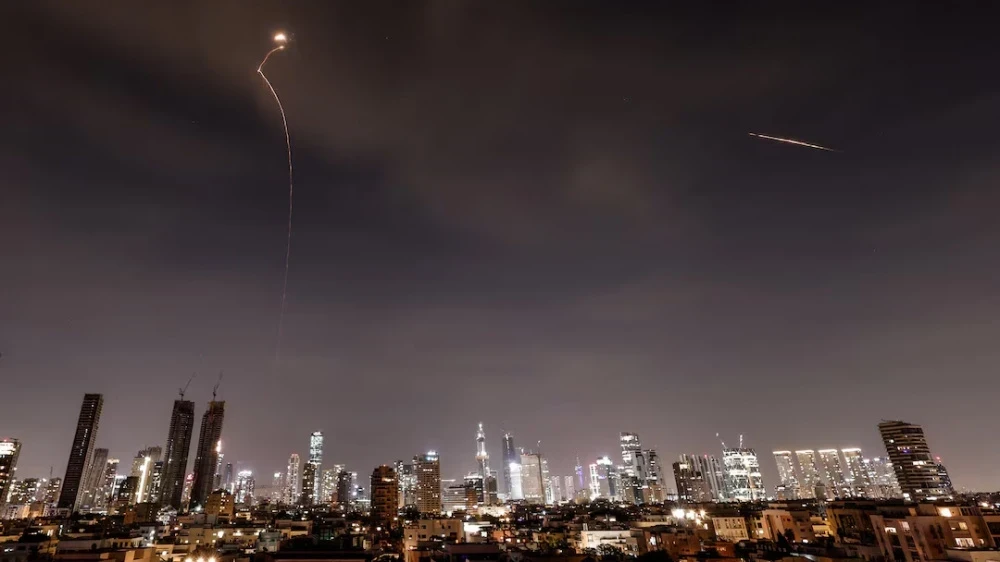
Despite statements from the U.S. and Israel about a significant weakening of Iran's military potential, Tehran continues its retaliatory measures. Air raid sirens were heard in Tel Aviv and other parts of Israel on Sunday night.Attempt to intercept a missile over Tel Aviv. Photo Reuters / Amir Cohen.
Iran has for the first time used ballistic missiles with a range of up to 4000 km, attacking a U.S. and UK military base in the Indian Ocean, thereby expanding the geographical scope of the conflict.
Israel, in turn, continues its attacks on Iranian military infrastructure and arms production, with reports of casualties, including as a result of an airstrike on a radio station in Bandar Abbas.
Expansion of the Conflict
At the same time, the confrontation between Israel and "Hezbollah," which is supported by Iran in Lebanon, continues. Israeli military operations have been conducted in the southern part of the country, while "Hezbollah" responds with rocket strikes on northern Israel.According to Israeli experts, hostilities may continue for several more weeks.
Impact on Global Markets
Analysts claim that the U.S. ultimatum creates a "48-hour bomb of uncertainty" for global markets. Stock indices are expected to decline, and volatility in energy prices is likely to increase.Since the beginning of the conflict, official data indicates that more than 2000 people have died, which has had a significant impact on the global economy, increasing inflation risks and tensions in energy markets.


