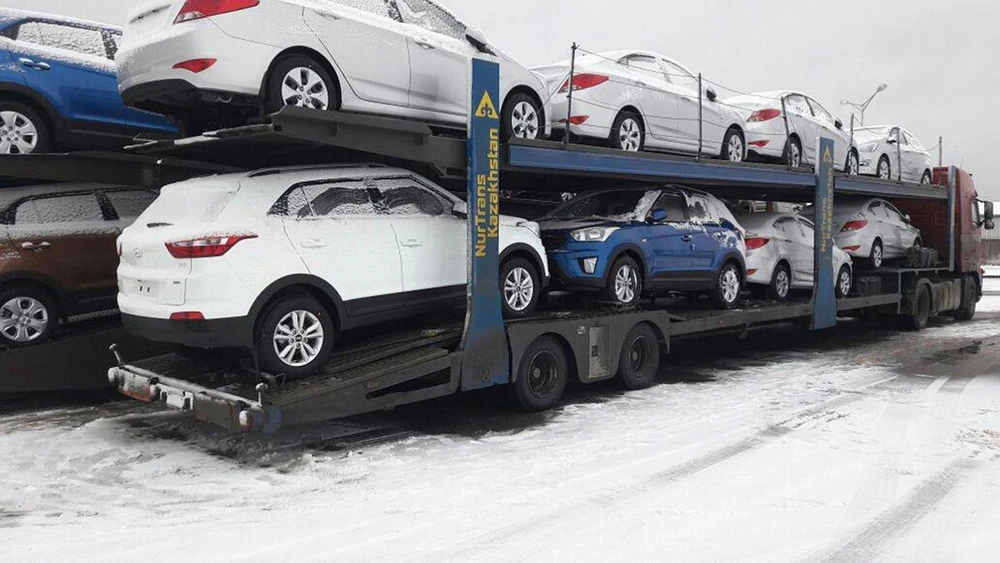
Illustrative photo
Kazakhstan is considering the possibility of increasing the recycling fee for importing cars from Russia and Belarus, potentially raising it by 40 times. This project is already available for discussion under the order of the Ministry of Ecology, Geology, and Natural Resources.
The main goal of this document is to level the playing field for Kazakh cars in the markets of the EAEU countries. Last year, Russian customs officials began requiring owners of foreign cars assembled in Kazakhstan and imported into Russia in 2024-2025 to pay additional recycling fees with consideration of additional coefficients, treating these vehicles as re-exports. On average, this additional payment amounts to 1-1.5 million rubles, with the cost of the cars being around 3-4 million rubles.
The project proposes the introduction of increasing coefficients for passenger and freight vehicles manufactured in Russia and Belarus. For cars from other manufacturers, the coefficients will remain the same. For example, for passenger cars, the base rate ranges from 1.5 to 11.5 depending on the engine size. For cars from Russia and Belarus, the coefficients may be increased to 22-246, respectively.
According to The Moscow Times, these measures are aimed at eliminating the imbalance in recycling fees between Kazakhstan, Russia, and Belarus. According to the EAEU Customs Code, cars assembled in Kazakhstan with foreign components are considered EAEU goods; however, additional coefficients apply for supplies to Russia and Belarus.
Starting in 2024, when exporting cars from Kazakhstan to the specified countries, the recycling fee will include the difference in customs duties, VAT, and excise taxes paid in Kazakhstan. This could lead to an increase in the price of the car for the end consumer by 25%. For instance, VAT in Kazakhstan is 4% lower than in Russia, while the recycling fee in Kazakhstan is significantly less. Currently, the recycling fee for mass-market cars with engines from 1 to 2 liters is about 114,000 rubles, while for imports from Russia, it can reach around 900,000 rubles.
If the proposed changes are approved, the recycling fee for importing cars of this category from Russia and Belarus to Kazakhstan could amount to 4.4 million rubles, which exceeds the current rates by 38.5 times.
It is also worth noting that the increase in the recycling fee is related to the intention to limit access to the Kazakh market for Russian and Belarusian agricultural machinery. The country has assembly plants for Russian and Belarusian brands, and the authorities aim to support local manufacturers, as noted by a Russian automotive analyst.
Kazakhstan was previously an important market for the Russian automotive industry. In 2020, Lada cars ranked second in sales after Hyundai, but in 2021, the main assembly plant of "AvtoVAZ" in the country closed due to complaints from local authorities, leading to a sharp decline in the company's market share. Lada assembly was resumed at the Allur plant in Kostanay, but in smaller volumes.
Nevertheless, last year saw a sharp increase in sales and imports of Russian cars to Kazakhstan. In the first half of 2025, 1,393 Lada cars were sold, significantly exceeding the 427 cars sold in the same period of 2024. In July, the import of passenger cars from Russia amounted to $7.8 million, which is four times more than last year. However, the share of Russian cars in the new passenger car market does not exceed 3%, while Chinese brands occupy 53% of the market.
Kazakhstan is among the top five largest exporters of cars to Russia: according to "Avtostat," 10,000 new passenger cars were supplied in 2025.
“This is an internal restriction: Kazakhstan is trying to shield its market from 'AvtoVAZ,' as Russia has closed its market to other manufacturers,” noted Anton Shaparin, vice president of the National Automobile Union. “I fear that such measures may spread to other categories of products, including the blocking of Russian certificates and goods in the Kazakh market.” This could negatively impact the Eurasian Economic Union, he emphasizes.