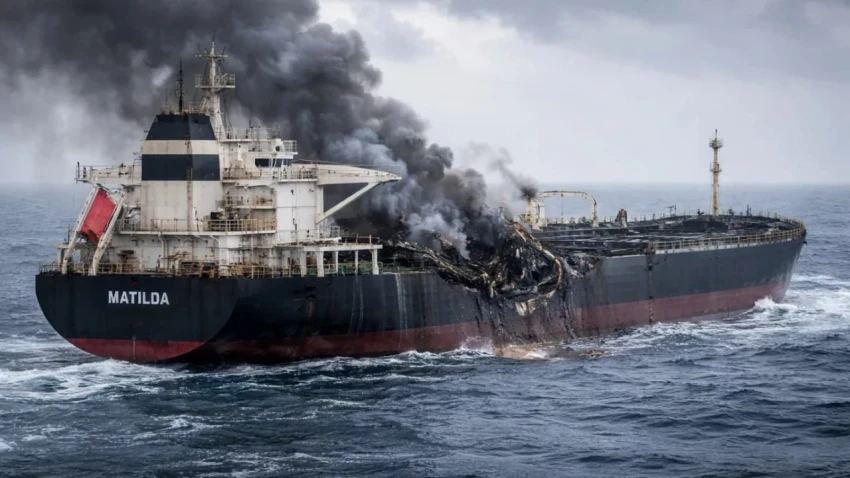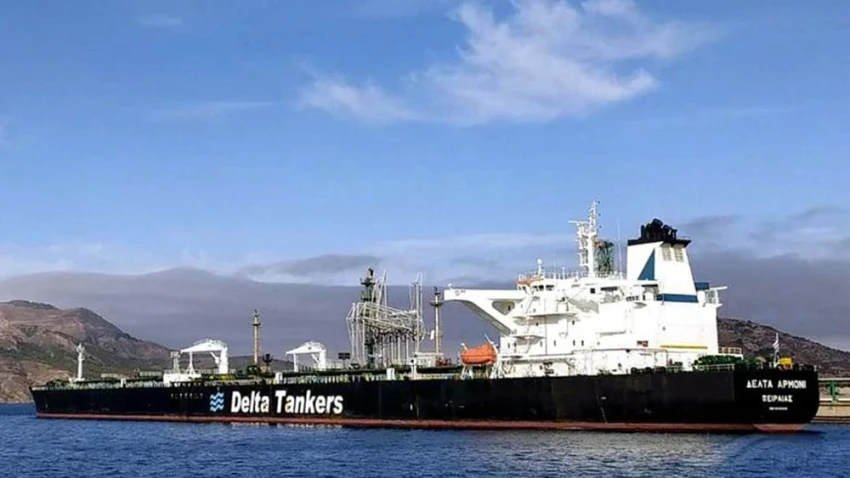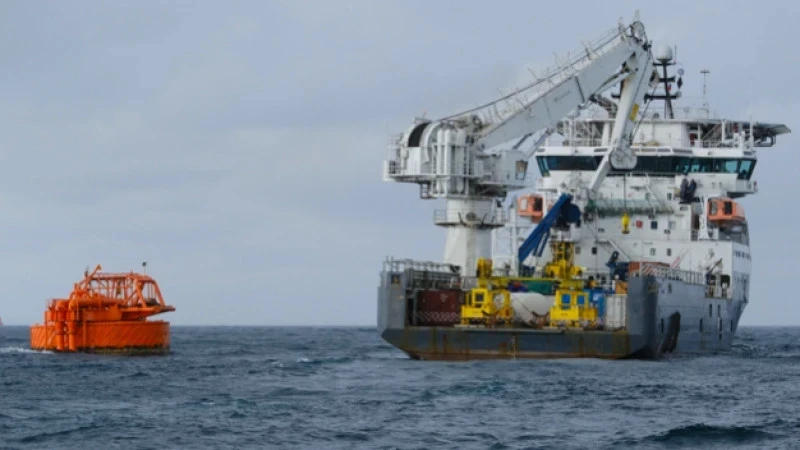
Illustrative photo
According to the ministry, the tankers "Matilda" and "Delta Harmony" were attacked while near the terminal of the Caspian Pipeline Consortium (CPC) in the Novorossiysk area.
The tanker "Matilda," owned by a subsidiary of "KazMunayGas" and registered under the Maltese flag, collided with a drone, resulting in an explosion. However, there was no fire, and no crew members were injured. Preliminary conclusions from technical specialists indicate that the tanker remained afloat, and no significant hull damage was found.
As for the tanker "Delta Harmony," registered under the Liberian flag, it was attacked while waiting for loading. This resulted in a brief fire, which was quickly extinguished. Crew members were unharmed, and at the time of the incident, oil loading had not yet begun, as the tanks were empty. Therefore, there was no damage to Kazakhstan's exported resources, as noted by the ministry.
Currently, the Ministry of Energy is actively collaborating with "KazMunayGas," the consortium, and shipowners to ensure the safety of logistics processes and the stability of export supplies.
Reuters reported attacks on tankers in the Black Sea prior to January 13, citing its own sources. It was noted that in addition to the attacks on "Matilda" and "Delta Harmony," two other vessels—Delta Supreme and Freud—also became targets, although this information has not been confirmed.
The CPC is the largest route for transporting oil from the Caspian region to international markets. The length of the main pipeline is 1,500 km, connecting the fields of Western Kazakhstan (Tengiz, Karachaganak, and Kashagan) with the Russian Black Sea coast, where oil is loaded onto tankers.
In recent months, the volume of supplies along this route has significantly decreased. Loading of raw materials has often been suspended due to adverse weather conditions. The commissioning of the second offshore loading terminal (OLP) was also delayed after maintenance. At the end of November, one of the terminals was damaged by Ukrainian drones. As a result, Kazakh oil is currently being loaded only through the one operational terminal, although the country needs at least two functioning OLPs to maintain export volumes.
According to Bloomberg, Kazakhstan produces about 1.8 million barrels of oil per day. In the absence of full operation of the CPC, the country can export only half of this volume through alternative routes, which in the long term may lead to a significant reduction in production at the fields.