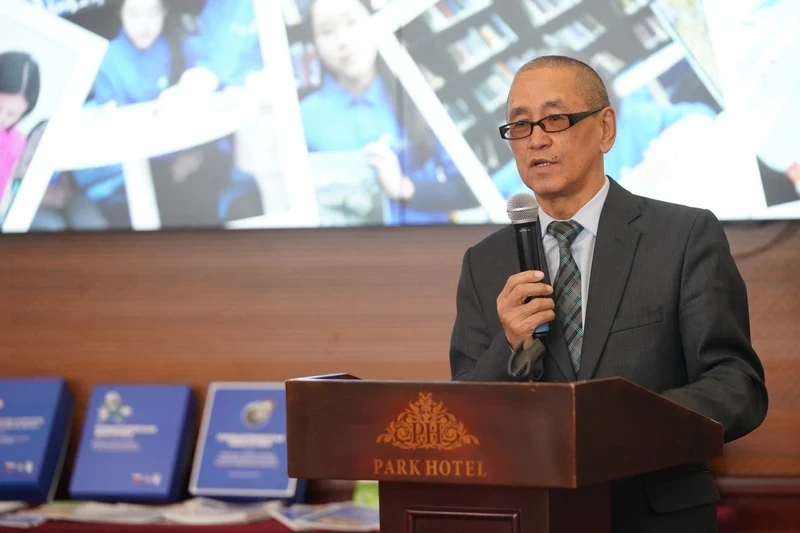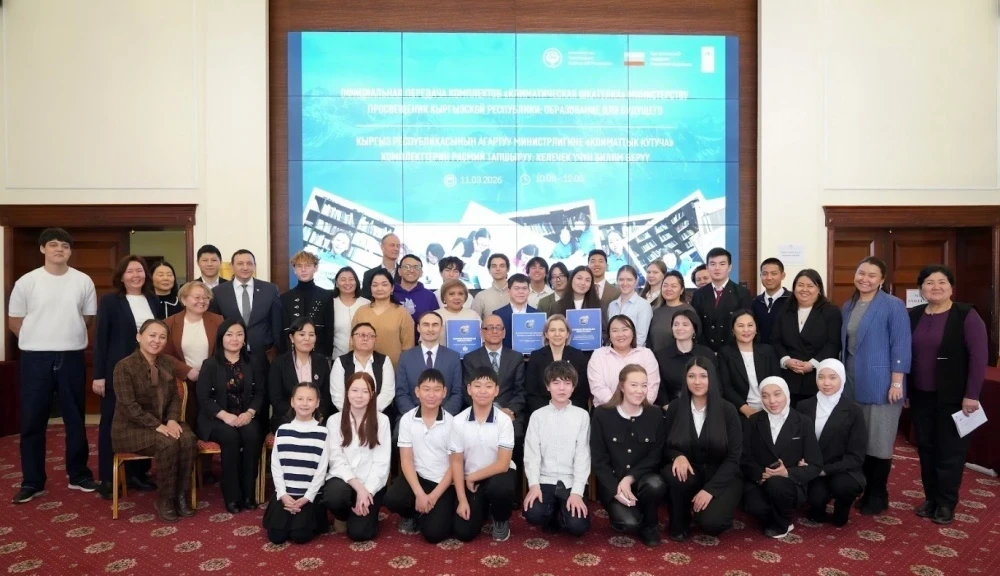
On March 11, an important event took place in Bishkek, where the United Nations Development Programme (UNDP) handed over updated educational sets called the "Climate Box" to the Ministry of Education of the Kyrgyz Republic. The event gathered representatives from government agencies, diplomats, teachers, and students who demonstrated how knowledge about ecology influences the educational process.
The new equipment includes materials in Kyrgyz and Russian languages, game sets, and methodological guides for educators. The project pays special attention to inclusive approaches. Kyrgyzstan has become the first country in the UNDP global network to develop materials in adapted formats such as Easy-to-Read and Braille, marking a significant step towards ensuring climate education for children with special educational needs.
Alexandra Solovyova, the UNDP Resident Representative in the Kyrgyz Republic, expressed her gratitude to the Ministry of Education and all partners for their long-standing cooperation in her address.
“The initiatives presented by the students are truly inspiring. We saw many ideas that are yet to be implemented. This contributes to the formation of future professions and supports the climate agenda in the country. We will continue to support efforts in climate education and youth entrepreneurship until 2030,” she emphasized.
The Director General of the Republican Institute for Advanced Teacher Training, Almazbek Toktomametov, also gave a speech, noting that the integration of ecological themes into the school curriculum is a significant contribution to sustainable development and security in Kyrgyzstan. “The 'Climate Box' provides teachers with the necessary tools and gives students accessible practice,” he added.
The highlight of the event was the interactive exhibition "The Climate Box in Action," where school teams presented their ecological solutions:
- School No. 64 amazed attendees with the project "Alternative Energy Based on Biological Processes in Soil," where the movement of earthworms drives blades, generating enough electricity to charge a phone. The students also presented an "Insect Hotel" and a concept for a nano-tablet to cleanse the body of plastic.
- School No. 65 demonstrated the Climate-class project: a monitoring system for parameters in greenhouses and a CO₂ sensor for classrooms. This device tracks the level of carbon dioxide and signals when it exceeds the norm by changing the screen color to red and emitting a sound, allowing for timely ventilation of the premises.
- School No. 94 showcased a working model for sorting and recycling waste.
Participants also shared their impressions of the knowledge gained. Nurasyl Abdyzhaparov, a student from school No. 94, admitted that the climate topic previously seemed complex and distant to him, but the "Climate Box" helped him realize how changes in the environment affect every resident of Kyrgyzstan. Geography teacher from Talas, Angela Ganyuk, noted that the interdisciplinary approach in teaching generates active interest among students and broadens their horizons.
The project "Climate Education for Promoting SDGs and Climate Action" is implemented by UNDP with the support of the Russian Trust Fund.
For reference: The "Climate Box" has been implemented in the republic since 2016. While initially only 21 schools participated in the project, today the program covers almost all secondary educational institutions in the country, becoming an important element of the educational system.