
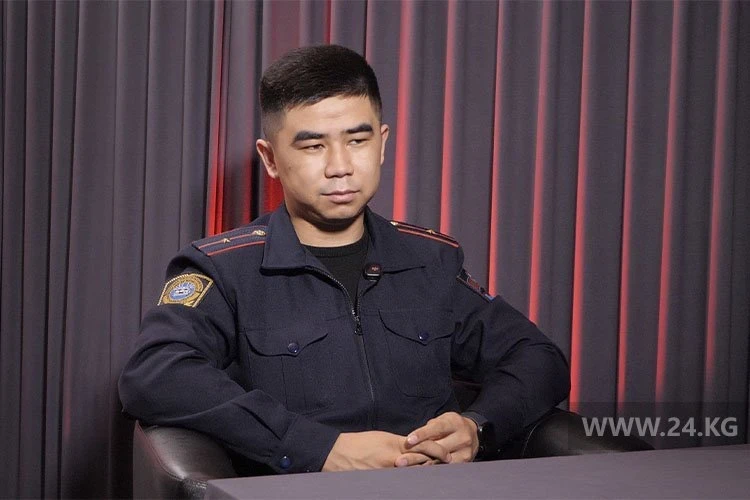
Photo 24.kg. Nadyrbek Jusupov
— Let's start with the basics. What traffic violations are most common?
— I would highlight three key violations. The first is the disregard for traffic signs: drivers often turn where it is prohibited or violate double solid lines.
The second is entering an intersection when there is no possibility to continue moving. This violates clause 13.2 of the traffic rules and leads to the blockage of cross streets.
The third is the use of mobile phones and gadgets while driving. This is one of the most common causes of driver distraction.
— Are there areas in Bishkek where violations occur most frequently?
— Currently, it is the new highway. At night, young people gather there, grossly violating the rules, speeding, and engaging in auto hooliganism. We often go there specifically at night.
During the day, minor violations are recorded throughout the city: improper turns, crossing double solid lines, and failing to comply with pedestrian requirements.
— How often do drivers try to "settle the matter on the spot"?
— In the past, when I wasn't working in the press service, such offers came quite often. Drivers didn't know who I was. Now many recognize me, and attempts to offer money have decreased.
However, there are situations where instead of money, they offer to talk on the phone.
— When was the last time such an offer was made?
— It was just a few days ago. A heavily intoxicated driver was calling someone on the phone. We refused to talk to avoid misunderstandings. The management always supports us in such situations, advising us to act according to the law.
— Have you encountered physical aggression from drivers?
— Yes, especially from drunk drivers. The last serious incident occurred in February when an intoxicated driver tried to escape and began to resist. As a result, he tore the inspector's uniform, and we had to use force. In such cases, criminal liability ensues.
— Have there been instances where you were threatened?
— Yes, such cases have occurred, and some of them were quite serious. Once, a group of people came to my house after an arrest. They waited for me at the door, and when I came out, we discussed the situation. I explained that I was just doing my job.
They left, but returned the next day.
Nadyrbek Jusupov, inspector of the Patrol Police Department
— So it wasn't just an emotional reaction?
— Yes, it was more serious than ordinary threats. We discussed the situation again, and I clarified that I had no personal conflicts—I was just fulfilling my duties as a police officer. Since then, they have not appeared again.
— In such moments, do you ever feel like leaving the profession?
— No, it's part of the job. Of course, it's unpleasant, but if you choose the patrol service, you need to be ready for various situations and people.
— You had a notable conflict with MP Erulan Kokulov, who claimed his "immunity." How do you view that now?
— With respect to the MP, I was just doing my job. I explained that he is not exempt from administrative responsibility. The law should be the same for everyone.
The conflict occurred; it was a work moment. I respect him then and now, and I do not harbor any personal animosity. I acted strictly according to the law, explaining that parliamentary immunity does not exempt one from responsibility.
— After that incident, have you met with him?
— No, I have not met with him. In my service, I must adhere to the law, not the status of a person.
— How many vehicles do you stop in a shift?
— On average, it's 20-30 vehicles. Each conversation is a new story. Working in the patrol service involves constant communication with people, which develops psychological skills and negotiation abilities.
— What advice can you give drivers to avoid fines for minor violations?
— The most effective advice is to admit your mistake. Many start to argue, but in the end, when you explain the situation, they agree. We are not a punitive body; our task is prevention.
— Are there instances when police officers themselves violate the rules?
— Yes, such cases also happen. We receive videos via the internet, and there is a special number 0777102102 for such reports.
We summon violators for questioning and conduct an internal investigation. If the violation is confirmed, we draw up a report. They pay fines like ordinary citizens.
Nadyrbek Jusupov, inspector of the Patrol Police Department
— Videos of violations often appear on social media, and drivers are identified within hours. How does this happen?
— We have databases that allow us to identify the vehicle owner and their address. The "Safe City" system also helps, recording vehicle routes.
— In your opinion, how can the number of violations be reduced?
— It should start with educating and training children. I often visit schools where children aged 10-12 already know about the rules and their violations. Adults should set a good example.
— Have there been situations where you saved people?
— Yes, although we don't always talk about it. One case stood out: a year and a half ago, there was an accident on Gorky Street where a scooter collided with a car. I arrived, and a person was lying on the ground, having swallowed their tongue. People were filming the incident.
I managed to extract the tongue using a spoon from the car. The ambulance arrived in 15 minutes, and the doctors said that if I hadn't helped, the person could have died.
— How do inspectors recognize violators in the flow of vehicles?
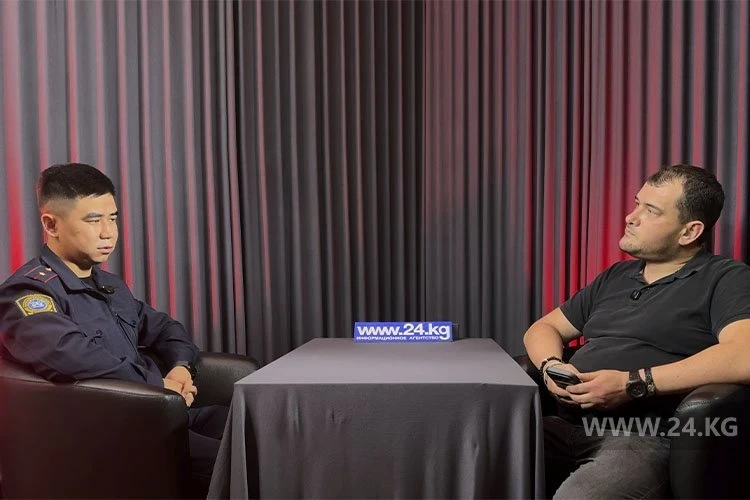
— It's a matter of experience and intuition. For example, a drunk driver can be recognized by their driving style. They often avoid eye contact with the inspector and behave nervously, while ordinary drivers look at the inspector calmly.
— How did you come to this profession? Why did you choose the patrol service?
— To be honest, I initially wanted to become a policeman, but I didn't know in which direction. After university, my father suggested trying my hand in the legal field, but I still hadn't decided. Eventually, I decided to start with the traffic police, considering it a good school.
— Why specifically the traffic police?
— Here, you constantly work with people, communicating with dozens of drivers, each with their own character and mood. In a shift, you can stop 20-30 vehicles, which allows you to develop communication and conflict resolution skills.
That's why I chose this field. We'll see how my career unfolds from here.
— What would you like to say to drivers?
— On behalf of the employees of the Patrol Police Department of Bishkek, I urge everyone to follow the traffic rules. Be especially careful and do not enter the center of the intersection if there is no possibility to continue moving. This is one of the main causes of traffic jams. And remember: knowing the rules is important, but driving culture is even more important. On the road, you must remain a human being.


