
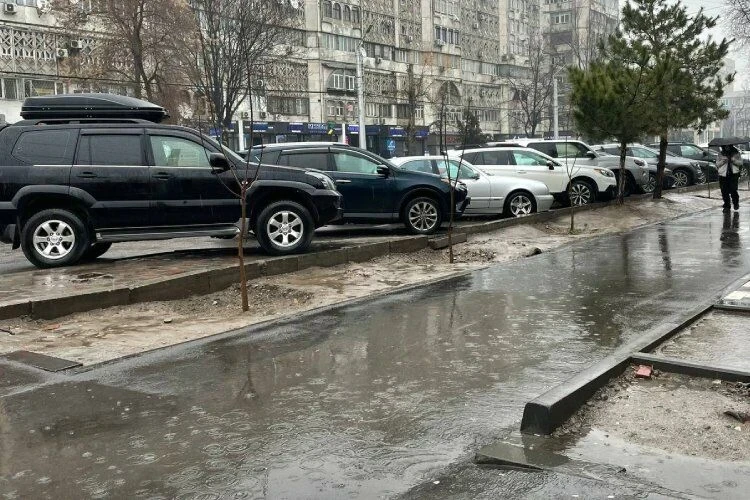
In the capital of Kyrgyzstan, Bishkek, pedestrians face difficulties during rainy weather. Scooters and electric scooters create dangerous situations, sometimes forcing people to jump into ditches to avoid collisions. Sidewalks, which are not always convenient, become even less passable when it rains.
At first glance, the sidewalks appear to be quite even for walking. However, as soon as it starts to rain, numerous puddles appear on them.
Storm drains are not installed everywhere, and residents are forced to demonstrate remarkable acrobatic skills to avoid deep puddles. Moreover, quality footwear is necessary; otherwise, after a walk along the "water routes," one might end up not only with wet feet but also with other health issues.
On Moscow Street, at the intersection with Tynystanova, puddles form regularly, but they can be bypassed along the edge. Continuing along Moscow Street towards Shopokova Street, the situation does not change.
Interestingly, on sections with old cobblestones, there are almost no puddles, as the water drains into the seams between the stones. In contrast, on the new asphalt laid last year, much more water accumulates.
In 2025, the repair of sidewalks on 28 streets, totaling 25 kilometers in length, was completed. However, despite this, puddles also form on the new sidewalks — the cause may be incorrect slope or uneven surface.
The most critical situation is observed in the area of the overpasses, known to locals as "under the bridge," at the intersection of Baytik Batyr and Leo Tolstoy. During rain, large puddles form here, and pedestrians often have to either climb up to Leo Tolstoy Street or walk through the water, saying goodbye to their shoes.
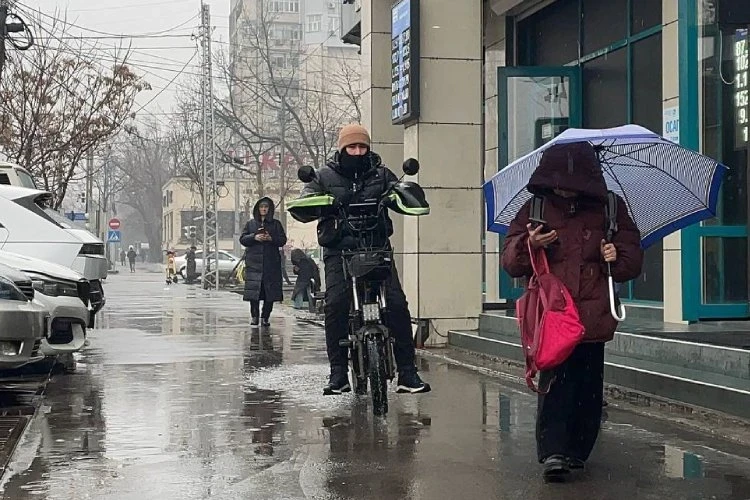

Local residents note that this problem arises year after year, especially during the rainy season. While some skillfully jump over puddles, others wonder: when will the urban infrastructure truly become convenient and safe for pedestrians?


