The motto of the event was: "Hearing is possible thanks to technology. Being heard is thanks to people."Tattygul, Alinur's mother, shared: "I am raising three children, and only Alinur has hearing problems. He is in the second grade of a regular school and is successfully mastering the educational material. My son wears binaural hearing aids," she said.
According to Tattygul, many parents mistakenly believe that after hearing aids are fitted, their children will immediately start speaking. However, it is necessary to develop understanding so that the child can analyze information and adapt to the surrounding environment.
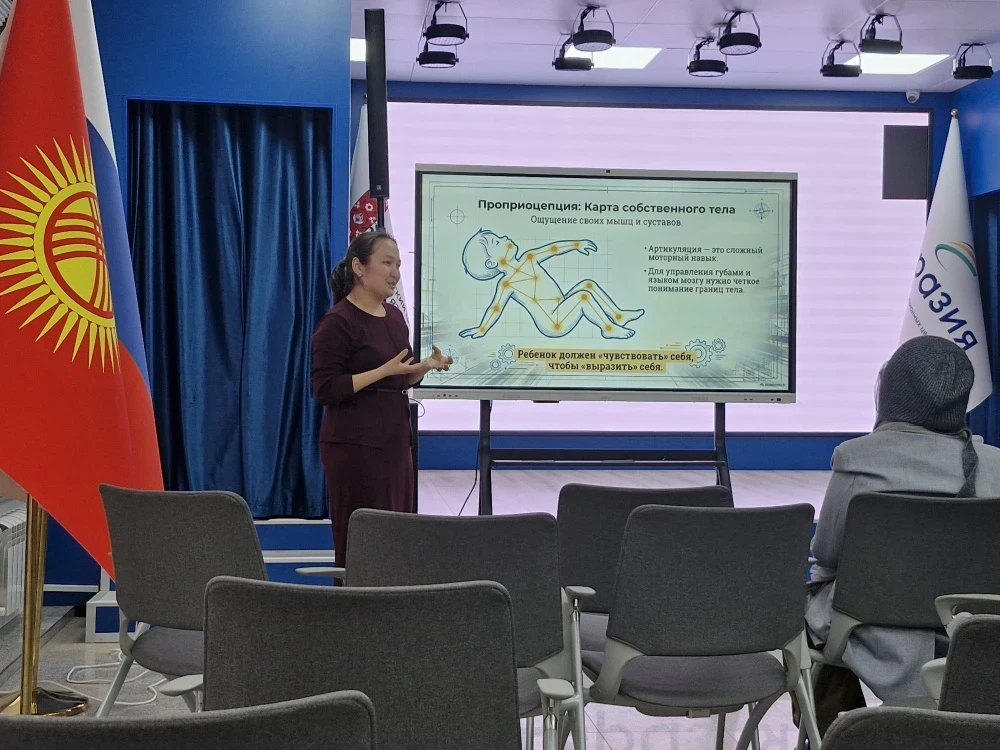
"We organized comprehensive rehabilitation: in addition to classes with a deaf educator and a speech therapist, we included sensory integration and physical development. This has yielded significant results. Alinur has become more confident, better controls his body, and his movements have become more coordinated. Children with hearing impairments often experience dysfunctions of the vestibular system, which can cause awkwardness and difficulties in group games. Developing motor skills and proprioception helps the child better manage their body and develop speech," noted Rysbaeva.
Tattygul Rysbaeva. The event dedicated to the International Cochlear Implant Day.
"Children who start hearing later perceive the world mainly visually. They memorize information with their eyes. For example, at five years old, Alinur learned the multiplication table thanks to cartoons and visual learning. He has a special love for numbers, knows them in Russian and English, can count to a million and perform arithmetic operations. However, his speech developed more slowly than his mathematical skills," added his mother.
After the hearing aids were fitted, they actively worked on expanding his vocabulary using visual cards. "I showed actions and pronounced words to establish a connection between the word and its meaning," Tattygul shares.
During walks, they named all the objects around: car, house, tree, grass, and so on. Thanks to repetition, new words were reinforced auditorily, visually, and tactilely.
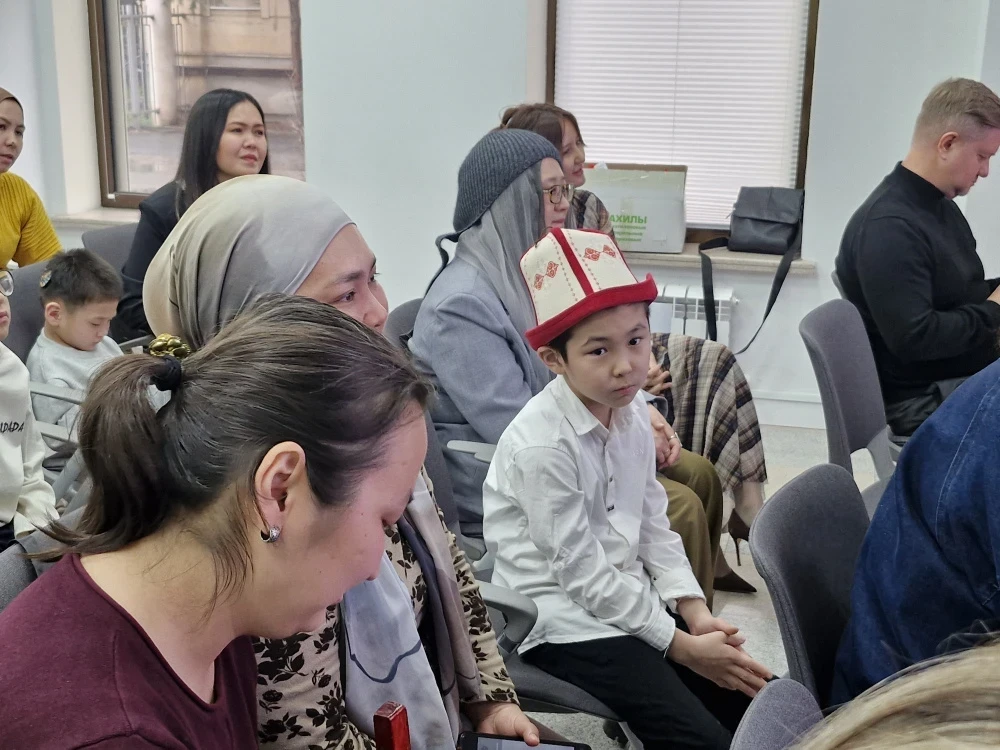
Alinur. The event dedicated to the International Cochlear Implant Day.
Tattygul emphasizes that such work requires the efforts of the entire family.
"Success in rehabilitation is only possible with the full involvement of the family," she is convinced.It is also important to monitor the condition of the hearing aids, which require regular care. "We check them after use, clean them at least every two days to avoid clogging the tubes with earwax. The devices need to be dried properly and removed at night to prevent them from breaking down," explains Rysbaeva.
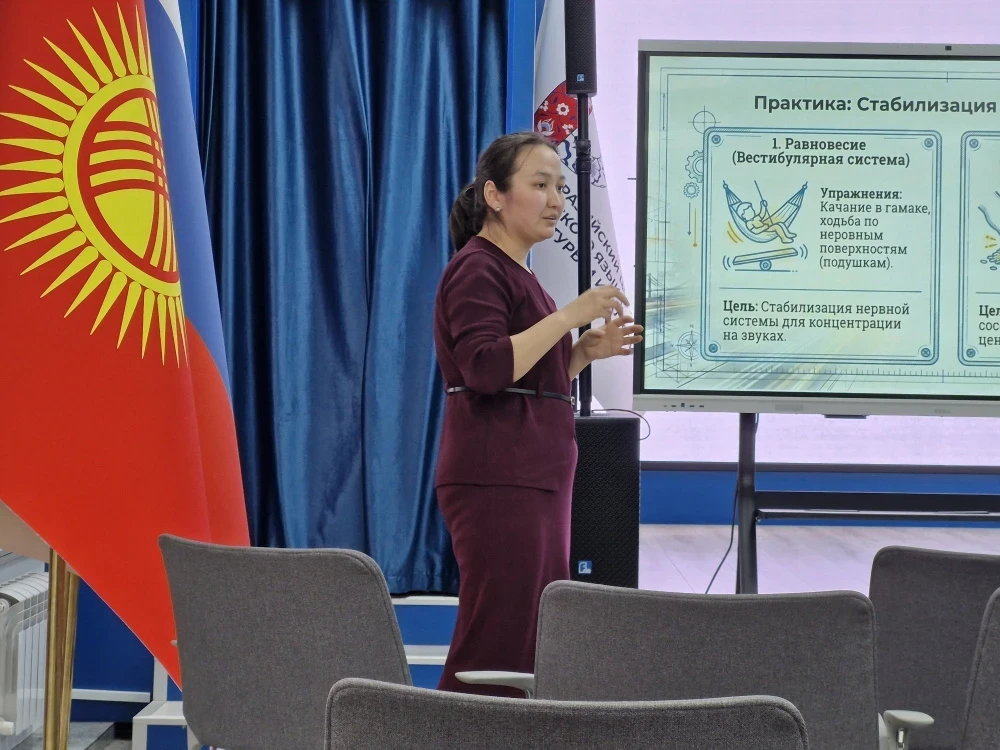
Tattygul Rysbaeva. The event dedicated to the International Cochlear Implant Day.
Tattygul believes it is important to explain to the child that the hearing aids are his, and no one has the right to touch them. "He should be able to explain to other children that these are devices that help him hear," she says.
"Once a classmate asked Alinur if he had headphones. My son calmly replied that these are hearing aids that help him hear," the mother recounts.Before sending Alinur to school, Tattygul had a conversation with the teachers, explaining to them the importance of an inclusive environment for his development. "He is safe, has no mental impairments, and can learn. We decided that a regular school is the best option for his future," she shares.
Those around perceive Alinur normally, without open discrimination. "Although someone may think something negative about us, no one openly expresses negative opinions. I see my son as a full member of society and do not allow him to be treated with pity. I am even more demanding of him than of other children so that he does not become lazy and continues to develop," says Tattygul.
Today, Alinur completes his homework independently (except for complex math problems). He helps his younger brother with his studies, monitors his progress, and feels responsible for his education.
"It is important to remember that before losing his hearing, Alinur could hear well. He could hear the sound of a bottle opening from another room and would come. Therefore, no one is immune to hearing loss. It is necessary to show humanity and openness to children with developmental disabilities," concluded Tattygul Rysbaeva.