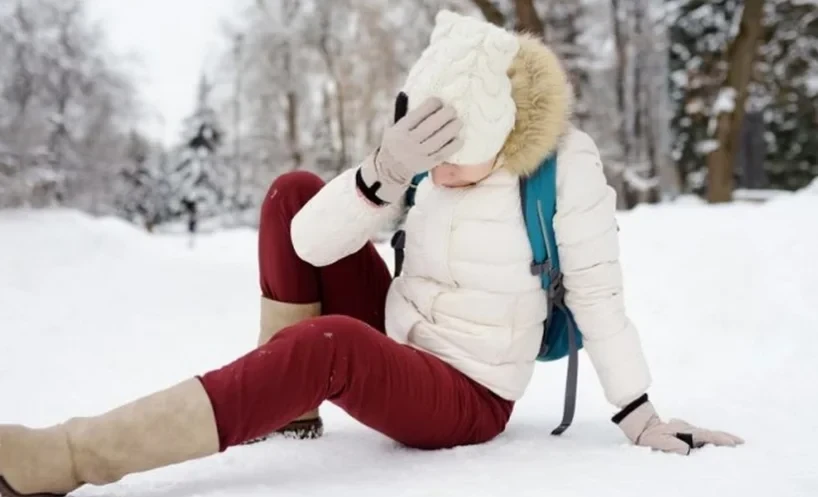
First and foremost, try to limit going outside in unfavorable weather. Prefer well-lit routes where there is less ice and the roads are sprinkled with sand. Pay attention to potentially dangerous areas, such as sidewalks along roads, public transport stops, manhole covers, and store staircases. When climbing stairs, hold onto the handrails and place both feet on each step before moving to the next one.
Footwear is also important: choose models with stable, non-slip soles, preferably rubber or textured. Avoid high-heeled shoes. If necessary, you can use special spiked attachments ("ice grips") or temporarily attach adhesive tape to the sole in a crisscross pattern or in a stair-step manner.
Move in small steps, fully placing your foot on the ground and avoiding sloped or slippery areas. Do not keep your hands in your pockets — this will help you react more quickly in case of a fall.
It is recommended for elderly people to carry a cane with a pointed end, and pregnant women are best accompanied by someone.
Be especially careful on the roadway: cross the street smoothly, without rushing, considering that on ice the braking distance of a vehicle increases. When exiting a bus or trolleybus, hold onto the handrails and do not attempt to catch up with departing transport.
Avoid walking on slippery streets while under the influence of alcohol — alcohol reduces pain sensitivity and increases the risk of serious injuries. Also, be cautious of icicles when near buildings, and maintain a safe distance from them.
How to Fall Correctly on Ice
If you do happen to slip, follow these recommendations for a safe fall:
- Try to crouch down to reduce the height of the fall.
- Assume a fetal position: tuck your head into your shoulders, press your chin to your chest, keep your elbows close to your body, if possible, cover your head with your hands, and bend your knees.
- Tighten your muscles — a bruise may be less dangerous than a fracture.
- It’s better to fall on your side to avoid injuries to your spine, arms, and ankles (this rule does not apply to elderly people — they have a higher risk of hip fractures).
- Do not instinctively try to regain your balance with your hands or feet — this can lead to injuries.
If you experience headaches, nausea, dizziness, joint pain, or swelling after a fall — seek medical attention immediately.