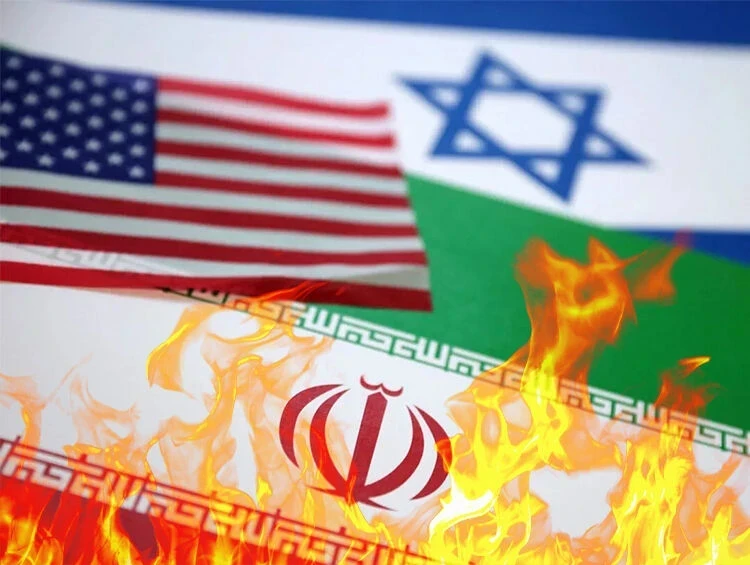
Since February 28, attacks by Israel and the United States on Iran have begun, accompanied by numerous air and missile strikes on military and civilian targets. In response to these actions, Tehran also started shelling Israeli and American bases in the region. President Donald Trump announced the start of a military operation called "Epic Fury" immediately after the first strikes.
As a result of these attacks, the Supreme Leader of Iran, Ayatollah Ali Khamenei, as well as several high-ranking officials and military personnel were killed.
The conflict in the Middle East continues to escalate, with both sides continuing to launch missile strikes. Due to the closed airspace, many people have been left stranded in the combat zone.
Experts shared their views with 24.kg on the possible consequences for Central Asia in light of the ongoing events in the Middle East.
Edil Marlis uulu, security expert:
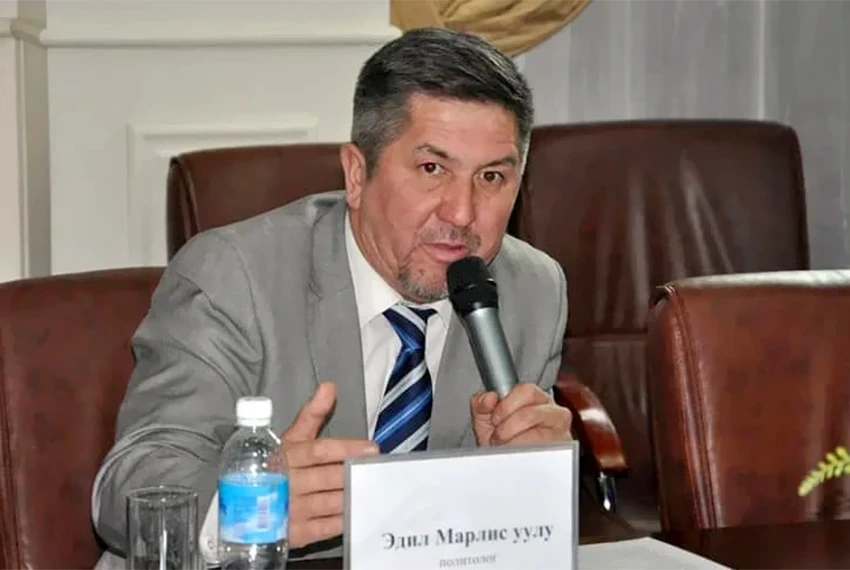
— Many experts believe that in the event of a ground war in Iran, a significant number of refugees will head to Central Asia. However, it is important to assess this situation soberly: when has Iran ever considered our region as its territory? Never. Historically, Persia and Central Asia are connected, but Persians have never migrated to us. The nearest Afghanistan is a more suitable target for Iran, not to mention neighboring Iraq, which has many Shiites.
A more alarming factor should be noted: the conflict between Afghanistan and Pakistan. This escalation in a small area could activate dormant cells in Central Asia.
Currently, there is a weakening of the Afghan "Taliban." This is a heterogeneous group consisting of more than 20 ideological and fragmented factions that could be directed towards Central Asia, posing a serious threat. We should be prepared for radical elements to become active.
If a ground operation is conducted in Iran, it will create a corridor for militants, including those from Syria. This scenario was predicted back in the early 2000s and has been discussed repeatedly in the press. In this chain, Libya, Syria, Iran, and Central Asia are involved.
The main blow will be directed not only at Iran but also at Central Asia. This territory is of interest to the United States because it borders Russia and China.
The primary goal of the current U.S. operation is not to change the regime in Iran but to achieve economic benefits.
Donald Trump, as a businessman, came to power with the intention of increasing America's wealth. For this, active trade is necessary. We see how Iran strikes at Arab countries such as Bahrain, Qatar, Oman, and Saudi Arabia — potential buyers of American weapons. The question arises: why do Iranian missiles so easily overcome the security systems of these countries? This is needed to create fear and compel them to purchase American arms.
I believe that the U.S. is conducting the operation with the aim of selling weapons to Arab countries.
Most likely, the operation will end as quickly as it began. We will then see Arab countries actively purchasing arms from the U.S.
Central Asia, as a region, must be prepared for the continuation of conflicts, as this is not a final operation against Iran.
It is necessary to unite the efforts of Central Asian countries. It is important to strengthen cooperation between security services and update outdated weaponry. Adapting to modern warfare methods requires the establishment of collective defense. No single state, be it Kazakhstan or Uzbekistan, can cope with threats alone.
The cells operating in Central Asia are interconnected, and their leadership is based in London and Washington. Therefore, our special services must work actively together, not only identifying and destroying cells but also conducting outreach among the population to prevent people from being drawn into such groups.
Taalaybek Jumadylov, security expert, veteran of the special services:

— Events in the Middle East may have a direct impact on Kyrgyzstan and the region as a whole. In particular, we depend on the import of petroleum products, which will lead to price increases. If fuel prices rise, it will affect the cost of food, clothing, and essential goods.
Thus, it is not worth expecting anything positive economically — inflation will increase.
Our neighbors, Kazakhstan and Uzbekistan, have already expressed their positions. In the current situation, our leadership faces a serious dilemma: how to act and with whom to cooperate. These issues require deep analysis at the level of closed meetings of the Security Council.
Urgent measures must be taken to strengthen national security. We cannot influence the situation on a global scale, but we can monitor it.
Serious challenges create risks that need to be classified. These risks can then lead to threats, and we should take preventive measures to minimize damage to the country and the economy.
Nur Ismail, public figure, blogger:

— I see aggression from the West in the events in the Middle East. Unfortunately, these problems have been around for a long time and have become "time bombs." U.S. policy is aimed at creating tension in various regions of the world, and their military bases do not provide security; rather, they pose a threat. In the event of a conflict, these bases could become legitimate targets.
Some claim that the Russian base in Kant could become a target. However, if a conflict arises, strikes are likely to be directed not at this base but at other targets, which reduces the risk for it. This is a purely pragmatic approach. Although it is unlikely that such a conflict will occur, as the U.S., Russia, and China are trying to avoid direct confrontation.
Destabilization in the Middle East will also affect Central Asia: if a serious conflict and humanitarian disaster arise, refugees will head north, creating additional burdens and risks of destabilization. Moreover, the threat of terrorism increases.
— How long could the conflict last?
— A long-term conflict is not beneficial for the U.S. They prefer short-term victorious wars. If the conflict drags on, it will be a problem for both the U.S. and Europe. Strategically, it could be advantageous for China and Russia, who may provide material support to Iran, but for the U.S., this is undesirable, given the low pain threshold of American society. If serious problems arise, they will inevitably provoke protests, and elections could negatively impact Trump’s hopes for victory.
As for a regional war, I see no reason for the intervention of other states. There may be small hotspots, but a serious conflict is not to be expected.
Neighboring countries report expert opinions stating that Iran could significantly impact the economic situation in Central Asia.

Economist Almas Chukin wrote on his Facebook page that the current events could be a turning point for the region:
— I have long argued that Iran is a key country for Central Asia in terms of geography. Many do not understand that Iran is our window to the sea.
The distance from the point where the Turkmenistan railway connects with Iran to the Persian Gulf is about 1,200 to 1,500 kilometers. Traveling this distance, you reach the largest ports that provide access to global markets. The sea route from there to Rotterdam takes only three to four weeks, opening up opportunities for trade with Europe.
If a regime change occurs in Iran to a more neutral one towards the West, sanctions will be lifted. I do not understand why Iran would continue to conflict with the West, as all problems have an ideological nature. The emergence of a neighbor like Iran, rich and educated, with high potential, will open new horizons for our region.
For Central Asia, this will be a colossal shift: a region with 80 million people and resources, but without access to the sea, suddenly gains direct access to global markets.
This will change the economic reality and open new opportunities for growth and investment.
If we recall history, civilization originated on the banks of the Nile, then reached Mesopotamia (modern-day Iran and Iraq) and spread to Transoxiana (the valleys of the Syr Darya and Amu Darya). This corridor is thousands of years older than the pyramids.