According to international sources, at least 50 children were killed as a result of an attack on a girls' school in Hormozgan province.
In response, Iran conducts missile and drone attacks on Israel and American bases in the Persian Gulf region.
By Saturday evening, the first reports emerged of the death of Iran's supreme leader, Ayatollah Ali Khamenei, who had held this position for over 35 years and was a key architect of the country's foreign and military policy.
Additional materials
Attack on Iran. Tehran responds with strikes on American bases in the Persian Gulf
Experts discuss the potential consequences of events that extend beyond battlefield losses and could trigger global economic upheavals and political turmoil in the UN. There are concerns about the involvement of new participants in the conflict, including Russia, China, and the Arab states of the Persian Gulf, as reported by 24.kg.
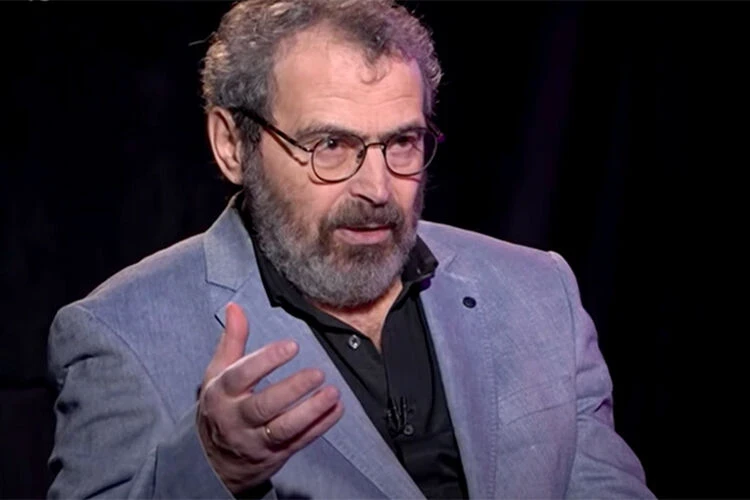
Arkady Dubnov, Central Asia and Middle East Analyst:
Photo from the internet. Arkady Dubnov
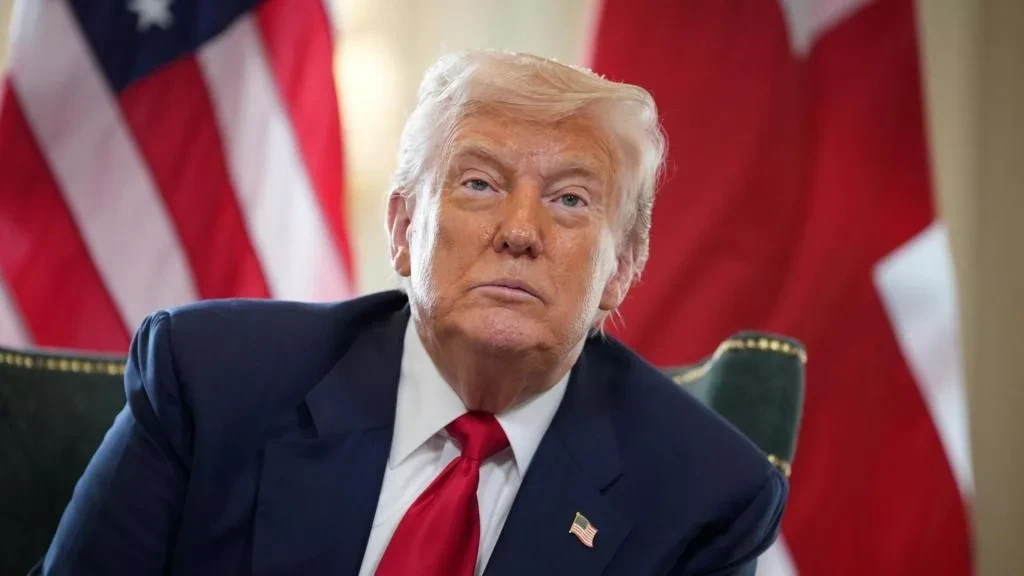
— It was expected that the situation would escalate. On February 18, Donald Trump reported: “In 10 days, I will tell you what will happen with Iran.” And now, 10 days have passed, it turned out that negotiations failed, and it was time to act, as the forces and resources for military action were already prepared.
Understanding could not be reached, as the Iranians are incapable of negotiations, like any theological regime based not on pragmatism but on faith in its sacred destiny, which in the case of Shiism includes the desire to destroy the infidels.
Arkady Dubnov
The doctrine of this regime implies the destruction of the "Satan," both the big one (the USA) and the small one (Israel). Anyone who has ever dealt with this regime can confirm this. After all, such systems are doomed, no matter how long they exist; every ideology has its expiration date. It seems that the expiration date of the Ayatollah regime is approaching.
Iran refused to discuss the key US demands to abandon its military nuclear program and Israel's demands to cease its missile program. These demands, being fundamental to the theocratic doctrine of the Ayatollahs, threaten not only Israel but also the Sunni monarchies of the region.
Israeli Prime Minister Benjamin Netanyahu stated that this war is existential for his country, and Israel intends to continue it until the threat to the existence of the state is eliminated, that is, until the overthrow of the Ayatollah regime, which will also undermine the positions of Iranian proxies in the region, such as Hezbollah and the Houthis from Yemen, attacking Israel.
Additional materials
Attack on Iran. The Shah's heir calls on the military to side with the people
It is difficult to predict the consequences for the world, but the terrorist threat from fundamentalist Iran, which questions the existence of Judeo-Christian civilization, can be neutralized, at least for several generations, until new ideologically charged groups emerge.
As one sage said, in a world where people live, things do not go well.
Emil Juraev, Expert:

— The logic of events predetermined the escalation in the Middle East. It began with a 12-day war when the Americans carried out several bombing strikes, followed by mass protests in Iran that did not meet US expectations.
Washington hoped that popular uprisings would lead to the fall of the Ayatollah regime, but that did not happen. To push the Iranians into action, America concentrated its forces in the Persian Gulf.
Additional materials
Israel vs Iran. Why the lessons of the 12-day war will not be learned by all
Internal processes in the US also fueled the aggressive tone. The Epstein scandal became a trigger for Trump, who decided to divert public attention from internal problems by initiating international activity.
Israel's policy, constant lobbying by Benjamin Netanyahu in the White House also played their role. It is likely that the conflict in Iran and the overthrow of the theocratic regime became one of the key topics in negotiations. At some point, Trump realized that further hesitation could lead to defeat and was preparing for military action.
Possible consequences are still difficult to predict. Iran, as an independent state, controls many transport and logistics hubs and is one of Russia's and China's closest allies. Although neither Moscow nor Beijing has shown active support for Tehran at the moment, this may change.
Moreover, there are hostilities between Afghanistan and Pakistan, which could further complicate the situation in Iran.
Emil Juraev
Overall, we are in a complex and alarming situation. The only thing that can prevent further escalation is an unexpected statement from Trump about achieving US goals and ending intervention.
Ruslan Suleimanov, Orientalist, NESTCentre Expert:

— I believe that the current situation is a result of Donald Trump's inconsistent policy towards Iran, which is also evident in other issues such as Greenland and Ukraine. It is unclear what the American leader actually wants. The same goes for Iran. Complete uncertainty and inconsistency: today Trump says one thing, tomorrow another. He found himself trapped when he sent the first aircraft carriers to the Persian Gulf, thinking that it would pressure the Iranian authorities. But Tehran proved unyielding, and US military presence in the region significantly increased.
In conditions where troops are stationed in the Gulf without a clear purpose, this indicates Trump's weakness and indecisiveness. As a result, he has no choice but to take military action, but the ultimate goal remains unclear.
Ruslan Suleimanov
I think what is happening is not an attempt to overthrow the regime. This is not a Venezuelan scenario. It is unlikely that Trump is interested in a full-scale ground operation. It is unclear who he is ready to bring to power in Tehran. These strikes are likely aimed at maintaining his image and demonstrating strength.
The American president wants to prove to himself that he is capable of acting decisively and achieving victory. But what he can consider a victory remains an open question. Trump can at any moment say that Iran has suffered serious losses and the regime will no longer be the same.
I see no sense in prolonging the military conflict. For now, it resembles the scenario of the 12-day war, although the scale and Iranian response differ, and more countries are involved.
There will be significant pressure on Trump in the Arab world to stop the conflict, as not only Iran is at risk but all the Arab monarchies of the region.
Most likely, Trump will stop and, as is his nature, declare his victory, once again calling himself a great commander or peacemaker. A regional war is unlikely.
Nikita Smagin, Orientalist:

— This week, several rounds of negotiations took place between the US and Iran, which yielded no results despite claims of progress from both sides. Western sources report a complete failure of the negotiations.
That is why Trump implemented the scenario he initially envisioned. Hopes for successful negotiations were minimal, and this was the last chance for diplomacy. But the chances were very slim.
Trump is seeking a breakthrough deal that would mean Iran's capitulation on several fronts, including a complete cessation of nuclear enrichment and restrictions on its missile program.
Nikita Smagin
These demands were unacceptable for Iran, as otherwise it would have to give up its resistance capabilities.
As for a full-scale ground operation, I believe it is unlikely. There are rumors of possible special forces use to undermine Iranian nuclear facilities, but that is more fantasy. Expecting large-scale ground actions is not reasonable.
Conclusion
Following the news of the death of Iran's supreme leader Ali Khamenei, the conflict entered a new phase. The removal of a figure who has long been not only a political but also a sacred center of the Islamic Republic became a symbolic milestone.
Nevertheless, analysts emphasize that even the elimination of the top leader does not automatically mean the destruction of all power. The history of the Middle East knows cases where systems have survived their leaders.
As for the escalation, it will not cease with the death of Ali Khamenei. Experts believe that military clashes in the Middle East are a logical result of failed negotiations and inflated demands from both sides. For some, this is the expected end of the confrontation with the regime; for others, it is a consequence of Washington's inconsistent policy, where an increase in military presence required actions to demonstrate resolve.
Additional materials
Attack on Iran. What remains of Ayatollah Khamenei's residence after the strike
Even the "decapitation" of the regime does not resolve the main question: who will govern a country with nearly 90 million people and a complex system of elites? Overthrowing is not just about airstrikes but also about territorial control, the need to coordinate forces on the ground, and understanding what will happen after the previous power. None of the experts see prerequisites for a large-scale ground operation, which makes a limited campaign scenario more likely, allowing Washington to declare at any moment that it has achieved its goals.
Even if this phase of the conflict is short-term, the consequences will be long-term. This is not just a military operation but an attempt to change the balance of power in the Middle East. The only question is whether the death of Ali Khamenei will be a point of no return or the beginning of a new round of struggle for influence in the region.