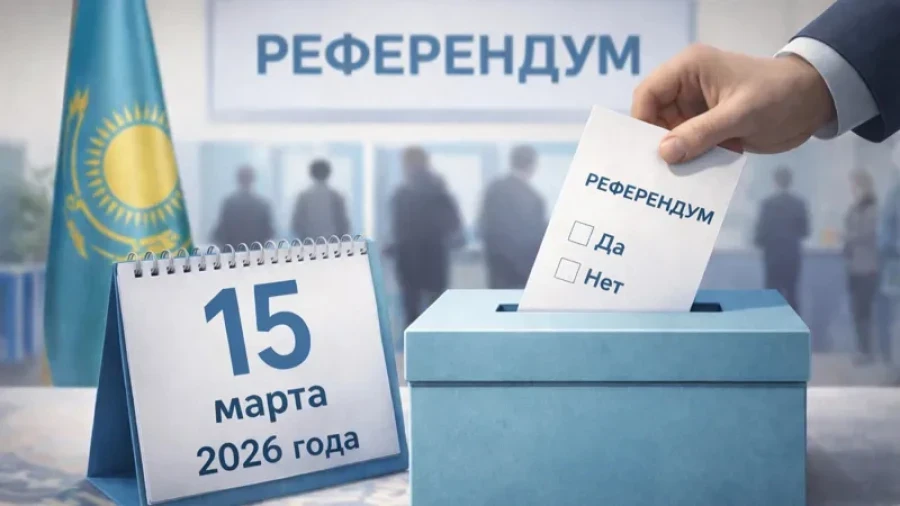
The referendum taking place in Kazakhstan aims to create a more flexible and ideologically secure model of governance for the country.
On March 15 of this year, Kazakhs will vote on a comprehensive package of amendments to the country's Constitution. These proposed reforms, which touch on important aspects such as the structure of parliament and the foundations of national identity, are aimed at modernizing the political system in response to contemporary challenges.
Expanding Powers: Breaking the Political Deadlock
One of the key aspects of the discussion has been the increase of presidential power concerning the legislative branch. According to the draft, the head of state will be able to dissolve parliament if two candidates for prime minister or judges of the Constitutional Court are rejected.
Despite concerns from critics who believe this will lead to an increase in executive power, supporters of the reform and legal experts cite international experience, where similar mechanisms serve as "safeguards" in crisis situations.
- In Germany, the federal president has the right to dissolve the Bundestag if the chancellor loses confidence (similar to what happened in December 2024 with Frank-Walter Steinmeier).
- Similar rules exist in the Czech Republic, Italy, and Spain, where failure to form a government can lead to new elections.
- In the U.S., despite the absence of a dissolution institution, presidents from Kennedy to Trump have used the appointment of candidates during Senate recesses to overcome political crises.
Thus, in this concept, the dissolution of parliament is viewed not as a tool of suppression but as a way to return the right to make the final decision to voters when parliament cannot reach consensus.
Identity as a Fundamental Principle
Significant attention is paid to the preamble of the Constitution, which is transformed from a formal introduction into an ideological foundation. For the first time at the highest legal level, the principle of historical continuity is enshrined: modern Kazakhstan is seen as a continuation of centuries-old statehood, rooted in the era of the Kazakh Khanate.
This norm has not only internal but also international significance. The mention of "ancestral Kazakh land" and the emphasis on historical subjectivity create legal protection against any attempts to challenge the territorial integrity or legitimacy of the country in international discussions. Thus, national identity and universal human rights are viewed as complementary elements rather than contradictory to each other.
Optimizing the Governance Structure: Transition to a Unicameral Parliament
The reform also proposes the elimination of the bicameral structure in favor of a unicameral parliament. Proponents of this change highlight three main arguments:
Speed: Excluding the coordination process between the Mazhilis and the Senate will allow for a more effective response to global economic challenges.
Economy: In conditions of budget deficit, reducing expenses for maintaining the second chamber and its apparatus will enable the redistribution of funds for social needs and education.
Global Practice: The unicameral model is common among unitary states with similar populations.
Establishing a Secular State
Against the backdrop of regional instability, the draft of the new Constitution clearly establishes the principle of separation of religion from the state. The reform asserts that the state acts as a neutral arbiter, not imposing ideology or favoring any particular confession, while ensuring equal rights for both believers and non-believers. This legal mechanism is designed to prevent the politicization of religion and protect religious communities from administrative pressure.
The upcoming referendum represents Kazakhstan's attempt to create a more dynamic and ideologically resilient model of governance. The success of these reforms will depend on how effectively the new mechanisms—from the right to dissolve parliament to the unicameral parliament—function in practice, ensuring the expected stability and development.
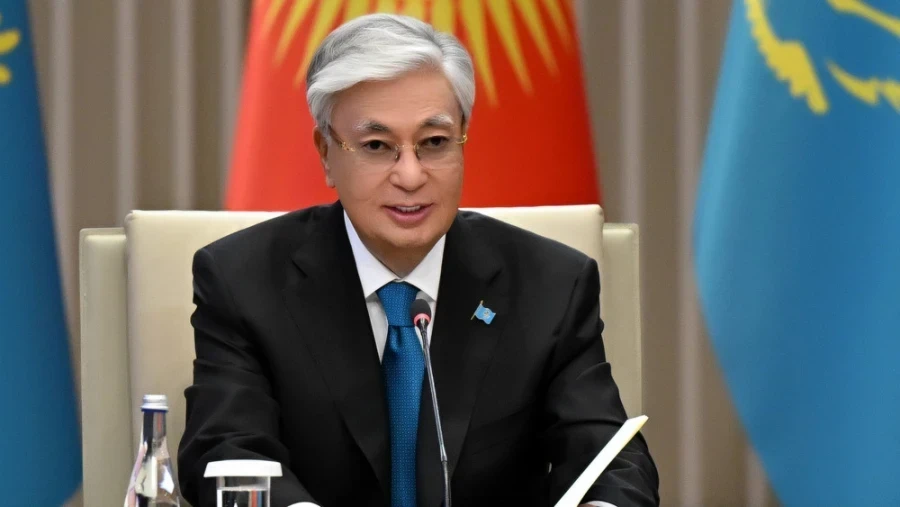
On February 17, an important phone conversation took place between Presidents Sadyr Japarov and Kassym-Jomart Tokayev. During the discussion, they addressed current issues in Kyrgyz-Kazakh relations, and Tokayev informed Japarov about the constitutional reform in Kazakhstan, which lays the foundation for the long-term progress of the state. Japarov expressed his support for the large-scale transformations in the neighboring country.
Photo www