
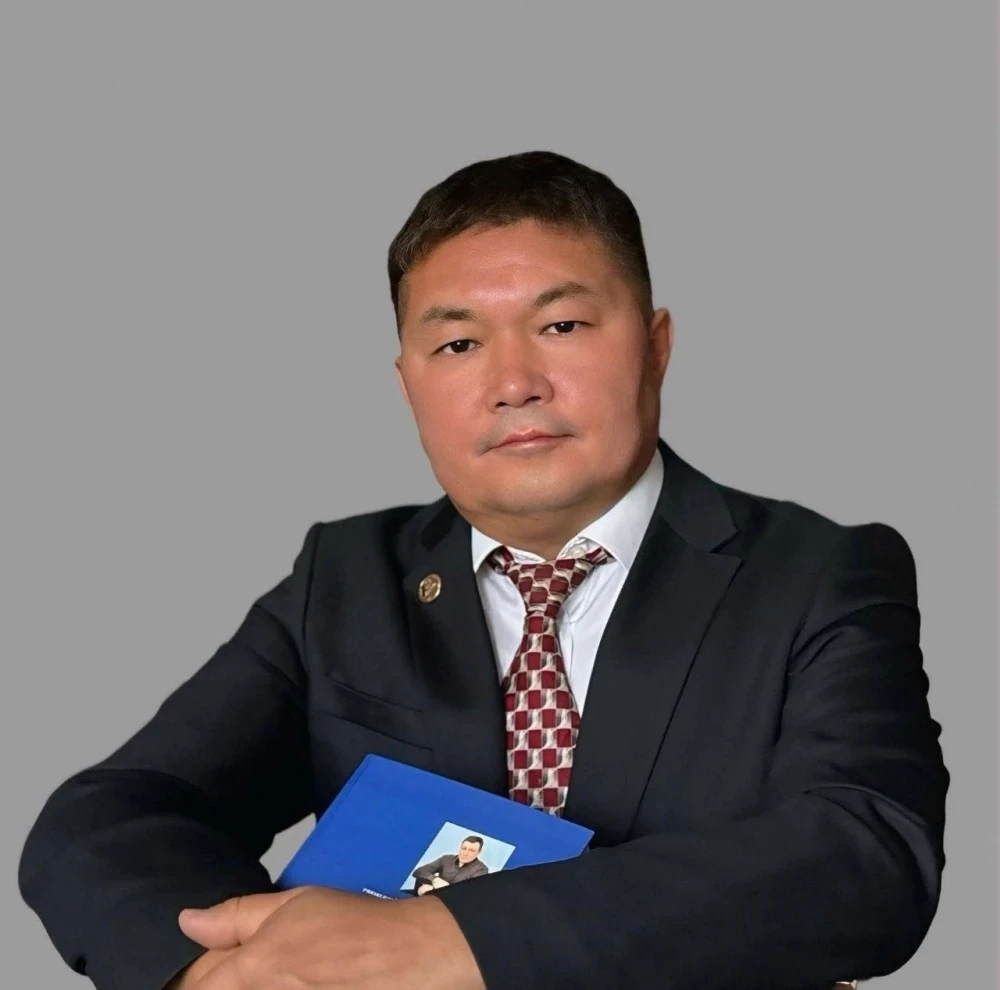
In the last days of January 2026, against the backdrop of the upcoming five-year anniversary of Sadyr Japarov's presidency, discussions about the legitimacy of presidential power and possible election dates resumed in Kyrgyzstan. The discussions were prompted by differences in constitutional models, as noted by Doctor of Law and Honored Lawyer of the Kyrgyz Republic Kairat Osmonaliev.
He reminded that Japarov was elected in January 2021 under the 2016 Constitution, which established a six-year term. However, the new Constitution, adopted on May 5, 2021, shortened this term to five years.
Osmonaliev noted that some experts and political scientists point to possible legal collisions and doubts about the legitimacy of the president's status. Nevertheless, he emphasized that this issue is legally resolved. According to the Law of the Kyrgyz Republic dated May 5, 2021, No. 59 "On the Implementation of the Constitution of the Kyrgyz Republic," part 1 of Article 3 states: "The President elected in 2021 for 6 years exercises his powers in accordance with the Constitution, and this term is counted as the first." Therefore, there are no grounds to doubt the legality of Sadyr Japarov's presidency.
The professor also pointed out that the legality of power does not always correspond to its legitimacy. Legitimacy implies public recognition and trust of citizens in the authority, while legality is determined by compliance with laws.
"As of today, the president ranks first in trust ratings according to various sociological studies. This indicates the presence of both legitimacy and legality. However, in public discussions, one can encounter varying data on support — from 30-40% to 80% and above. However, the methodology of these surveys is often not disclosed, making it difficult to objectively assess the level of trust. With the approach of elections, the issue of legitimacy may again become relevant for the opponents of the authorities and be used in political struggles. In this regard, some experts express the opinion that holding early elections would be advisable as a way to eliminate doubts and renew the public mandate. This makes sense from the perspective of political logic," Osmonaliev noted.
The lawyer also recalled that at the end of 2019, during one of the meetings, he gifted Japarov the book "Why Nations Fail: The Origins of Power, Prosperity, and Poverty" by Daron Acemoglu and James A. Robinson.
"At the next meeting in December 2020, he said he had familiarized himself with the content of the book. To what extent the ideas from this work have found their reflection in practice is a separate topic for discussion. Nevertheless, the economic measures being undertaken and the rates of growth indicate the leadership's attention to institutional factors of development. At the same time, serious problems arise: rising food prices, controversial reforms in the management of presidential affairs, changes in driver training and the elimination of private driving schools, housing accessibility within the framework of the state mortgage program, environmental issues in Bishkek, transport difficulties, as well as issues of freedom of speech and political pluralism. The problems of our labor migrants have also intensified. Unresolved issues may affect the level of public trust in the medium term," Osmonaliev added.
Given Kyrgyzstan's political experience, where electoral campaigns are often accompanied by waves of instability, the question of the legitimacy of power becomes particularly relevant.
"At the moment, there are no signs of an acute crisis, and therefore some experts view early elections as a preventive and stabilizing step. Similar practices have been used by other leaders in the region in recent years: Russian President Vladimir Putin in 2024, Kazakh President Kassym-Jomart Tokayev in 2022, Uzbek President Shavkat Mirziyoyev in 2023, and Azerbaijani President Ilham Aliyev in 2024. In all these cases, early elections became a tool for renewing the mandate of trust and strengthening power. The question of the advisability of such a step in Kyrgyzstan remains open and requires serious and balanced discussion, free from emotions and political speculations," Kairat Osmonaliev concluded.


