
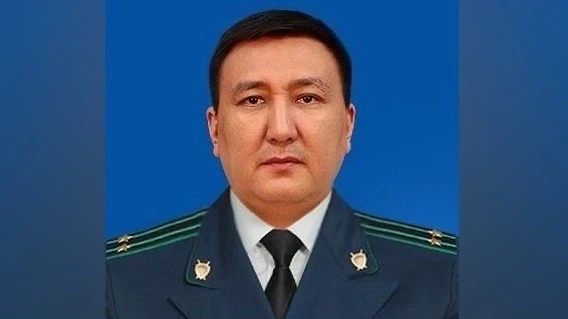
The effectiveness of justice is determined not only by the severity of sentences but also by their actual enforcement. For a long time, the bailiff system in Kyrgyzstan has been a source of serious problems: low collection rates, prolonged bureaucratic processes, and corruption undermined citizens' trust in justice. In the summer of 2025, the Bailiff Service was transferred to the jurisdiction of the Prosecutor General's Office, and this event became a starting point for significant changes. The acting director, Colonel of Justice Kurmanbekov Zhyrgalbek Kurmanbekovich, spoke about the initial results of this reorganization, digital transformations, and the increase in the service's efficiency in an exclusive interview.
- Since July 1, 2025, your powers have been transferred from the Judicial Department to the Prosecutor General's Office. What was the reason for such a significant reorganization, and what changes have occurred in your work during this time?
- The situation required decisive action. By the decree of the President dated June 23, 2025, a large-scale reform was initiated, as the old model within the Judicial Department had exhausted itself. We faced numerous systemic problems: weak enforcement discipline, lack of proper oversight, and slow inter-agency interaction.
The transition to the management of the Prosecutor General's Office is not just a change of name. It allowed us to create a strict vertical of management, where every bailiff feels the support of the supervisory authority, which immediately improved discipline. During this time, we completely changed our approach to work: we centralized functions, began actively implementing digital technologies, and established coordination with other government agencies. Now we do not ask but demand the enforcement of the law in the interests of citizens.
As for the numbers, the results speak for themselves. In 2024, just over 633 million soms were collected for the budget, and in 2025 this amount increased to 1 billion 62 million soms. Comparing the second halves of the years, in 2024, 286.6 million were collected, while in 2025, it was already 743.1 million soms, which means an increase in efficiency by 2.5 times!
The volume of incoming documents has also significantly increased: in 2025, we received almost 496 thousand enforcement orders, which is 57% more than the previous year. At the same time, the percentage of actual enforcement increased from 63% to 86.5%. We stopped ignoring documents that could previously remain unregistered for months. Now every document is registered.
- What interim results can you already announce? Has the system become stricter or, on the contrary, more operational? Has the staff increased?
- I would say that the system has become "healthy," manageable, and operational. Thanks to prosecutorial oversight, the timeframes for decision-making have been significantly reduced. We have become more proactive in applying coercive measures, but this is not "tightening" for the sake of tightening; it is normal work aimed at protecting the rights of those who have won their cases.
As for the staff, we have not increased the number of employees. On the contrary, according to the decree, we were only given the "combat units" — the bailiffs. In total, we have only 500 positions across the country, of which 380 are bailiffs. Imagine: such a huge volume of work with billion-soms collections is handled by fewer than four hundred people!
The secret of our success lies in close cooperation with the local prosecutor's office. In each of the 56 subdivisions, prosecutors analyzed all pending and problematic cases and issued strict directives. Of course, we had to conduct an internal cleanup: about 270 bailiffs received disciplinary sanctions. We analyzed the effectiveness of each employee and are preparing for rotation: if in Sokuluk one bailiff handles 500 cases a month, while in the mountains there are only 70, we will redistribute the workload.
- Will you use staff rotation? For example, between the south and the north?
- Definitely. Rotation is an effective anti-corruption tool that has been tested in the prosecutor's office. The only thing that may slow down the process is living conditions. You cannot simply move a person to another region without providing them with housing and normal conditions. Previously, no one thought about this, but now we are addressing this issue.
- On January 1, 2026, the law on full digitalization of court proceedings comes into force. Is the Bailiff Service ready to abandon paper documents in favor of electronic ones with a digital signature? Is this even possible, and do you need it?
- We are all for it! Working with paper documents in the 21st century is an outdated practice. Digitalization for us is not a trendy fad but a necessity. Currently, our IT specialists from the State Institution "Ukuк" under the Prosecutor General's Office are developing the "Enforcement Proceedings 2.0" system, which will be a real breakthrough.
Understand, the system currently operates slowly. To find a debtor's bank account, a bailiff must manually send requests to all 22 banks in the country and wait months for a response. In the new system, everything will be different: with one click, we will be able to obtain data from banks, the Cadastre, the Social Fund, and the State Institution "Unaa," and at the same moment, impose an arrest. This will significantly reduce bureaucracy and prevent debtors from hiding their assets.
- What electronic services will be available to citizens?
- We strive to be as open as possible. We already have a service with a QR code. It's convenient: you point your smartphone, enter your TIN, and instantly see all your debts, travel restrictions, and contact details of your bailiff. This news has garnered millions of views on social media, and people have started actively checking themselves.
Imagine how frustrating it is when a person who has bought tickets cannot fly due to a debt of a thousand soms. To avoid such situations, we placed QR codes in airports, akimats, post offices, and travel agencies. Now you can pay your debt online and immediately send a PDF receipt to the bailiff — the issue is resolved in 15-20 minutes. We plan to implement a "pay" button in the app to simplify the process.
- Deputy Dastan Bekeshev proposed to tighten penalties for alimony non-payers. Do you think such measures will help solve the problem, or do we need other mechanisms?
- The issue of alimony always remains complex and painful. Jails alone will not solve it. We understand that many do not pay not out of malice but due to lack of work or difficult life circumstances. However, there are also blatant evaders. For them, a short-term arrest of 3-7 days can be a good incentive. In Soviet times, 15 days of arrest significantly reduced the number of alimony dodgers.
Today, we have 60 thousand alimony cases, and 1200 people are officially wanted, meaning they have been evading responsibility for years. We propose introducing arrest as an interim measure. A criminal record is a stigma not only on the father but also on the child, who will then face difficulties when seeking employment. Short-term detention is an opportunity to reflect on one's responsibilities without ruining the child's future. Our goal is not to punish a person but to find resources for the children.
- What types of debts can lead to border restrictions? Is there a threshold amount at which a ban is imposed?
- Restrictions can be imposed for any debts: alimony, unpaid fines, or damages. The law does not set a minimum threshold, so even a small amount can become an obstacle. The exception is business taxes: a restriction is imposed if the debt exceeds 500 calculated indicators. It is best to check yourself in advance through our service.
- Are there legal ways to obtain a deferral or installment plan for the enforcement of a decision, and how can this be arranged?
- We operate within the law, not like collectors. If a person is genuinely in a difficult situation, they can apply for an installment plan. But it is important to understand: this is decided by the court, not the bailiff. According to Article 209 of the Civil Procedure Code of the Kyrgyz Republic, an application must be submitted to the court that issued the enforcement order. If the court finds the reasons valid, it will grant time or change the payment method. We are obliged to comply with such decisions.
- The work of a bailiff is associated with financial issues and external pressure. How does the Prosecutor General's Office control the integrity of the new service, and what internal checks are conducted?
- Yes, there are many temptations and pressures in our work. Therefore, "cleanliness of ranks" is a matter of the survival of the reform. Now we are being monitored by the Internal Investigations Service of the Prosecutor General's Office. Every month, we hold strict meetings where each employee signs a document confirming their awareness of the consequences of corruption.
Control has become multi-level: from analyzing citizens' complaints to electronic monitoring. Every action of a bailiff is recorded in the system. If suspicious activity is detected or a signal is received, a service investigation begins. We do not cover for our own, and if an employee tarnishes the honor of the uniform, the materials are immediately forwarded for criminal proceedings. Only in this way can we restore people's trust.
- We are used to seeing service employees only during property confiscation. What other duties do you have that society knows less about (for example, searching for debtors, working with non-property claims)?
- Confiscation and eviction are just the tip of the iceberg that journalists love to highlight. In fact, our work is much deeper and often more dramatic. We deal not only with the search for property but also for people, and even children that one parent hides from the other. We restore rights at work, demolish illegal constructions, and compel people to comply with court orders that are not related to financial issues. This is a vast area of invisible but extremely important work aimed at restoring justice.
- The presidential decree mentioned the development of the institute of private bailiffs. When will they appear in Kyrgyzstan, and how will the division of powers be implemented?
- This is a necessity of the time. The president has tasked us with implementing this institute, and the corresponding bill is already in the Jogorku Kenesh. This will be a new "hybrid" model for the country. Private bailiffs will take on part of the workload, allowing us to focus on particularly important or state cases. The powers will be clearly delineated, and we will likely start with a pilot project in certain regions.
- What are your plans for working with debtors hiding abroad? Will there be new agreements on mutual enforcement of decisions?
- This is our "painful topic," which we are actively addressing. Previously, our powers ended at the border. Now we have prepared a law that will allow us to declare international wanted status for debtors and their assets. We have already joined the International Union of Bailiffs, which unites 90 countries. A memorandum has been signed, and by March 2026, when the new legislation comes into force, we will begin actively working on assets abroad. It will no longer be possible to hide abroad.
- How can young people get a job with you? What education is required, and is there a competition?
- We need talented and competent lawyers. The requirements are clear: a law degree and work experience. Selection is carried out through strict computer tests in the State Personnel Service. Those who successfully pass the test undergo an interview with us. We are looking for enthusiastic people ready to make real changes in the system. Currently, we already have 30 excellent candidates in reserve, so competition is high, which is encouraging. All vacancies are always open on our website, so come and try your luck.


