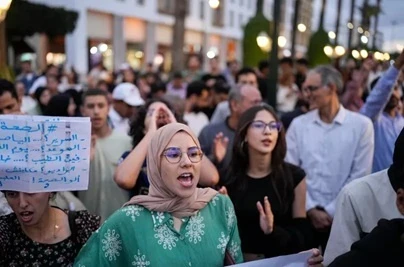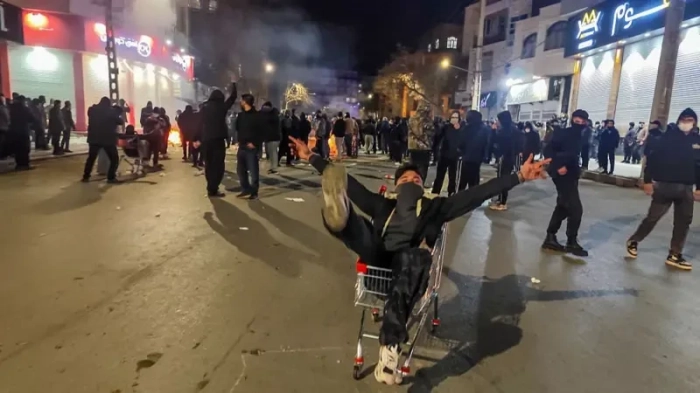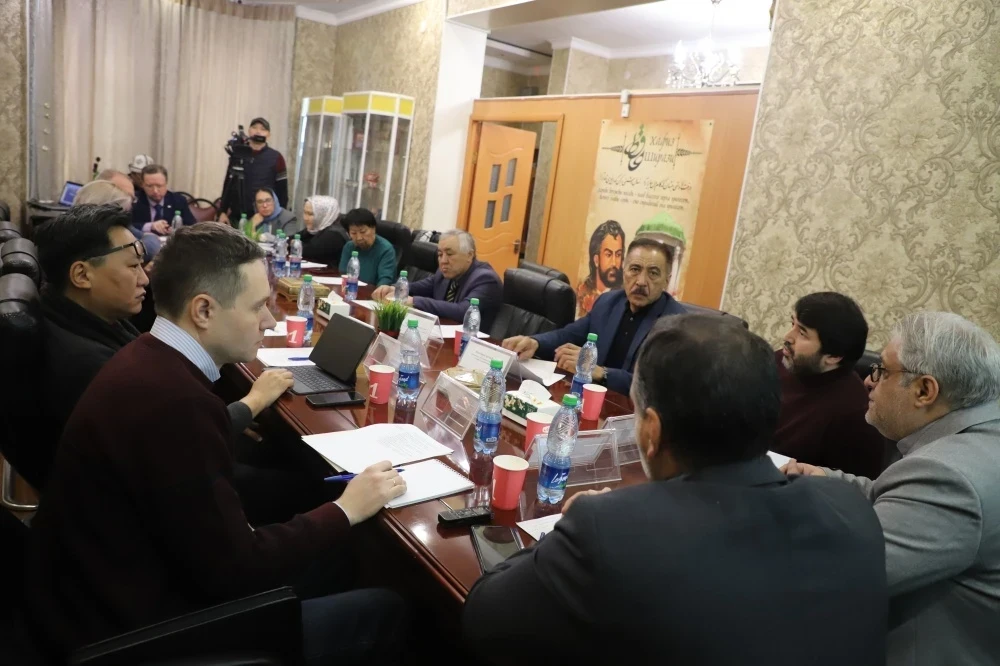
Roundtable participants noted that rising prices, inflation, and a decline in living standards have become the main factors provoking peaceful protests in the markets of Tehran. However, the further escalation of violence and attacks on state facilities indicate the interference of destructive forces in the protest movement.
Mahdi Bazzazan, acting head of the Cultural Representation of Iran in Kyrgyzstan, emphasized that what is happening in Iran is not a unique phenomenon. He pointed out that the government had previously warned about the possible consequences of social and economic difficulties that caused public discontent.
According to Bazzazan, the authorities initially tried to engage in dialogue with the protesters, which indicated the presence of democratic mechanisms in the country. However, the situation changed in early January when external forces began to intervene, calling for violence and attacks on state institutions.
The expert also noted that from that moment on, the protests radicalized, armed attacks and arson began, leading to casualties among both civilians and law enforcement officers. In response, the authorities temporarily restricted internet access to curb the coordination of protests from outside.
Hasan Chupan, director of the Cultural and Information Representation of "Fars News" in Bishkek, pointed out that the key factor in the protests in Iran was not political but socio-economic reform related to changes in the system of state subsidies. For many years, Iran allocated huge sums to subsidize essential goods; however, in practice, a significant portion of these funds did not reach consumers.
As a result, the government decided to abandon subsidies and switch to direct payments to the population, which caused a sharp rise in prices and shortages, especially among the middle class. This became the main reason for discontent and protests from merchants who lost state support.
Experts believe that the cumulative effect of sanctions and the lack of systemic reforms also exacerbated the situation. Despite the change of power, structural problems remained unresolved, undermining public trust in the government and contributing to the growth of protest sentiments.
The events in Iran cannot be viewed solely as spontaneous protests, as economic difficulties became just the starting point for the implementation of managed destabilization technologies, including financial pressure and information warfare. This complex of factors defined the scale of the crisis, according to roundtable participants.
Multiple participants noted that what is happening in Iran goes beyond spontaneous protests and represents an example of managed destabilization, where socio-economic discontent became the entry point for external intervention.
Bazzazan also noted that the methods used against Iran combine technologies of color revolutions and hybrid warfare that were previously employed in other countries. Experts emphasized that public support in the form of mass rallies in defense of the state and constitutional order demonstrated the readiness of Iranians to defend their country.
A key aspect of the analysis was the influence of external forces that use proven mechanisms of hybrid impact. Participants noted that similar technologies had been applied in other countries, and Iran has become a "showcase" of the updated model of hybrid warfare adapted to its national and cultural characteristics.
According to experts, the methods of hybrid warfare have not changed for decades, and the current events in Iran are not unique. It is important to consider that such scenarios may repeat, and Central Asian countries should be prepared for various developments.
The discussion also touched upon the potential regional consequences of Iran's destabilization, including risks for Central Asian countries, China, and Russia. Participants noted that Iran's weakening could lead to increased oil prices, disruption of logistics chains, and heightened overall turbulence in Eurasia.
Summarizing the discussion, experts agreed that hybrid technologies of violent regime change have become a serious risk factor for the states of Central Eurasia, requiring a comprehensive approach to counteraction, including the development of analytics, media literacy, and international dialogue.
The roundtable marked the beginning of a new series of expert discussions aimed at forming a balanced view of contemporary security challenges in the region.