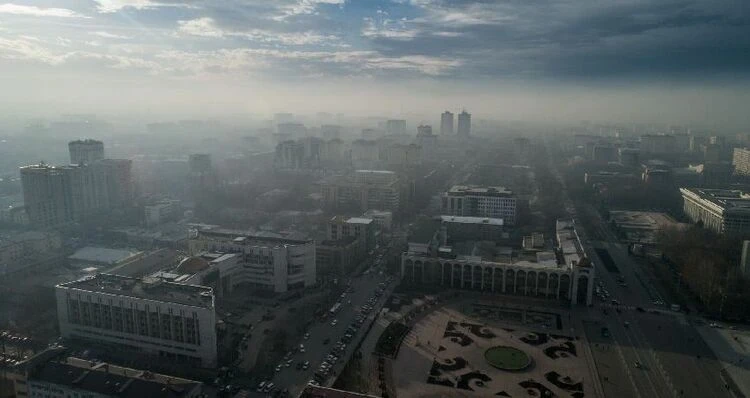
The collected data was obtained using citizen monitoring sensors and does not have official status, emphasize the organization's representatives.
In Bishkek, the level of fine particulate matter PM2.5 exceeded permissible norms for approximately 118–120 days a year. The highest level was recorded on December 24, 2024, at 367 µg/m³, which is more than 11 times the government-set limit of 35 µg/m³. The annual average concentration was 44-47 µg/m³, while the World Health Organization (WHO) norm is 5 µg/m³.
Air pollution exhibited pronounced seasonality, with the highest levels during the heating season. The level of pollutants increased in the evening, especially around 7 PM, which, according to the report's authors, is linked to the active use of heating systems in private homes and emissions from vehicles.
In Osh, the situation was as follows: out of 336 days with available data, the norm was exceeded for 159 days. Unlike Bishkek, Osh recorded exceedances even in the warmer months. The annual average concentration of PM2.5 was about 74 µg/m³ — this is 15 times the WHO norm.
The main factor contributing to pollution during the winter period was the burning of solid fuels for heating residential premises, primarily coal with high sulfur content in the private sector of Bishkek. Road transport remains a year-round source of pollution.
Among the proposals for improving the situation are increasing the number of monitoring sensors, transitioning to energy-efficient heating systems, developing public transport, greening initiatives, and enhancing the legislative framework for air quality management.