
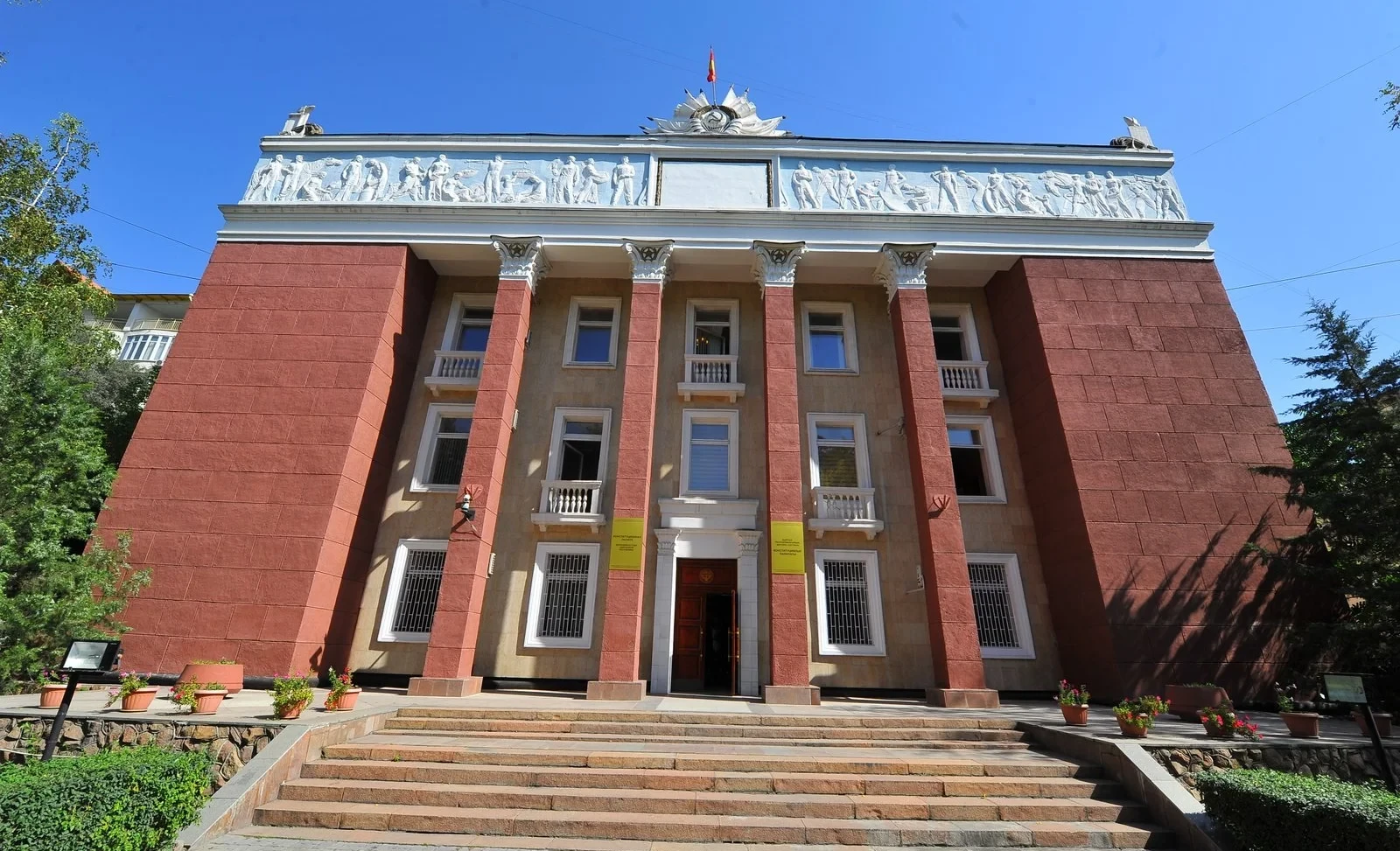
The Constitutional Court of the Kyrgyz Republic has completed discussions on an important issue regarding the term of office of the president, clarifying the dates of the upcoming elections. On February 17, 2026, the court examined the president's request for an interpretation of several articles of the Constitution in the context of the amendments made by the Law of May 5, 2021, and reached important conclusions.
The fundamental law of the country serves as the basis for the organization and functioning of power, ensuring the stability of the legal order. At the same time, the Constitution must remain flexible to respond to changes in society without undermining its core principles. The people of Kyrgyzstan, as the source of power, confirmed the legitimacy of the new Constitution on April 11, 2021, establishing a new structure of power.
The transition from one constitutional model to another is permissible; however, it must be legally correct. It is important not only to change the text of the law but also to consider the logic of the transition to the new system. Legal uncertainty can undermine the legitimacy of power and cause legal conflicts, making the consolidation of legal continuity essential.
The transitional period requires special attention, as it is most vulnerable to legal violations. Transitional provisions serve as stabilizers, providing protection for legal norms during reforms. This allows for the control of the transition process and the maintenance of the functioning of power.
Changes in the 2021 Constitution affected the rules for appointing the president. The new version of Article 67 establishes five-year terms with a limit of two terms in office. Unlike the 2010 Constitution, where the president was elected for six years without the possibility of re-election, the new model allows for re-election.
These changes became relevant in the context of the powers of the current president, S.N. Japarov, who was elected under the 2010 Constitution and took office on January 28, 2021. After the new Constitution came into force, his powers continued within the framework of the new system.
Over time, debates arose in society about how the new term of office affects the mandate of the president elected under the old rules. The main question was whether the new five-year limit applies to the already existing mandate or if it continues to operate in its previous scope.
The Constitutional Court pointed out that President Japarov's mandate is the result of the people's will and, therefore, must be respected in its original conditions. It is important that the new constitutional norms do not alter existing legal relationships.
According to the Constitution, the president's mandate must end within the established term—six years. At the same time, his powers continue to operate within the framework of the new Constitution, and the six-year term is counted as the first under the new rules regarding the number of terms.
The transitional provisions of the new law have the same legal status as the main text of the Constitution, as they were adopted simultaneously as a result of a referendum. This underscores their importance and high legal force.
Regarding early elections, the Constitutional Court noted that discussions about the term of office do not create grounds for their conduct. Early elections are only possible if there are exhaustive grounds listed in the 2021 Constitution, such as resignation or inability to perform duties.
In the absence of such grounds, the issue of early elections remains closed, and elections must proceed according to the established cycle. The next presidential elections are scheduled for January 24, 2027, and their preparation must be initiated by the Jogorku Kenesh no later than September 24, 2026.


