
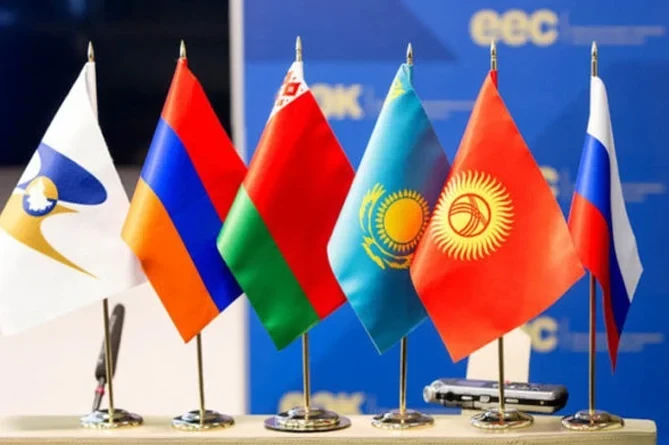
With the start of 2026, when Kazakhstan will chair the EAEU, the country is taking decisive steps to protect its automotive manufacturers and agricultural machinery producers, despite criticism directed at the country's representatives for weak protection of economic interests, writes Maksat Nurpeisov.
The public discussion period for amendments to the order of the Ministry of Ecology of the Republic of Kazakhstan regarding the increase of the recycling fee for cars and agricultural machinery imported from Russia and Belarus ended on February 3. This decision was a response to the sharp increase in recycling fees for equipment coming from Kazakhstan, which was initiated by the Russian side.
According to the Telegram channel Baza, more than 30,000 cars assembled in Kazakhstan were imported into Russia since spring 2024, but since October, customs authorities began requiring additional payments due to the presence of an import declaration. Previously, Kazakh car owners had not faced such requirements. The Kazakh side, in turn, distanced itself from the problem, citing that the actions of Russian customs officials are beyond their competence.
Now, according to the Ministry of Industry of Kazakhstan, "the balance will be restored," and this only concerns equipment from Russia and Belarus.
The reaction from Moscow and Minsk to these events is still unknown, but representatives of industry associations in these countries are expressing concern. Russians are rightly worried: the current recycling fee rates for importing cars into Kazakhstan are 757,000 tenge (about 114,000 rubles), which is much lower than in Russia. The draft order from the Ministry of Ecology proposes to increase the coefficient 40 times, making the tariffs effectively prohibitive — up to 29 million tenge or 4.4 million rubles.
This step will lead to a significant increase in the cost of importing cars, primarily products from AvtoVAZ, and create additional opportunities for the Kazakh automotive industry, which the government has long recognized the need to develop. However, AvtoVAZ, which is currently going through tough times, holds significant importance for Russian authorities not only economically but also politically. Anton Shaparin, Vice President of the National Automobile Union of the Russian Federation, expressed the opinion that this step is "a blow to the Eurasian Economic Union." Although he does not comment on possible retaliatory actions from Moscow, they will undoubtedly follow.
Shaparin also noted that Kazakhstan is trying to limit access to its market for AvtoVAZ in response to Russia's actions, which may also affect other goods. In his opinion, the recycling fee is being used as a tool for political pressure, and he hopes that negotiations will be held regarding the further development of the EAEU and customs policy.
Since the beginning of Kazakhstan's chairmanship in the EAEU, mutual economic attacks between countries can be expected to continue. The question of a possible "trade war" between Astana and Moscow is becoming increasingly relevant. Previously, such a situation seemed unlikely, but changes in global trade relations and active actions by Kazakhstan are calling into question traditional agreements, including contracts with transnational companies. The precedent with cars shows that Kazakhstan is ready to bring order to its integration union, which was founded by Nursultan Nazarbayev.
The EAEU, despite its name, has long become a tool for Russia to exert pressure on its partners. The situation with the "sugar crisis" in the summer of 2022, when Russia halted supplies, is a vivid example. Over the past decade, Russia has applied numerous "non-tariff" measures against Kazakhstan and other member states. Kazakhstan, apparently, could not or did not want to respond to this, which is explained by its dependence on Russian imports and the scale of the Russian economy.
Nevertheless, the question of why Kazakhstan continues unprofitable trade with Russia and other EAEU countries remains open. In 2023, Kazakhstan had a significant negative trade balance with Russia and Belarus. Political economist Petr Svoik links this dependence to the difference in the economic potentials of the countries. But is that really the only factor that matters?
Expert Olzhas Zhoraev believes that the structure of the EAEU creates barriers to protecting the interests of individual countries, which also worsens the situation. Kazakh economist Arman Beisembaev emphasizes that the country suffers from a huge trade imbalance with Russia, which devalues the benefits of participating in the union. His colleague Tulegen Askarov previously estimated Kazakhstan's losses from participation in the EAEU at 20 billion dollars over the first seven years.
Thus, it is evident that for Kazakhstan, participation in the EAEU is more likely useless than beneficial. And although actions to protect the automotive market do not mean an immediate exit from the union, they demonstrate that Kazakhstan is ready to defend its interests. This could mark the beginning of significant changes in relations within the EAEU.


