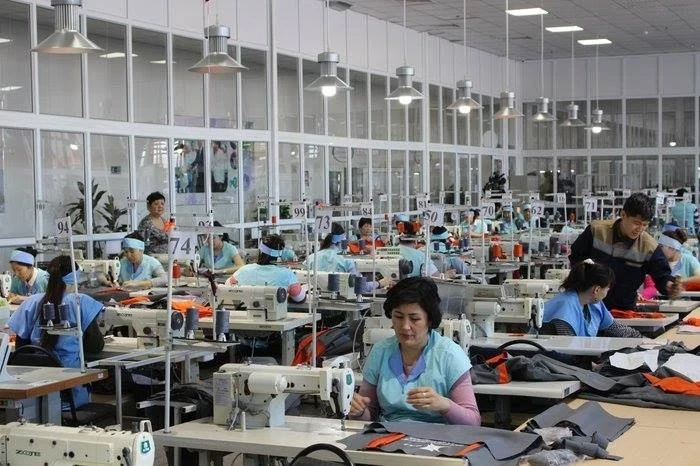
Atabekova noted that the main problems in the garment industry relate to product sales and financial issues, which negatively impact competitiveness in both price and quality of goods.
“We see that all manufacturers have a common problem. First and foremost, it is sales and financial issues. Therefore, we cannot compete on price or quality,” she emphasized.
She also added that to develop the industry, it is necessary to create favorable conditions and ensure access to labor, including foreigners. However, in her opinion, the current punitive measures are too lenient. “Our legislation is not strict enough, and many producers start to poach foreign labor that was invited to work,” Atabekova noted.
The head of the association proposed to amend Article 93 of the Code of the Kyrgyz Republic on offenses, indicating that the existing fine for legal entities is 650 calculation indicators (65,000 soms) and is not an effective deterrent.
“For a garment enterprise, the amount of 65,000 soms is insignificant. They can simply view it as a regular fine and continue to violate the law,” she added.
According to Atabekova, such a situation leads to dumping, loss of qualified workers from conscientious companies, as well as growth in the shadow economy and hidden tax revenues.
As an example, she cited the practice in Russia: “In the Russian Federation, fines for legal entities can reach 1 million rubles for each illegally hired employee, and there are also measures for administrative suspension of activities for up to 90 days,” she noted, adding that no one would want to take such a risk.
Atabekova also voiced unofficial data on the scale of the problem: “As of today, 72% of enterprises use illegal labor or foreign labor invited without proper documents,” she said, adding that the association is ready to present a draft amendment to the deputies.
In addition, the head of the association expressed her opposition to the creation of a separate ministry for the industry, considering it unnecessary.
“The creation of new ministries will lead to additional bureaucracy and expenses for the country, which is absolutely impractical,” she stated.
Atabekova also drew attention to the issue of opening garment enterprises by non-residents. She noted that foreign companies, having financial resources and operating under the same tax conditions as local enterprises, can create competitive risks and contribute to capital outflow from Kyrgyzstan.
“This creates opportunities for violations of competition legislation and significant capital outflow from the country,” she said.
In conclusion, Atabekova emphasized that the proposed changes in two key areas—tightening responsibility for violations in the use of foreign labor and regulating the working conditions of non-residents—could significantly impact the development of the industry.
“The introduction of legislative amendments in these areas will be a significant step in the development of the textile and garment industry,” she summarized.