
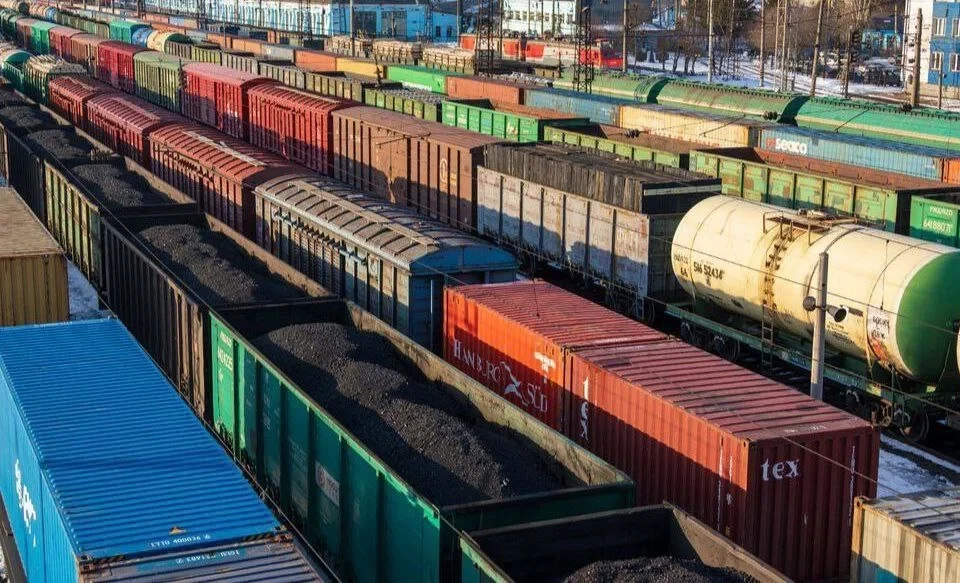
The length of the Kyrgyz railway is 424.6 km, and it plays an important role in the country's transport infrastructure, providing strategic connections with the railway networks of neighboring countries and facilitating the development of international trade and passenger transport.
The railway network of Kyrgyzstan is divided into two separate sections. The northern section, 323.4 km long, connects Rybachye with Kazakhstan through TurkSib and serves as an important transit route for cargo heading to Russia and other CIS countries. The southern section is 101.2 km long and provides Kyrgyzstan with access to the railway network of Uzbekistan. Currently, the system operates 28 stations.
At present, the National Company "Kyrgyz Temir Zholu" is one of the largest state enterprises, actively developing its potential based on a strategy initiated in 2021.
By the end of 2025, the enterprise achieved a historical record in cargo transportation volumes, exceeding 10 million tons. This event was significant for the Kyrgyz railway, as the average annual cargo volume before this was around 7 million tons. Since 2022, there has been a steady increase, and by 2024, the transportation volume reached 9.2 million tons.
The reasons for the increase in transportation volumes include enhanced production efficiency, the development of railway corridors and routes, as well as systematic modernization of the industry. In 2021, a strategy was developed aimed at restoring the enterprise, which was in a difficult financial situation and needed to update its capacities.
The initial steps of the reform included digitalization, reducing risks associated with the human factor, combating corruption, optimizing expenses, revising the legislative framework, and modernizing repair facilities and tracks. At the same time, activities were carried out to develop international connections, including the opening of new multimodal transport corridors from China to Europe.
Additionally, as part of the digitalization of freight transport, software called "Unified Model of the Transportation Process" was created, which integrates all stages of cargo transportation into a single information system.


