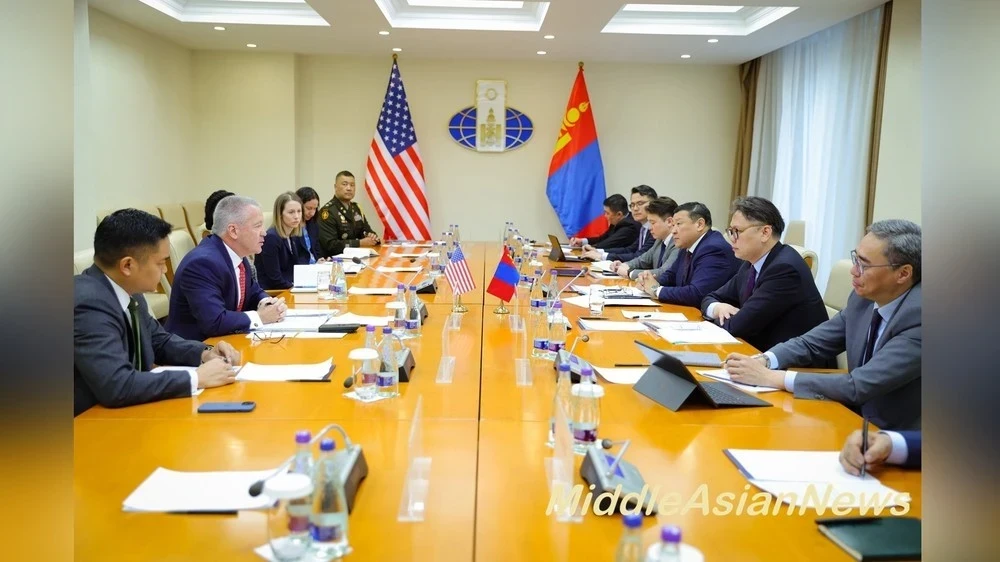
On March 19, a meeting was held at the Japanese embassy in Ulaanbaatar to commemorate the 50th anniversary of the beginning of education for Mongolian students in Japan. Graduates who received diplomas through Japanese scholarships over the past five years were warmly welcomed at the ambassador's residence, where a reception and festive party took place.
According to MiddleASianNews, 2023 marks the 50th anniversary of the first Mongolian student studying in Japan under the Japanese government's scholarship program. Representatives from Japanese alumni associations and various societies operating in Mongolia, including the "Jugamo" and "JDS" alumni associations, attended the event.
Diplomatic relations between Japan and Mongolia were established on February 24, 1972.
According to "Secret Order No. 26," issued by the Chairman of the State Committee for Higher Specialized Education of the Council of Ministers of the Mongolian People's Republic on February 11, 1975, a Japanese language course was opened as an elective subject at the Faculty of Linguistics of the State University.
The first six students of the Mongolian language department began studying Japanese, which was an important step in training specialists proficient in the Japanese language in Mongolia.
From 1975 to 1990, elective courses were offered at the State University of Mongolia, taught by three instructors, and during this period, 53 graduates were produced. From 1990 to 2010, Japanese was taught in 90 schools with 350 teachers, and in 2006, 12,620 students graduated, setting a record in Japanese language education.
Just five years after establishing diplomatic relations, Mongolia began sending its first students to Japan, and in March 1975, six students traveled to the Land of the Rising Sun for the first time.
Looking back over the past 50 years, it can be noted that Mongolia's transition to democracy and a market economy in 1990 had a significant impact on bilateral relations with Japan. Since then, cooperation has become more active, and interest in studying the Japanese language has increased, leading to improved levels and quality of language proficiency among Mongolian students.
Mongolian students studying in Japan choose a variety of specialties. Mongolians have achieved success in culture and art, including sumo and visual arts, and their proficiency in the Japanese language has become deeper and broader. It is also worth noting that the "Higher Engineering and Technical Education" project is being implemented with financial support from Japan. Starting this year, the training of new Mongolian engineers and specialists in technology will begin, contributing to the growth of specialists in the Japanese language in the natural sciences.
Fifty years is just the beginning, and in the future, Japanese language teaching will continue to develop, combining traditions with modern technologies. I am confident that the pioneers and teachers who have overcome many difficulties will continue to seek solutions together with the younger generation and develop the training of Japanese-speaking specialists in Mongolia.