
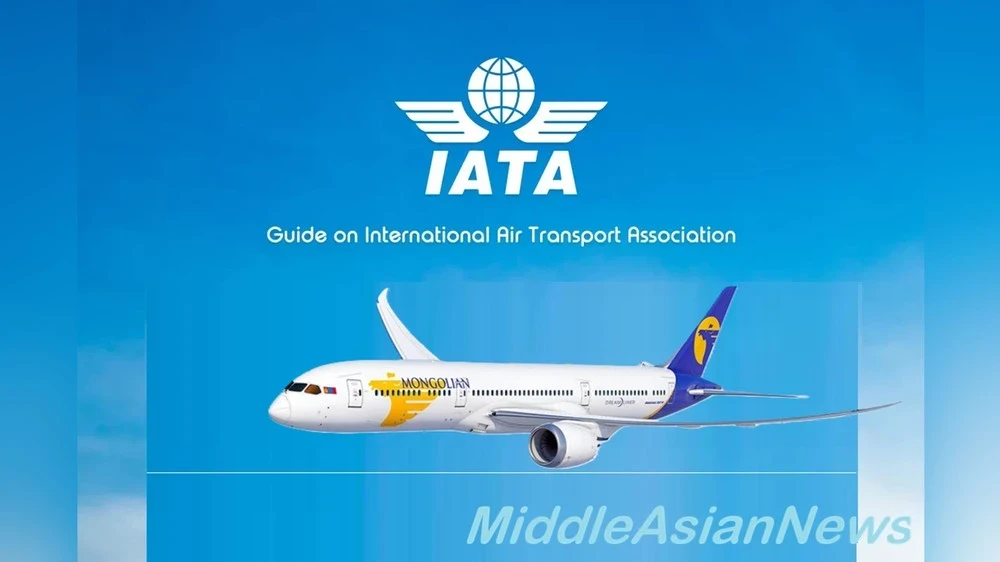
On March 6, 2026, at a meeting of the Board of Directors of the International Air Transport Association (IATA), Telmen Tunsag, the Executive Director of MIAT, was elected to the Board of Directors of the association," reports MiddleAsianNews.
Currently, the IATA Board of Directors includes representatives from airlines such as Air Canada, Air China, Air France-KLM Group, Air India, All Nippon Airways, American Airlines, Atlas Air, Lufthansa Group, Cathay Group, Copa Airlines, Croatia Airlines, Ethiopian Airlines, FedEx, Hainan Airlines, Japan Airlines, KLM, Korean Air, Latam Airlines Group, MIAT, Middle East Airlines, Pegasus Airlines, Qatar Airways, Royal Air Maroc, Rwandair, SAS, Saudi Arabian Airlines, Turkish Airlines, United Airlines, and VOLARIS. The chairman of the board is Luis Gallego Martin, CEO of IAG, and the director general of IATA is Willie Walsh.
Board members participate in decision-making on various issues related to safety, environmental policy, and international cooperation. This event represents not only a prestigious opportunity but also a chance to influence the future of global aviation.

Telmen Tunsag, Executive Director of MIAT
IATA, or the International Air Transport Association, is an international non-governmental organization headquartered in Montreal, Canada, with its executive office in Geneva, Switzerland. The association has 57 offices and 120 representations worldwide.
IATA was founded on April 19, 1945, in Havana, Cuba, with the aim of promoting cooperation among airlines.
At the time of its establishment, IATA included 57 members from 31 countries, primarily from Europe and North America. Today, the association has 350 members from 120 countries, operating about 80% of all international flights (as of May 25, 2025).
IATA is the successor to the International Air Traffic Association, founded on August 28, 1919, in The Hague. The primary goal of this organization was to ensure safe, regular, and economically viable air transport, as well as to promote cooperation among all participants in international air transportation. This organization ceased to exist during World War II.
Before the reforms of Ronald Reagan regarding deregulation in commercial aviation, IATA controlled all aspects of civil aviation, including in-flight menus and seat spacing.
In February 2021, a partnership agreement was signed between IATA and OAG, a leading global provider of travel analytics, allowing the association to access flight information and other reference data.
IATA acts as a coordinator and representative for the aviation industry in areas such as flight safety, flight organization, fare policy, maintenance, and the development of international standards in cooperation with ICAO.
Since 2007, IATA has fully transitioned to the use of electronic tickets for the sale of air transport.
Flight safety is a priority for IATA. The main tool for ensuring safety is the IOSA (IATA Operational Safety Audit), which has been implemented as a regulatory requirement in several countries. The year 2012 was the safest year in aviation history, with an accident rate of 0.20 per million flights, corresponding to one incident per 5 million flights.


