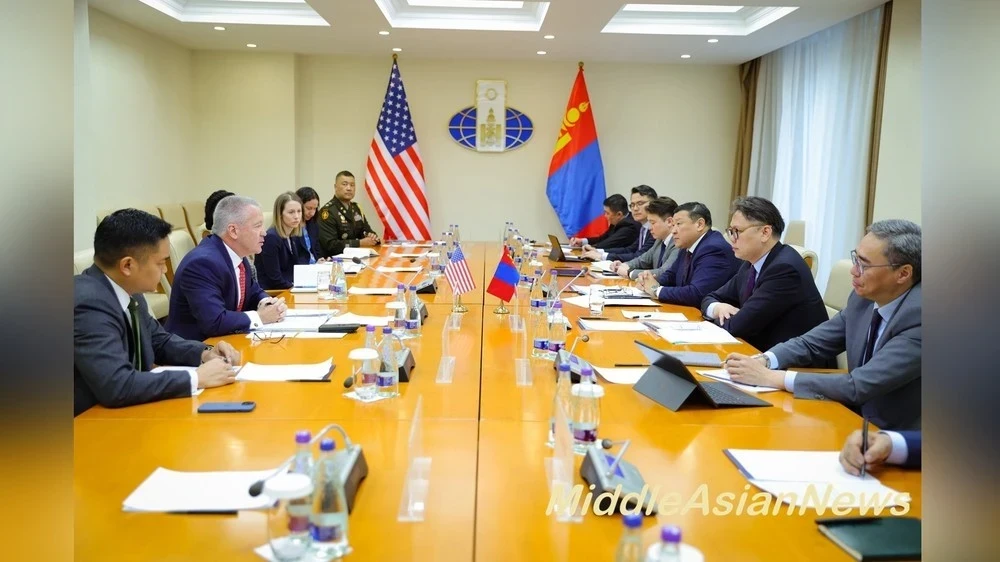
on the left: Minister, Ms. Jeong Eun-kyung and Minister Chingburen Jigjidsuren
Korea and Mongolia have resumed their cooperation in the field of health care and medicine, which was interrupted due to the COVID-19 pandemic. Under the new agreements, the parties agreed on the transfer of patients funded by the Mongolian government, as well as on the training of medical personnel.
On Friday, a bilateral meeting took place at the Lotte Hotel between Mongolia's Minister of Health Chingburen Jigjidsuren and representatives of the Korean Ministry of Health and Welfare. Mongolia sent its minister to participate in the Medical Korea 2026 conference. This was reported by MiddleAsianNews.
Since the signing of the memorandum of understanding in the field of health care in March 2011, Mongolia has become an important partner for Korea. Korean medical institutions are actively developing their activities in this country. As of 2024, about 26,000 Mongolian patients have visited Korea for medical assistance, highlighting the level of cooperation between the states.
During the meeting, the parties confirmed the importance of bilateral cooperation in the field of health care and discussed ways to further develop it. The main topics of discussion included the resumption of the Korean-Mongolian medical cooperation body, treatment of state patients, training of medical specialists, oncology, pharmaceuticals, telemedicine, and the development of Mongolia's ICT infrastructure.
As a result of the meeting, three agreements were signed aimed at improving cooperation on the transfer of patients from Mongolia to Korea, as well as the training of doctors: an agreement on patient transfer and training, an agreement on the provision of medical services, and an implementation plan for educational programs.
The agreement signed between the health ministers of the two countries is significant as it expands cooperation in patient transportation and clinical training, which was previously focused on the Middle East, now includes Mongolia as well.
The agreement involves 24 leading Korean medical institutions, the Mongolian Center for Health Development (CHD), and the Korean Health Industry Development Institute (KHIDI), which will provide medical services for patients receiving government funding.
Now, Mongolian patients with serious illnesses will be able to choose suitable medical institutions in Korea in advance and receive systematic medical assistance upon arrival.
The implementation plan for the training program for Mongolian doctors signed between CHD and KHIDI meets Mongolia's requirements, as the country partially finances these expenses. The "Korea-Mongolia in Seoul" project trained 173 doctors from 2012 to 2019, strengthening mutual understanding and trust between the countries.
According to the new plan, a month-long interdisciplinary training program for doctors will be held in July at one of the Korean medical institutions, which will help develop skills in such in-demand areas as oncology and heart transplantation.
Chingburen Jigjidsuren, Mongolia's Minister of Health, noted: "Patient transfer and medical training are key areas of our cooperation. I am confident that training in Korean medical institutions and the exchange of advanced technologies will have a significant impact on improving the health of the Mongolian population and enhancing the qualifications of doctors."
Korean Minister of Health Jeong Eun-kyung added: "This meeting within the framework of Medical Korea created an opportunity to resume cooperation between our countries. We hope to quickly establish a bilateral cooperation body in the field of health care and expand interaction in areas such as oncology, pharmaceuticals, medical devices, and ICT health care, in addition to patient transportation and training."