According to GovInsider, a Singaporean information platform, Mongolia is actively working on the implementation of digital technologies as part of its national strategy. The main focus is on maintaining a balance between regional leadership and preserving cultural heritage. Within the framework of the "Vision 2050" strategy, the government aims to leverage digitalization to stimulate socio-economic growth.
Mongolia, which has an area four times larger than Germany, is the largest landlocked country in the world. It is renowned for its picturesque landscapes, the Gobi Desert, and unique flora and fauna, including the Przewalski's horse.
With a population of about 3.5 million people and neighbors like Russia and China, Mongolia is focused on implementing technologies for closer integration with the global community.
In May 2020, the Parliament of Mongolia, known as the Great State Khural, approved the strategic document "Vision 2050," which envisions transforming the country into a regional power with a high-income level by 2050.
In an interview with GovInsider, the Director of the Census and Data Analysis Department of the National Statistical Office of Mongolia, Ariunbold Shagdar, emphasized that the main goal is for Mongolia to become a leader in socio-economic development while preserving its identity and ecology.
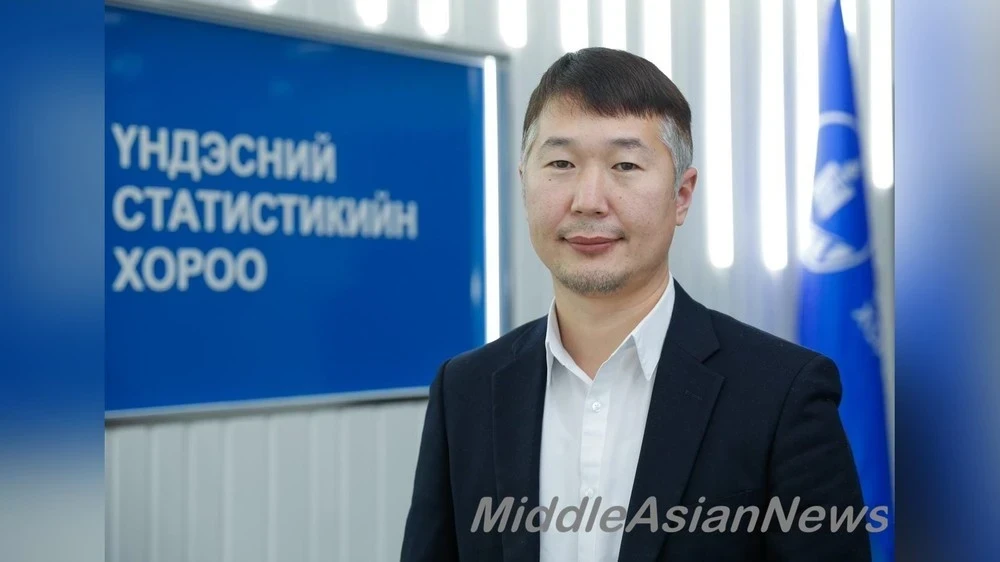
Ariunbold Shagdar, Director of the Census and Data Analysis Department of the National Statistical Office of Mongolia.
Ariunbold Shagdar also spoke at the 2026 Innovation Festival organized by GovInsider.
One of the key tasks of "Vision 2050" is to use digital technologies to diversify the economy and reduce dependence on the mining sector.
The document also aims to create a more comfortable living environment through the expansion of digital government services using the E-Mongolia platform.
According to Shagdar, the NSO is the foundation for data-driven decision-making in Mongolia.
THREE-STAGE DIGITAL ROADMAP
Ariunbold outlines three stages of the country's digital roadmap.
"By 2030, we will focus our efforts on creating a legal and secure infrastructure for digital government," he says.
"Then, by 2040, we will move towards the integration and implementation of innovations in ICT across all sectors to enhance efficiency," he adds.
"By 2050, we aim to create a fully human-centered digital government that ensures transparency and minimizes corruption, putting citizens first," emphasizes Ariunbold.
He views the transition to digital government as the final stage in a process that began with the establishment of the NSO in 1924.
According to him, the 1960s were a time for building a scientific foundation, while the 1990s marked the transition to a market economy.
DATA IN MANAGEMENT
According to Ariunbold, Mongolia has made significant progress in data management, viewing it as a strategic asset alongside countries like Estonia and Canada.
Since May 2024, the NSO, together with the Ministry of Digital Development, has been working on creating integrated databases.
"This allows for the formation of an ecosystem where the government, businesses, and citizens have access to quality data for analysis and policy development," he notes.
Since 2020, the NSO has abandoned outdated data collection methods and implemented more effective registry-based approaches.
"We have combined 30 databases from 14 government agencies for the interim census in 2025, verifying information for 570,000 households using digital systems," shares Ariunbold.
In 2026, a population census is planned using "mixed methods," where more than half of the data will be collected directly from administrative records.
"Our goal is to create an e-government ecosystem where data is not only collected but also actively used to improve citizens' lives through informed and rapid decisions," he adds.
INTEGRATING BIG DATA INTO OFFICIAL STATISTICS
Ariunbold notes that the NSO collaborates with the UN Global Platform to integrate big data into statistics.
"We have shifted from an 'analog' approach to a 'digital' one, focusing on three key aspects: human potential, technical infrastructure, and data security," he adds.
Explaining the significance of integrating big data into statistics, he emphasizes that traditional agricultural data collection poses a serious challenge.
Currently, 17,700 enterprises and households fill out paper forms nine times a year, which is time-consuming and prone to errors.
With UN support, the NSO is pioneering the use of remote sensing to automate data collection.
Ariunbold states that during the 2022 agricultural census, the NSO collected benchmark data for training machine learning models.
Currently, the NSO applies the Spectral Angle Mapper (SAM) method for classifying crops, using satellite images and drone data to identify crops.
After identifying the crops, the NSO uses a random forest algorithm to estimate yields, allowing for the identification of crops such as wheat and potatoes from satellite images.
In 2024, the NSO, together with PARIS21, launched a pilot project in Arkhangai aimag, achieving an accuracy of 81.63% in identifying livestock and 98.11% for Mongolian dwellings (ger).
USING AI FOR COUNTING SHEEP
Last year, the NSO conducted a pilot test of an AI-based application for counting sheep and goats using video recordings during grazing.
Ariunbold notes that despite promising results, there are challenges such as the high cost of obtaining quality images and the need for specialized skills to operate drones.
According to him, the country continues to invest in training staff in image processing and AI to ensure sustainable management of these technologies.
The agency is also working with the ministries of food, agriculture, and light industry to develop an open-source system for scaling remote sensing across the country.
International cooperation, according to Ariunbold, has played an important role in Mongolia's digitization process. In 2025, the country joined the board of the UN Statistical Institute for Asia and the Pacific (SIAP).
"Our chair holds positions in the Executive Committee of PARIS21 and in the Board of Directors of the Association of Population and Housing Census Directors," he adds.
"These roles allow us not only to follow global standards but also to shape them," emphasizes Ariunbold.
"The main evidence of our progress lies in the data," he concludes, noting that high international ratings confirm compliance with national quality standards set by the UN.
Mongolia ranks 11th in the Open Data Inventory (ODIN) and second in East Asia in terms of data openness.
In 2024, the World Bank's Statistical Performance Index placed the country 47th, rising five positions.
"These achievements confirm that the National Statistical Office of Mongolia has become a world-class institution providing quality and transparent data that meets the highest international standards," says Ariunbold Shagdar.
author: Amit Roy Choudhury
translation: MiddleAsianNews