
In the context of escalating confrontation with Israel and the US, Iran's military strategy demonstrates that the country is not seeking a traditional victory. Its focus is on survival — on its own terms.
The leadership of the Islamic Republic has been preparing for the current crisis for many years.
They realized that their ambitions at the regional level could lead to a direct conflict with Israel or the US, and that a war with one of these countries would almost certainly involve the other. This scenario became evident during the 12-day conflict last summer when Israel initiated the first strike, and the US got involved a bit later.
This time, both countries attacked Iran simultaneously.
Given the technical superiority and military power of the US and Israel, it would be a mistake to assume that Iranian strategists are counting on a simple victory on the battlefield.
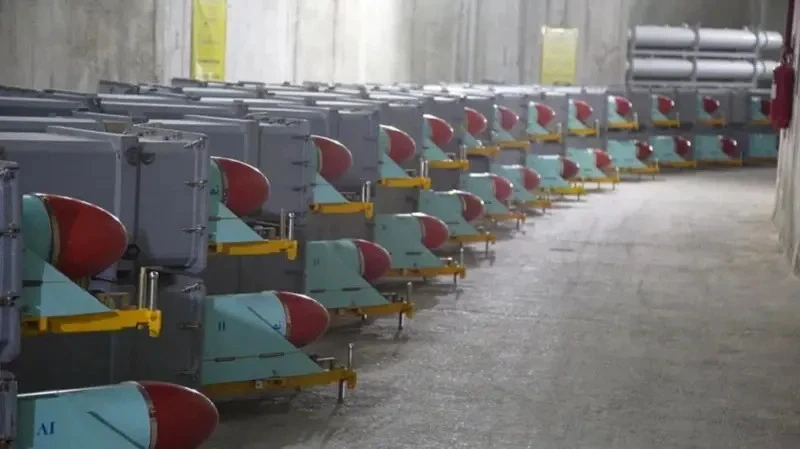
Rather, Iran is developing its strategy based on concepts of deterrence and endurance. Over the past ten years, the country has invested significant resources into multi-layered ballistic missile systems, long-range drones, and the creation of a network of armed groups in the region.
Israel is aware of its limitations: the continental US is out of reach of Iranian missiles, but American bases in the region, especially in neighboring Arab countries, remain vulnerable.
Moreover, Israel is within range of Iranian missiles and drones, and recent attacks have shown that its air defense systems can be overcome. Every projectile that bypasses these systems has not only military but also psychological significance.
Iran also bases its calculations on the economic aspects of war. The interceptors used by Israel and the US are significantly more expensive than many of the drones and missiles in Iran's arsenal. A prolonged conflict forces the US and Israel to expend costly resources to intercept relatively inexpensive targets.
Energy serves as another important element in the war economy.
The Strait of Hormuz is a vital artery for oil and gas supplies. Iran does not necessarily have to completely close this narrow waterway in the Persian Gulf; even real threats and minor disruptions can lead to price increases, which, in turn, can intensify international pressure and calls for de-escalation.
Thus, escalation turns out to be a tool not intended for the military defeat of opponents but for increasing the cost of waging war.
This brings us to attacks on neighboring countries.
Missile and drone strikes on states such as Qatar, the United Arab Emirates, Kuwait, Oman, and Iraq are likely aimed at demonstrating that the presence of American troops carries risks.
Tehran may hope that the governments of these countries will pressure Washington to limit or cease military operations; however, such a strategy could prove extremely risky. An increase in attacks could lead to heightened hostility and even closer ties between these states and the US and Israel.
The long-term consequences could be more significant than the war itself, altering regional alliances and exacerbating Iran's isolation.
If survival remains the primary goal, then expanding the number of enemies is a high-stakes move. However, from Tehran's perspective, restraint may also appear risky, as it can be perceived as a sign of weakness.
Reports that local commanders may independently choose targets or launch missiles raise additional questions.
If this is the case, it does not necessarily indicate a failure in the command structure. Iran's military doctrine, especially within the Islamic Revolutionary Guard Corps (IRGC), has long included decentralized elements to ensure operational continuity in the face of large-scale attacks.
Communication systems are vulnerable to interception and suppression. Senior commanders have become targets. Air superiority by the US and Israel limits centralized control. In such conditions, pre-agreed target lists and delegation of authority may be intentional precautions against complete command destruction.
This may explain how Iranian forces continued to operate after the elimination of high-ranking IRGC officials and even after the possible death of Ayatollah Ali Khamenei, Iran's supreme leader, as a result of recent US and Israeli strikes.
Nevertheless, decentralization carries risks. Local commanders with limited information may attack unintended targets, including neighboring states seeking to maintain neutrality.
The lack of a unified operational picture increases the likelihood of errors. If this continues, there may also be a loss of command and control.
Ultimately, Iran's approach appears to be based on the belief that it can withstand blows longer than its opponents are willing to endure losses.
If this is the case, then it is a form of purposeful escalation: to endure, respond, avoid total collapse, and wait for political disagreements to arise among the adversaries.
However, such endurance has its limits. Missile stocks are limited, and production lines are constantly under attack. Mobile missile systems can be destroyed during movement, and replacing them takes time.
This logic also applies to Iran's opponents.
Israel cannot fully rely on its air defense systems. Every missile penetration causes public concern. The US must consider regional escalation, instability in the energy market, and the financial burden of prolonged operations.
Both sides seem confident that time is on their side. However, both cannot be right.
In this war, the Islamic Republic is not seeking victory — it merely needs to survive.
The question of whether this goal can be achieved without a final loss of allies remains open.


