
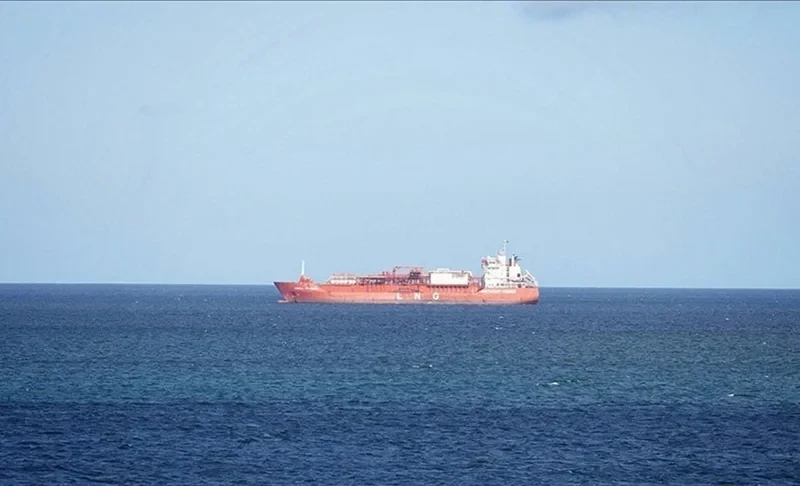
According to Anadolu Agency, shipping in the Strait of Hormuz has virtually come to a halt amid a sharp increase in security threats. As a result, more than 700 oil tankers have accumulated on both sides of this key waterway.
Data analysis shows that as of March 1, the volume of crude oil and petroleum products transported through the Strait of Hormuz fell by 86% compared to the figures from 2026. On that day, only three tankers passed through the strait.
The Strait of Hormuz, located at the exit of the Persian Gulf, is crucial for connecting oil and liquefied natural gas (LNG) supplies from Middle Eastern countries to global markets via the Gulf of Oman and the Indian Ocean.
This strategic route accounts for about 20% of the world's total daily oil consumption, which is approximately 20 million barrels. The main exporters through the strait are Saudi Arabia, the UAE, Iraq, Kuwait, and Iran, with key destinations being Asian countries such as China, India, Japan, and South Korea.
Following the onset of attacks by the US and Israel on Iran over the weekend, vessel movement through the Strait of Hormuz has been effectively paralyzed. Operators suspended passage through the strait due to increased insurance risks and rising insurance costs for ships.
According to Kpler, a real-time data processing company, on February 27, 15 tankers passed through the strait, transporting about 21 million barrels of oil and petroleum products.
On February 28, the number of tankers increased to 18, with a total transport volume of 21.6 million barrels. However, with the escalation of tensions in the region, on March 1, only three tankers passed through the strait, carrying 2.8 million barrels of oil and petroleum products, one of which transported about 2 million barrels of crude oil.
Since the beginning of the year, the average transport volume through the Strait of Hormuz has been about 19.8 million barrels of oil and petroleum products per day. As a result, on March 1, exports through the strait showed a sharp decline of 86% compared to the daily average figures.
Analysts note that the initial increase in risks prompted expedited unloading of cargoes; however, under worsening conditions, transit has virtually ceased.
As of today, there are 706 tankers not owned by Iran at the entrances to the Strait of Hormuz. Among them are 334 tankers with crude oil, 109 vessels with dark petroleum products, and 263 tankers with refined petroleum products. The vessels are awaiting passage in various areas of the Persian Gulf (west of the strait), the Gulf of Oman (east of the strait), and the Arabian Sea.


